Assume yourself as a lawyer, and you have different clients who need your service regularly. Each client will have different needs and requirements. So you must ensure to get paid properly for all the services you provide.
But you can't send professional invoices every time the services are delivered because it can create confusion on what work was done or whether extra billable hours are paid. To avoid this, you must provide a retainer invoice to your clients.
What is a retainer invoice? How is it different from professional invoices? Does it add benefit? To get answers to these questions, continue reading this article.
What You'll Learn
- 01What a retainer invoice is and how it differs from regular invoices
- 02Key benefits of using retainer invoices for businesses and clients
- 03When and why to send retainer invoices to secure payments
- 04Essential elements to include in a professional retainer invoice
- 05How retainer invoices help small businesses and freelancers maintain cash flow
Understanding Retainer Invoices
Before getting into the concept of a retainer invoice, do you know what a retainer fee is?
The retainer fee is the upfront payment you get from your client to secure your services. Usually, this fee is paid to the third parties the payer engages with to perform a service.
But here is something you must note about the retainer fee.
When you collect advance payments from your clients, they can't be considered immediate income.
The retainer fee doesn't guarantee any outcomes or final products and doesn't represent the project's or services' final cost.
Besides, the retainer fee can be refunded if the costs of your services end up being less than expected or if the service hasn't been delivered within the period.
Definition and purpose
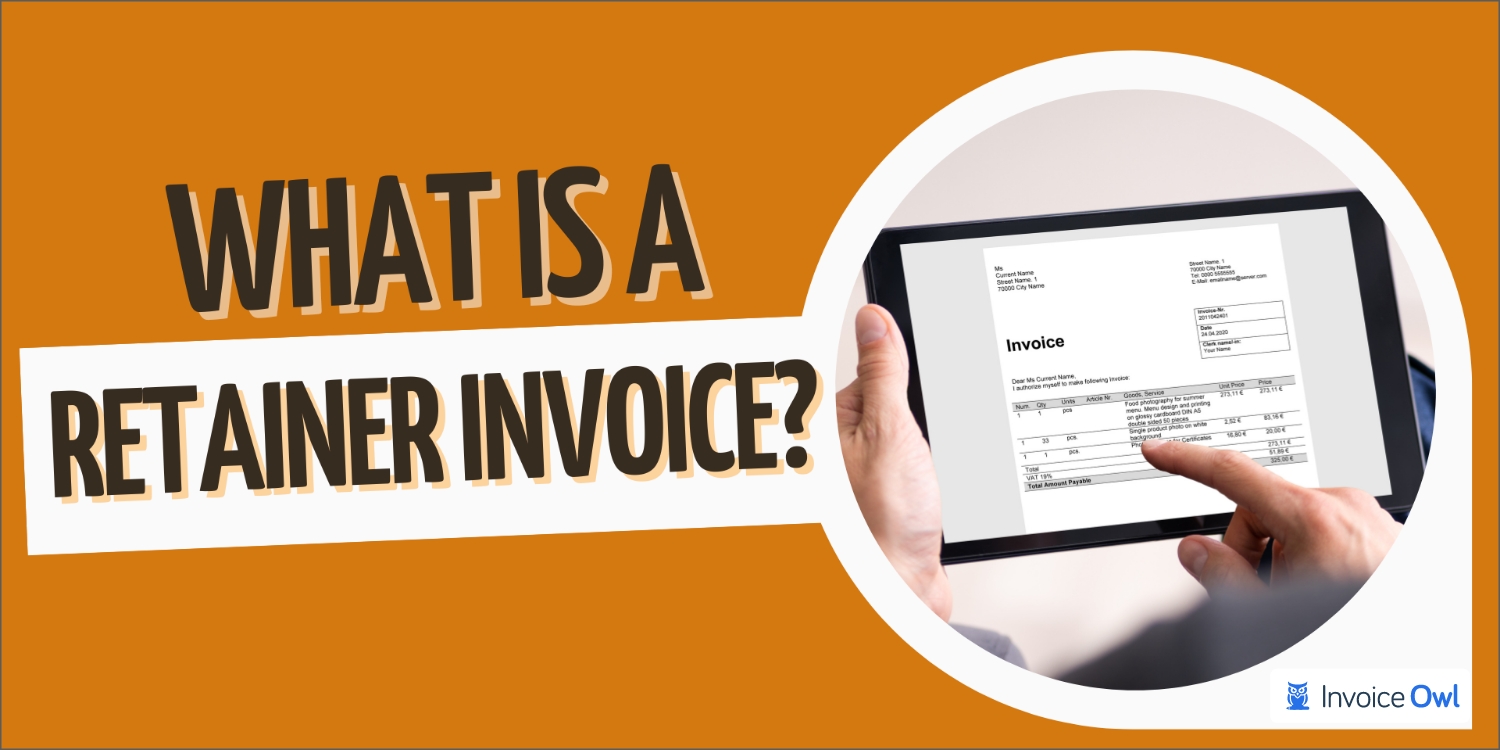
A retainer invoice is a document issued by a business to request advance payment from a client before commencing a project or delivering products or services.
To collect the retainer fees from your client, you need to send them a retainer invoice.
As already mentioned, a retainer invoice is the advance payment you ask your client before starting a project. These invoices will act as the bookkeeping document of the retainer fee that must be created at regular intervals so that you and the client get some time to input payments into the accounting systems.
Also, you must ensure the invoice contains all important details about the project or services you provide.
You can also create error-free retainer invoices to send clients using robust software such as InvoiceOwl. You just have to add the instructions in the customizable invoice templates.
Use invoicing software like InvoiceOwl to create professional retainer invoices quickly. Customizable templates ensure all important details are included, reducing errors and saving time.
Retainer Invoice for small businesses
Getting retainer invoicing can benefit many businesses, especially small businesses, because they get paid a monthly fee for working a specific number of hours.
You can also take advantage of this method's flexibility and financial security. Also, freelancers rely on retainer agreements to create a sense of security. So with a retainer, clients can use the freelancer's services on an ongoing basis while the freelancers can maximize their income stability.
Benefits of using retainer invoices
Using retainer invoices is definitely a strategic approach that benefits both businesses and their clients. Here are the key benefits of using retainer invoices:
Application of Retainer Invoices for Small Businesses
Here are some of the top use cases of retainer invoices for small businesses:
- Budget management: By paying a retainer fee upfront, businesses can better plan their expenses and avoid unexpected costs during projects.
- Securing ongoing services: Retainer invoices allow small businesses to secure consistent services from freelancers or agencies, ensuring smooth invoicing for essential tasks.
- Legal & professional services: Such invoices are commonly used to engage lawyers, accountants, or other professionals for ongoing support.
- Technical support & maintenance: It helps secure IT services, software maintenance, or equipment repairs on a priority basis.
When and Why to Send a Retainer Invoice
The question is, why not get a pre-payment for the services with a regular invoice instead of the retainer invoice?
A retainer invoice is preferred in this case because regular invoices can create chaos in how you work with the project.
You may end up with a fixed fee rather than hourly billing. And you may be at a loss. Also, advance payment gives more confidence to work on the project without fearing non-payment issues.
Imagine the scenario where your customer starts ghosting without paying for your services. Sounds scary, right?
This is why you must offer a retainer invoice to your customer. This is considered the downpayment on the future services you will be providing. Despite the type of occupation, the retainer amount helps you with the initial expenses of the project.
It is important to send your retainer invoice immediately after you have agreed to the terms of the retainer agreement with your customer. This will avoid unnecessary confusion about what work is being done or when the payment must be transferred.
However, if you are charging for your services on a regular basis, send your invoices at the same time every month or quarter. This helps your client when to expect the invoice, and you get the idea of when to expect the payment.
Always send retainer invoices immediately after agreeing to terms. Delays can create confusion about deliverables and payment schedules, potentially harming client relationships.
Important Considerations in a Retainer Invoice
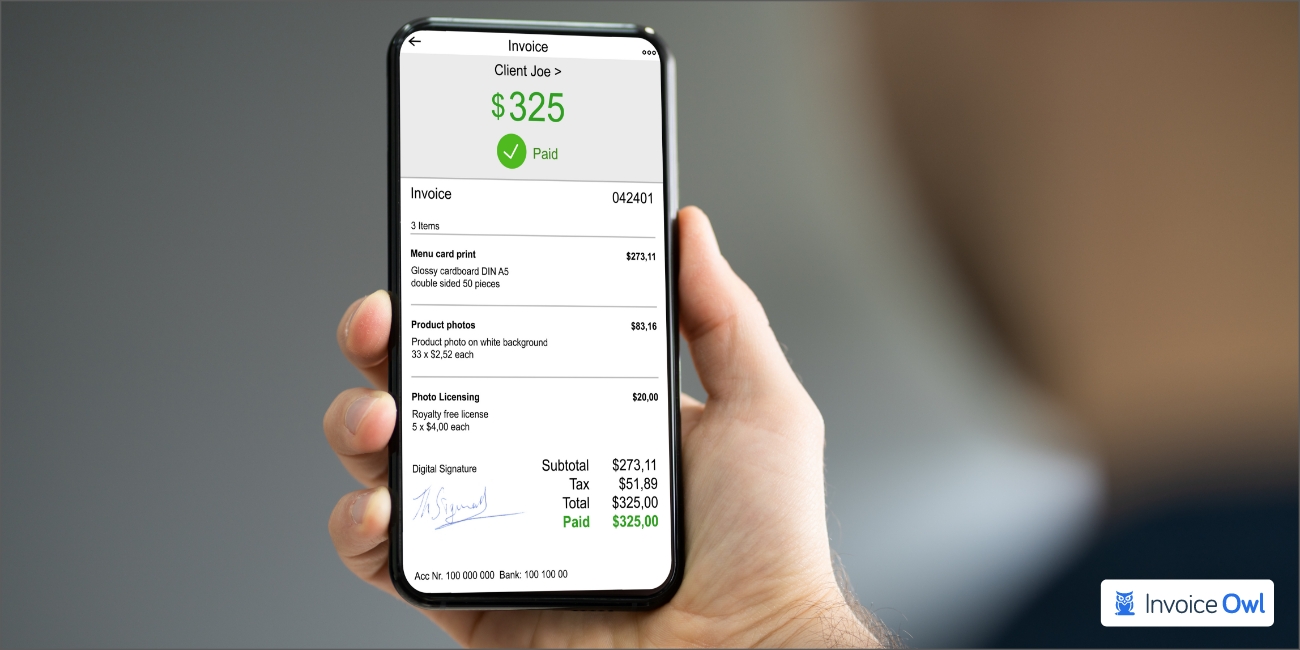
The retainer invoice must include the following details:
- If the retainer payment is received after the due date, then some retainer invoices may include a late payment fee.
- It is also recommended to list the total project cost and divide it into retainer installments.
- If possible, write a detailed description of what's included in the retainer fee to avoid confusion about whether additional hours were added wrongly.
Curating professional retainer invoices with all the details and sending them to clients to get paid quickly sounds hectic. To make your life easier, use an invoicing software such as InvoiceOwl. This software can make customized estimates and invoices within seconds and saves your time and effort.
Invoice Templates and Customization Options
There is a wide range of professional invoice templates designed to suit various industries and business needs. If you're in construction, freelancing, professional services, healthcare, retail, or any other field, our templates are tailored to meet the unique invoicing requirements of your industry.
For making your lives simpler and better, we have ready-made invoice templates. Try our free invoice template and create an invoice in seconds. The templates are available in five different formats, Google Docs, Google Sheets, MS Word, MS Excel, and Adobe PDF.
Create Professional Retainer Invoices in Seconds
Join thousands of contractors and freelancers using InvoiceOwl to create customized retainer invoices and get paid faster.
Start Your FREE TrialConclusion
Retainer invoicing ensures that both the service provider and the client are assured about the payment and services. Retainer invoicing for small businesses is best because the contractors can work confidently without any payment issues. However, retainer invoicing is not everyone's cup of tea. So discuss retainer invoicing with your customers before signing the deal.
Frequently Asked Questions
Billing and invoicing provide the same information about the amount paid for a business transaction. However, the invoice is generated only by businesses that provide services, while customers receive invoices as bills to be paid. So both terms differ depending on who is referred to in the document.
An invoice is legally not a contract because it isn't an agreement between two parties. Rather it is created by a business and sent to the customer requesting payment for its services and is called a one-sided document.
The term retainer in accounting means the client pays a part or all of the services as an advance. If, in case, the retainer is pay for access, it means the business or service provider must provide services to the client regularly for a set number of hours every month. Also, the retainer payment must be paid immediately after the agreement is signed.
Yes, if you want to collect a retainer fee from your customers, you can claim it only through a retainer invoice.