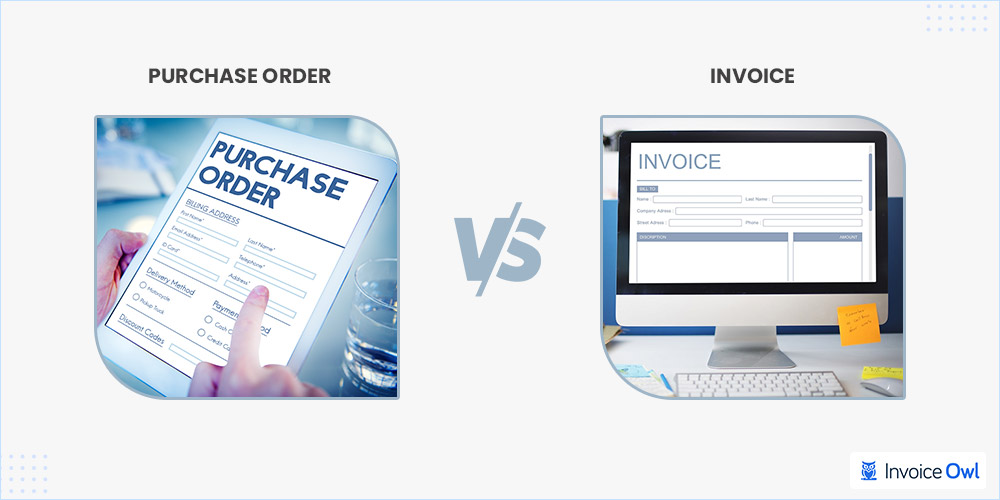
Being a contractor, you have to manage and organize several elements of the business like purchases.
You have decided to purchase supplies for your contract business, but do you think informing the seller about the purchases verbally is enough? No, it is not. You need a document that confirms that both vendor and seller are on the same page.
Here, purchase order comes into the picture and that's what our blog is all about. Let's discuss briefly the PO number and what is a PO number on an invoice?
First, let us clarify the concept of what is PO number?
What You'll Learn
- 01What a purchase order (PO) number is and how it works in business transactions
- 02The importance of PO numbers for tracking purchases and maintaining accurate records
- 03Key differences between purchase orders and invoices
- 04The distinction between PO invoices and non-PO invoices
- 05How to create and manage PO numbering systems manually or automatically
Table of Content
- Understanding Purchase Order (PO) Numbers
- Why PO Numbers Matter: Benefits and Importance
- How Purchase Orders and Invoices Work Together
- What are PO invoices and Non- PO invoices?
- Step-by-Step Guide to Creating PO Numbers
- Frequently Asked Questions
Understanding Purchase Order (PO) Numbers
A purchase order number is a unique number assigned for a specific transaction. It is given after a process of purchase between buyer and seller. Let us simplify for you:
For example, buyer name A wants to purchase supplies of 2 Kg from the seller name B. After the buyer placed the order, the seller will give a document mentioning the purchase order. To not confuse transactions, the seller gives a purchase order number for that 2 Kg order.
In legal terms, it becomes a legally binding contract. Once the seller issued the purchase order number, the buyer cannot deny the transactions. It is also a proof document for both buyer and seller.
The purchase order number is created at the beginning of the transactions and in the legal binding contract quantities, price, payment terms, and issue date should be mentioned. Moreover, it should outline detail of payment terms like it should be paid within 30 days or more.
Now, once we are clear with the concept of the purchase order number, let's deep dive into why a PO number is needed?
Manage Multiple PO numbers in a matter of minutes with automated invoicing software!
Why PO Numbers Matter: Benefits and Importance
The purchase order number is also known as the purchase order tracking number because it helps vendors and purchases track purchases with the unique number. Initially, it may seem like a minor thing, like just a part of the document but it is crucial.
For instance, if you are tallying a balance sheet, with the PO number you will be able to find purchase transactions history rapidly. It helps companies in making changes and optimizing business finance. POs become the deciding factor of a company's performance for a specific product.
The number is also the reason for recording accounts' details and contains all the essential information needed for a successful business process. Information stated in the PO number system such as the number of purchased items helps businesses in setting up the profit target and the required volume of sales.
The volume of purchases specified in the PO may be the basis for making decisions regarding the payment cycle, cash flow, and business processes.
However, in the business finance process, several business owners mistake invoice numbers and purchase order numbers as the same. No, it is completely different. The invoice comes in the end process of transactions and you will find the PO number on an invoice.
Let us understand more briefly about the PO number on an invoice in the next section.
How Purchase Orders and Invoices Work Together
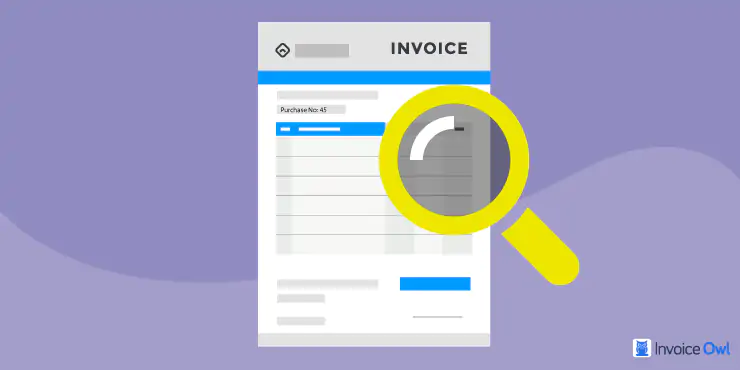
A purchase order is made and issued based on the delivery date by the client or buyer of particular goods and services at the beginning of a transaction to help the payroll firm. It entails the order details of a specific sale, such as the service or products required, the price agreed upon, and the amounts paid.
The PO number depends on the template of the invoice you used or choose. However, it is usually located at the top of an invoice. And it can be referenced throughout the whole transaction, such as shipping forms, and the client's phone number.
Purchase Order vs Invoice: Key Differences
| Aspect | Purchase Order | Invoice |
|---|---|---|
| Issued By | Buyer | Seller |
| When Created | Before the transaction begins | After goods/services are delivered |
| Purpose | Confirms what the buyer wants to purchase | Requests payment for delivered goods/services |
| Contains PO Number | Generates the PO number | References the PO number |
| Legal Status | Binding contract once accepted | Payment request document |
Now, talking about the invoice. The seller usually issues invoices upon completion of a transaction after the terms outlined in the purchase order form have been agreed upon by the purchasing department.
The invoices serve as the bill. Just like the purchase order, it'll also list important details about the service provided or delivered by the seller, including price, quantities, and mode of payment like credit card or bank account.
Most of the time, it also references the PO number indicating the transaction was pre-approved. After receiving the invoices, the buyer is expected to pay within the terms that were previously agreed upon (for example, the seller requires payments within two weeks).
Do you know not all invoice has PO number? Yes, there are non-PO numbers as well. Let's discuss more about it.
What are P.O. Invoices and Non-P.O. Invoices?
Purchase Orders are a form of an invoice that helps to reference the purchase order number with the actual invoice. A non-PO number invoice is unable to do this. Invoice means the purchase order is not required for the transaction of services to get billed for.
Some of the reasons for not generating a purchase order include:
The order was processed too quickly (the customer didn't have the time to give one)
The transaction wasn't up to a specific amount or dollar figure. Some companies have the policy and payments term not to issue POs for transactions that did not exceed a particular dollar value.
For instance, some companies believe that they do not need any purchase order for transactions below $10,000. If a purchase order is required with a reference number, it will be forwarded for management approval.
Hope you are clear with the difference and now you can decide whether you need a PO number for your business or not. We also have a quick solution if you want to create PO numbering faster.
Step-by-Step Guide to Creating PO Numbers
There are two ways to create a PO number system, one is manual, and the other is by using automatic software.
Manual PO numbering systems
In a manual numbering system, you have to use a computer and generate a PO number manually. You need to include and write all detailed information like quantity, price, date, contact number, and name.
The numbering can be a mixture of numbers, letters, and dashes. For instance, the seller issued a purchase order document and give #0003 PO number. It is a good practice if you are handling small businesses. If you are running a large business, you should try to automate software.
Automated PO number generation
In the automated software system, the software generates PO numbers automatically. It is an easy method for businesses that handle too many purchase orders and business expenses.
It makes your time-less consuming and the chances of missing any details decreases as every piece of information are recorded.
Thus, to make your PO numbering system effortless, automate software like InvoiceOwl. It helps you to automate the entire purchase order process within a few clicks.
Common PO number formats
Ideally, the combination of numbers, letters, and sometimes symbols is used to create a unique identification for transactions. Some use sequential numbers (e.g., PO#001, PO#002), while others add prefixes or suffixes based on dates, departments, or subject codes.
This categorization helps businesses to easily track the invoice whenever necessary. For instance, a professional can find an invoice by using the type of origin for the product. What's more, companies also customize formats as their operations grow bigger.
- Sequential: PO#001, PO#002, PO#003
- Date-based: PO-2025-001, PO-2025-002
- Department-based: PO-IT-001, PO-MKT-001
- Vendor-specific: PO-VENDOR-001
Ready to Streamline Your Purchase Order Process?
Join 100,000+ contractors using InvoiceOwl to create professional invoices and manage PO numbers effortlessly.
Get Started for FreeFrequently Asked Questions
Purchase Order (PO) numbers come in different types based on their use. There are standard PO numbers for regular purchases, blanket PO numbers for repeated purchases, and contract PO numbers for long-term projects with set terms. Each type helps track and manage purchases according to the specific needs of each transaction, improving budgeting and resource planning.
The best practices for managing purchase order (PO) numbers effectively are to use a consistent numbering system and train staff on PO procedures. Utilize software to minimize manual errors. It is also important to track outstanding POs and follow up on pending approvals. This helps businesses to maintain a smooth workflow and supports financial accuracy.
Some common mistakes with purchase order (PO) numbers include using different formats, not recording the numbers correctly, and reusing numbers. These issues can create confusion when tracking and reporting. To avoid these mistakes, set up clear protocols. This will help keep purchase records accurate and prevent misunderstandings during financial audits.
No, not all invoices require a PO number. Non-PO invoices are used for transactions that happen quickly or fall below a certain dollar threshold. Some companies only require PO numbers for purchases exceeding specific amounts (e.g., $10,000). Smaller or urgent purchases may be processed without a formal purchase order.
The PO number is typically located at the top of an invoice. It can be referenced throughout the entire transaction process, including shipping forms and payment records. The exact placement depends on the invoice template used, but it's always positioned prominently for easy identification and reference.
Yes, automated invoicing software like InvoiceOwl can generate and manage PO numbers automatically. This approach is especially beneficial for businesses handling multiple purchase orders, as it reduces manual errors, saves time, and ensures all transaction details are accurately recorded. Software solutions also make it easier to track and organize PO numbers systematically.