There is no legal significance to an invoice on its own. The market share for online invoices is 20.4%, with 80% growth expected by 2027. Despite the importance of invoices to businesses, invoices are not legally binding agreements between the business and its clients.
The tampering of an invoice makes it unsuitable for use as a legal document, and the invoice lacks proof that both parties involved agreed to the terms. Small businesses must create professional contracts that can serve as legally binding agreements between the business and its clients, unlike invoices, to ensure clients pay on time.
To clarify all the concerns that you may have regarding the what is invoice and contract, we have put together the complete guide.
What You'll Learn
- 01The fundamental differences between invoices and contracts
- 02Why invoices alone are not legally binding agreements
- 03Essential components that make an invoice legally valid
- 04Step-by-step process for creating enforceable contracts
- 05When to use invoices versus contracts in your business
What is an Invoice? (Pros & Cons)
Invoices are documents that service providers send to clients to collect a payment, and purchased goods or services are included in this document itself. Invoices can also create legal records if they contain the names of the seller and client, product descriptions, and prices. If you fixed the roof, did the makeup, or launched a consulting business, you may need to send an invoice.
You can employ invoicing software like InvoiceOwl to draft a professional-looking invoice that gets you paid faster.
- Payment terms can be set up, so you receive payment for your efforts
- Quick payments - customers are prompted to pay for services provided
- Clients are reminded of their liabilities through detailed billing
- Helpful for keeping records - required for 5-6 years for tax purposes
- Opportunity to present your brand and company positively with professional design
- Incorrectly drafted or vaguely worded documents can lead to disputes or delay payments
- Invoices can be challenged if product sales or work hours are not meticulously recorded
- Late invoices may cause customers to be relaxed about settling their debts
If you are concerned about the invoicing process, no worries; you can move to InvoiceOwl, and you won't face problems generating professional invoices.
What is a Contract? (Pros & Cons)
Contracts are essential to business. A legal contract is a legally binding document between the parties. Typically, a legally binding contract clearly explains all parties' expectations, laying out the agreement's details. A contract may include information about payments, materials, timelines, and how disagreements between the parties involved can be resolved.
- Verifies what you and the other party agreed to
- Makes the agreement clear from the beginning, preventing future misunderstandings
- Terms are documented and don't change, providing security and peace of mind
- Decreases likelihood of disputes regarding responsibilities and payment
- Provides a framework for resolving disputes
- Limited flexibility - restrictions may affect future decisions
- Time-consuming - takes more time to write up than verbal agreements
- Both parties may not understand complex legal terms without legal assistance
Writing a legal document can be time-consuming, but it can make compliance easier and protect your business interests.
Understanding Invoices vs. Contracts: Key Differences
Contracts are legal documents between two parties in which one party specifies the terms of the legally binding agreement, and the other accepts those terms. An invoice involves a document between parties. Apart from involving two parties in an agreement, an invoice is a written document to request payment for services provided to another party by one party.
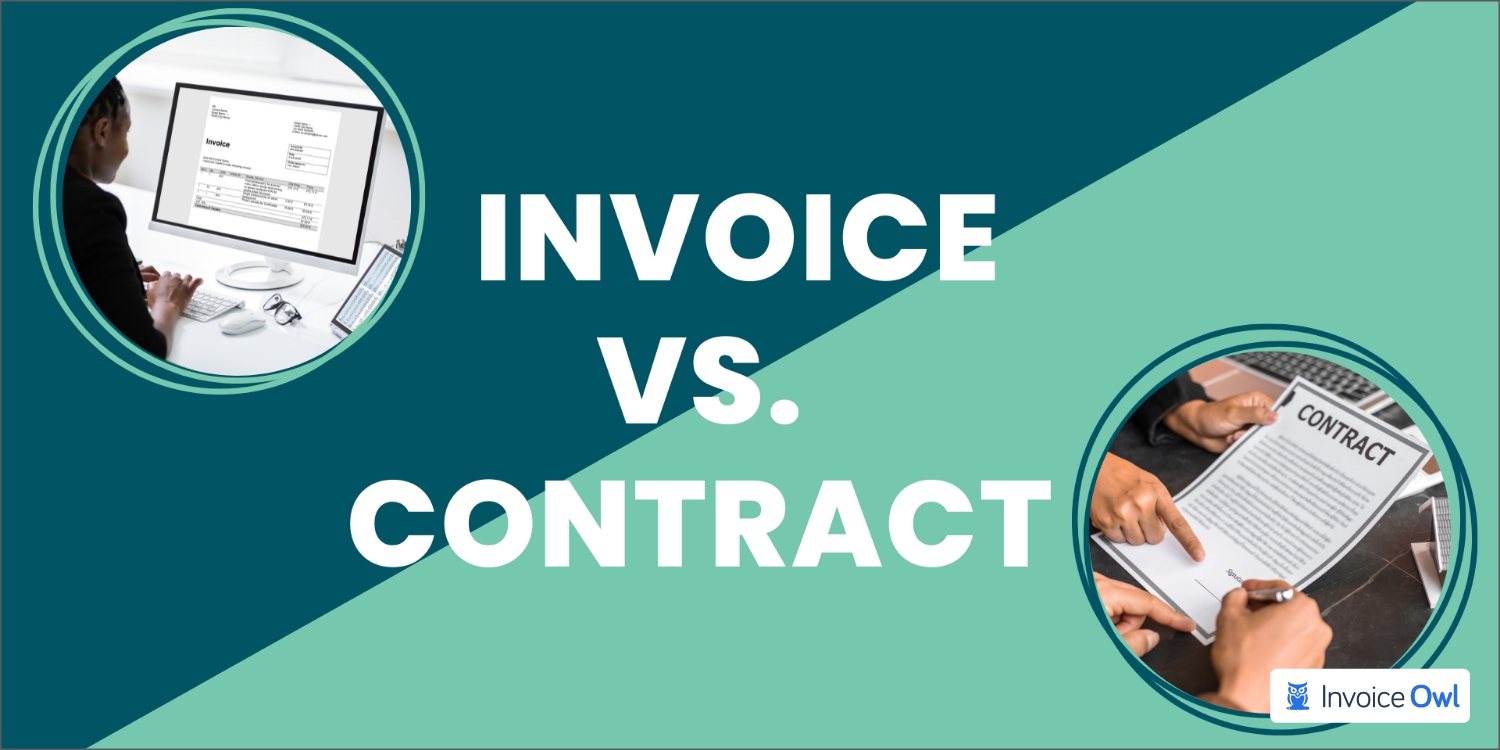
On the other side, a contract is usually a handwritten contract that both parties sign, although it can also be verbally signed. When both parties explicitly agree to a legal document in electronic communication, such as an email or text message, they make a contract.
Both parties agreeing to the legally binding contract are protected since they are legally binding agreements.
What Makes an Invoice Legal? Essential Components
For an invoice to be legally binding, particularly in the United States, it must include specific components that transform it from a simple billing document into a valid contract.
Ready to Create Professional Invoices?
Join 100,000+ contractors using InvoiceOwl to create legally compliant invoices that get you paid faster.
Start Your FREE TrialCreating Legally Binding Contracts: Step-by-Step Guide
To protect your legal rights, contracts are a great choice. Businesses and significant asset purchases require them. In most cases, verbal agreements aren't enforceable, so it is best to write them down.
Here are the step-by-step instructions for creating a contract:
Step 1. Information gathering

List the parties' names and affiliations and the contract's effective date at the top of the page. For example, "XYZ Company agrees to the terms and conditions contained herein on this 1st of January 2022."
Step 2. List your offers/services
Next, you will need to describe or list the products or services you are offering and expect to receive payment in exchange for them. In this section, you should get very specific with the terms you are using since general terms may be interpreted differently.
As a business owner, you would rather not be on the receiving end of an agreement where the client can pressure you to work harder than you want to.
Step 3. Determine term length
The next step involved is specifying the duration of your contract. Depending on the company, they may end after a certain period, like 90 days, or specify a specific date for termination. It is also possible to indicate in this section that your customer is willing to work with you continuously.
Step 4. Lay out the consequences
The business world is full of claims of breach of contract and negligence, and customers should understand the penalties for not paying or not receiving orders. To avoid dealing with non-compliant individuals in the future, include the term "null and avoid" in this section.
Step 5. Defining the terms of the dispute resolution
How does your company handle disputes? This question has a lot of options. One option would be to allow traditional civil litigation methods. Mediation or arbitration option, however, could be enforced as an alternative dispute resolution method.
Step 6. Create signature and date lines
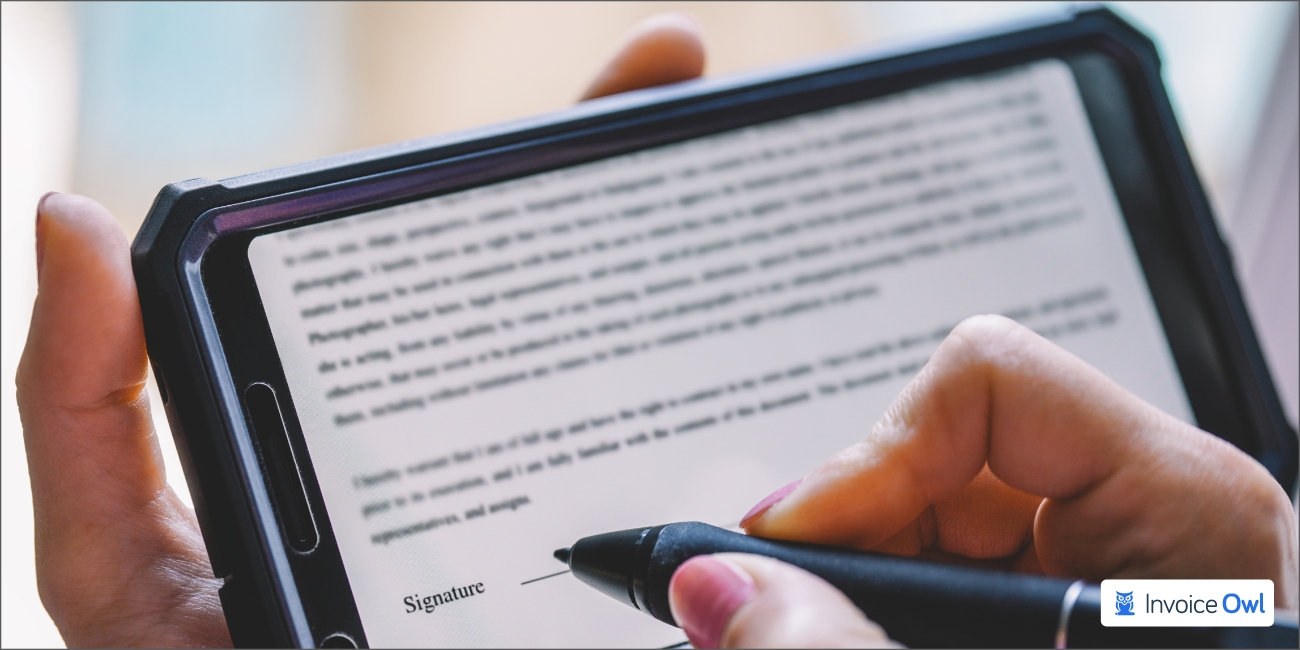
Unless both parties sign the contract in their respective place, you cannot have a valid and enforceable contract. Both parties should sign signed contracts on a timeline with two signatures. If you sign the contract first, or if the order of signing implies any advantages, it does not matter who signs the contract first.
A contract is only enforceable when both parties have signed it. The order of signing doesn't affect the validity of the agreement.
Conclusion
Now you know what sets both invoices and contract different from each other. No matter their differences, both serve equally essential roles in any business. One does the work of protecting rights, and the other does the work of getting payments from the clients.
Frequently Asked Questions
Invoices and contracts are fundamental aspects of any business, so understanding their differences is crucial. A contract does not qualify as an invoice, nor can an invoice qualify as a contract.
A contract defines, defines, and governs all parties' rights and obligations. Regarding contracts, they involve either the transfer of goods, services, or money or the promise to transfer any of those later.
Often, businesses will invoice their customers without the need to have a contract in place.
The essential elements of valid contracts consist of acceptance, mutual intent, and payment terms. With these notable elements, an invoice serves as a binding contract, which secures both payment and clarity for the transaction.
The contract fundamentals needed for an invoice to serve as a binding contract are mutual consent, defined terms, payment conditions, and delivery specifics. Covering these elements is important as this makes invoices more than just a billing document. The invoices act as a legally binding contract that protects both parties and enhances business transparency.