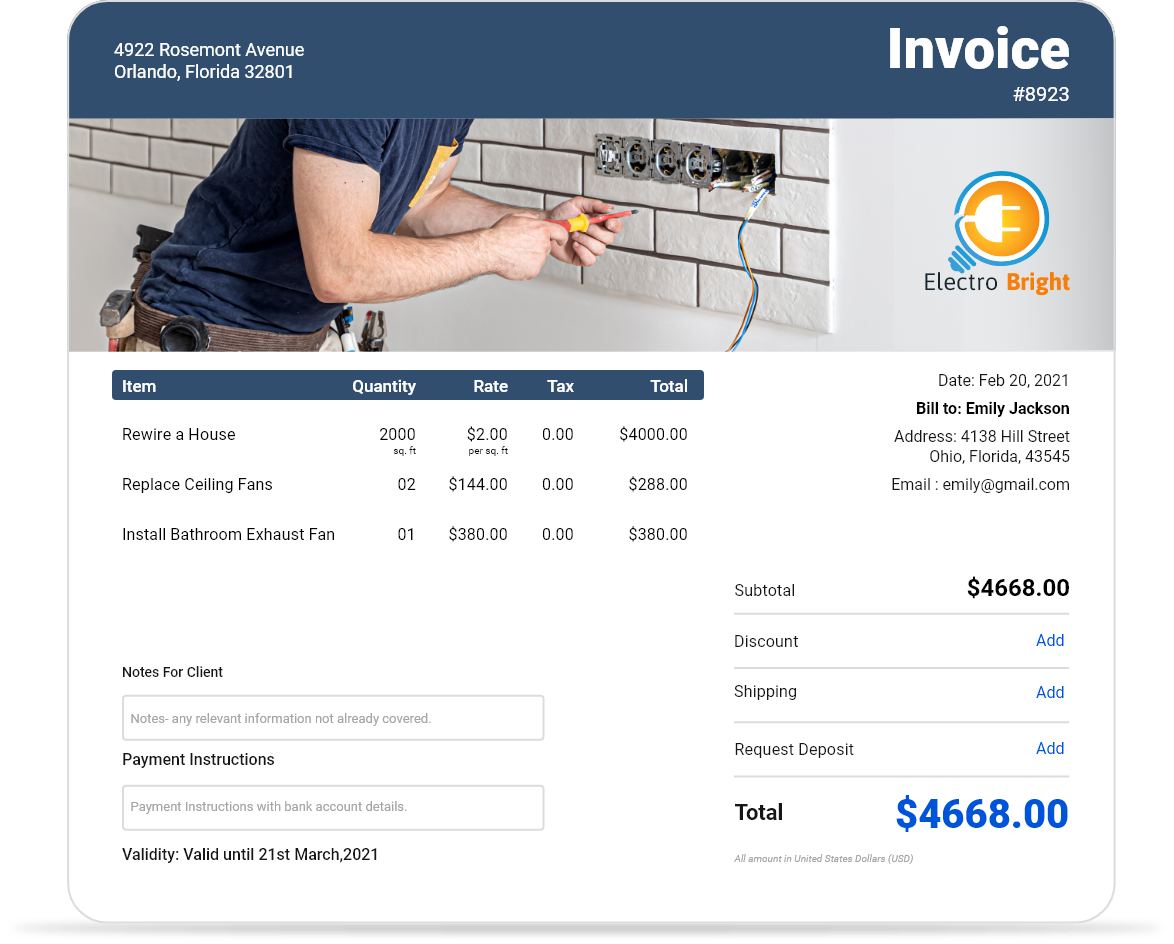
Download Free Electrical Work Invoice Templates
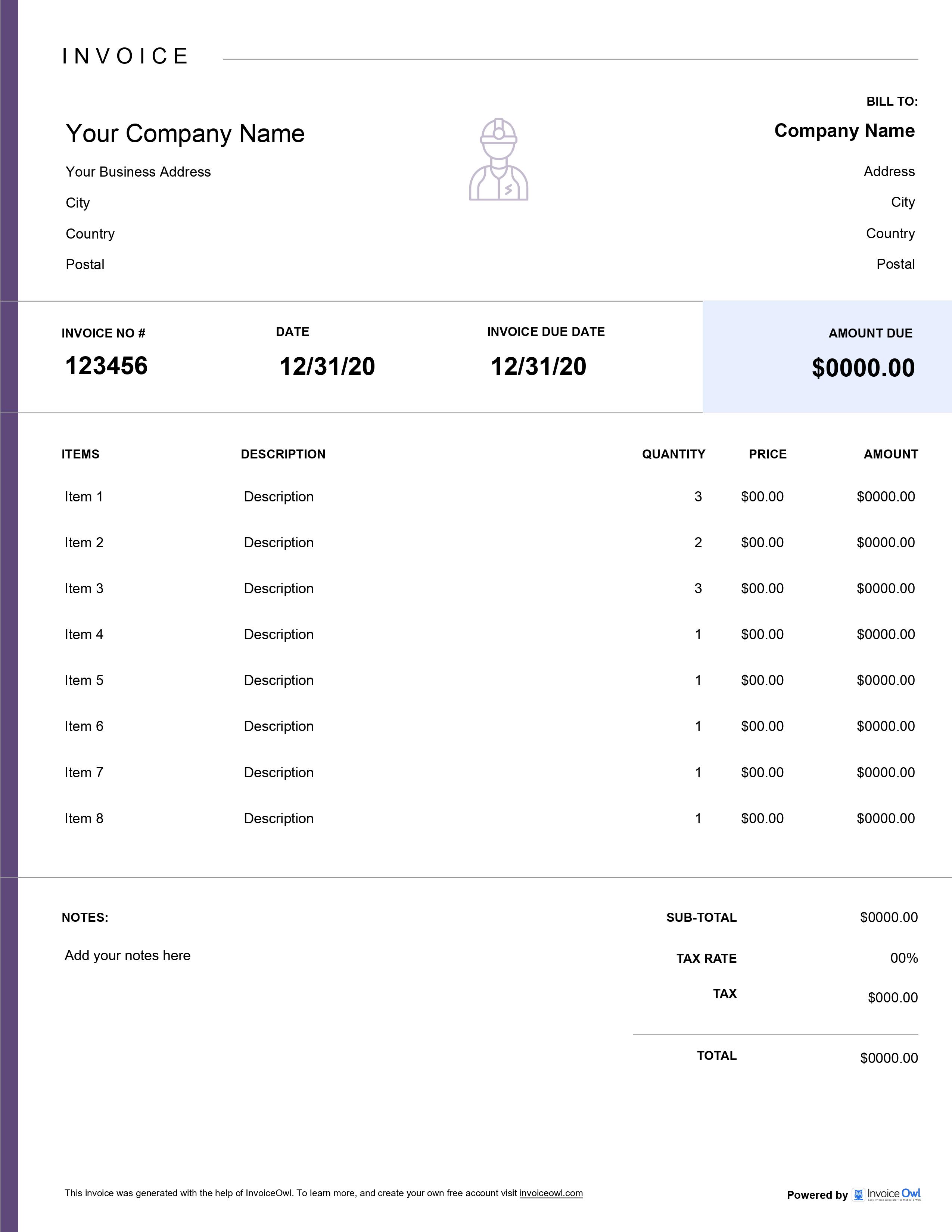
Get free electrical invoice templates for licensed electricians and contractors. Bill residential, commercial, and industrial electrical jobs with industry-standard professional formats.


 Word
Word Excel
Excel PDF
PDF Docs
Docs All
All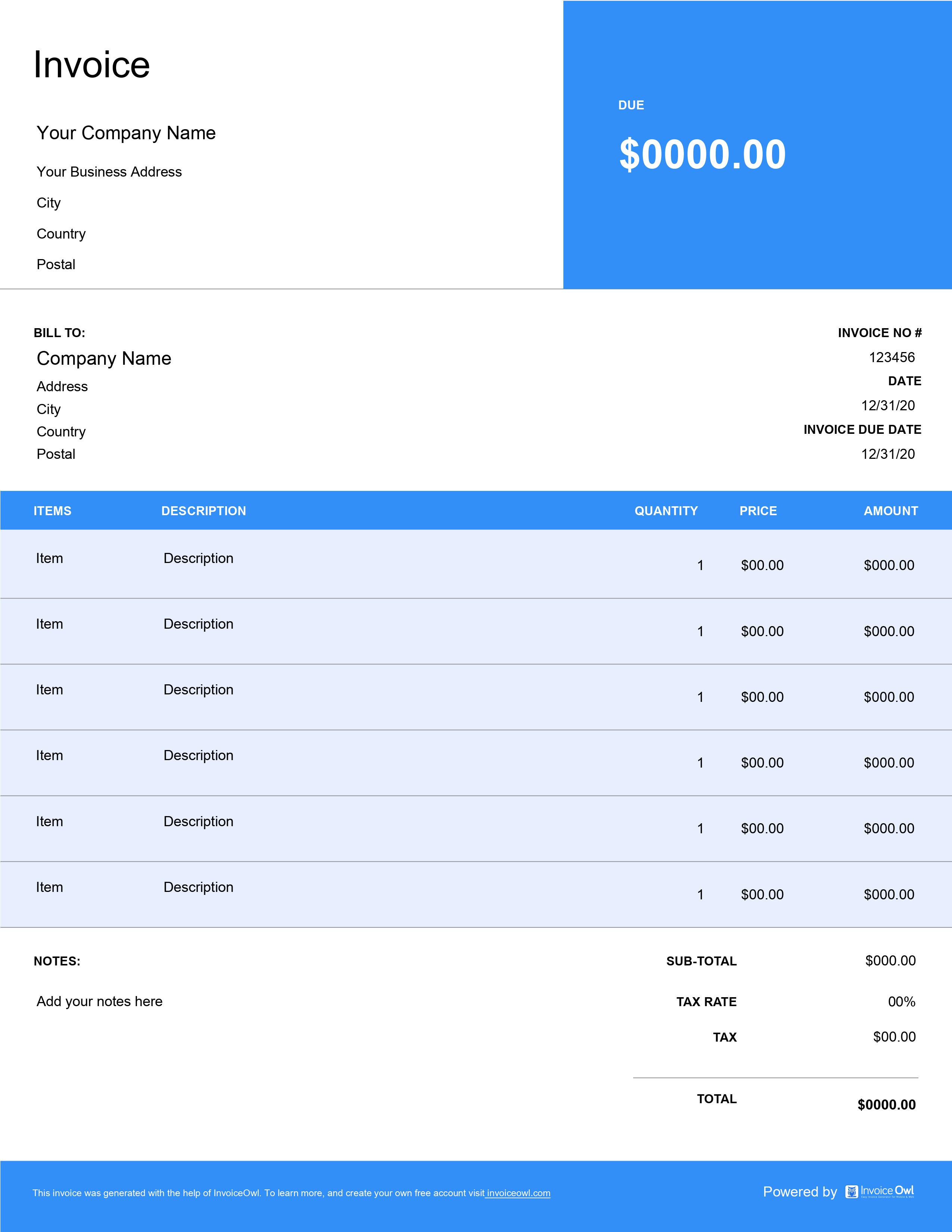
InvoiceOwl vs Free Electrical Work Invoice Template
See why professionals choose InvoiceOwl
Get Paid Faster with Professional Electrical Invoices
Running an electrical contracting business means spending your days wiring circuits, installing panels, and troubleshooting complex electrical systems. The last thing you want is to waste hours creating invoices from scratch at the end of each job.
Save valuable time with our free electrical work invoice templates. Download professional, customizable templates in multiple formats and transform your billing process from time-consuming to streamlined. Focus on what you do best—delivering quality electrical work—while we handle the invoice design.
Get paid faster for your skilled electrical work with InvoiceOwl's free electrical invoice templates.
Why Electrical Contractors Need Professional Invoices
As an electrical contractor, you provide essential services that keep homes and businesses powered safely. You deserve to be paid promptly and accurately for every job you complete. Professional invoicing is critical to running a successful electrical business—ensuring you get paid on time, every time, for your expertise and hard work.
Between managing multiple job sites, coordinating with clients, ordering materials, and ensuring code compliance, electrical contractors juggle numerous responsibilities. Poor invoicing practices shouldn't slow down your business or delay your payments.
Centralized Invoice Management - Track all electrical job invoices from a single platform for complete financial oversight. Maintain organized records that make tax time stress-free.
Professional Client Communication - Present detailed, professional invoices that build trust and credibility with every client. Your billing reflects your professionalism.
Accurate Cost Tracking - Monitor labor hours, materials, permits, and equipment costs for every electrical project. Know exactly where your money comes from and goes.
Tax Compliance Simplified - Maintain organized records that make tax season stress-free and audit-ready. Proper documentation protects your business.
Payment Tracking Efficiency - Know exactly who owes what and when, reducing outstanding accounts receivable. Get paid faster with better organization.
Download Professional Electrical Invoice Templates
Running a successful electrical contracting business demands expertise, certification, and countless hours on job sites. Well-designed electrical invoice templates help you spend more time on what matters most—completing quality electrical work and growing your business.
Customizing your invoice templates maintains your brand identity and reinforces professionalism with every client interaction. Access templates in multiple formats designed specifically for electrical contractors.
Available Template Formats
Google Docs - Perfect for collaborative editing and cloud-based access anywhere. Edit on any device with internet access.
Google Sheets - Advanced calculations for complex electrical job pricing. Track materials and calculate totals automatically.
MS Word - Easy customization for your electrical business brand. Complete control over layout and design.
MS Excel - Powerful tools for tracking materials and labor costs. Automated formulas save time and reduce errors.
PDF - Professional presentation ready to send immediately. Polished invoices that look great on any device.
How to Create Professional Electrical Invoices in 10 Steps
As an electrical contractor handling installations, repairs, and maintenance daily, creating professional invoices shouldn't consume your valuable time. With the right tools and templates, professional invoicing becomes remarkably simple. We've created a comprehensive guide specifically for electrical contractors, helping you create professional electrical invoices for free and send them in just a few clicks.
Step 1: Download Your Free Template
Select the electrical invoice template that matches your business needs from our collection of residential, commercial, industrial, maintenance, and installation templates.
Step 2: Add Your Business Information
Include your electrical company name, logo, license number, and contact details. Your license number is especially important for compliance.
Step 3: Insert Client Details
Add client's name, property address, and contact information. Accurate client data ensures smooth communication and payment.
Step 4: Create Unique Invoice Number
Assign a distinct invoice number for tracking and record-keeping. Sequential numbering helps you stay organized.
Step 5: Include All Relevant Dates
Add service date, invoice issue date, and payment due date. Clear dates set proper expectations for payment.
Step 6: List Electrical Services Performed
Detail all electrical work completed, from installations to repairs. Be specific about what work was done.
Step 7: Add Materials and Labor Costs
Itemize all electrical materials used and labor hours charged. Transparency builds trust with clients.
Step 8: Include Permits and Fees
Add any electrical permits, inspection fees, or service charges. Don't forget to bill for regulatory compliance costs.
Step 9: Calculate Totals with Tax
Sum all costs and add applicable sales tax for final amount. Double-check your math for accuracy.
Step 10: Add Payment Terms and Send
Include payment instructions, accepted methods, and deliver the invoice. Make it easy for clients to pay you.
Include detailed descriptions of all electrical work performed so clients understand exactly what they're paying for. Specify circuit numbers, panel locations, wire gauges, and equipment model numbers when relevant. This level of detail builds trust, reduces payment disputes, and serves as valuable documentation for future reference. Clear payment terms and accepted payment methods help ensure timely payment. Following these best practices delivers professional invoices that get you paid faster. Invoice templates for contractors provide similar benefits across trades.
Essential Elements of Electrical Work Invoices
Professional electrical invoices contain specific elements that protect both you and your clients. Including all necessary information ensures clarity, reduces disputes, and maintains compliance with electrical industry standards.
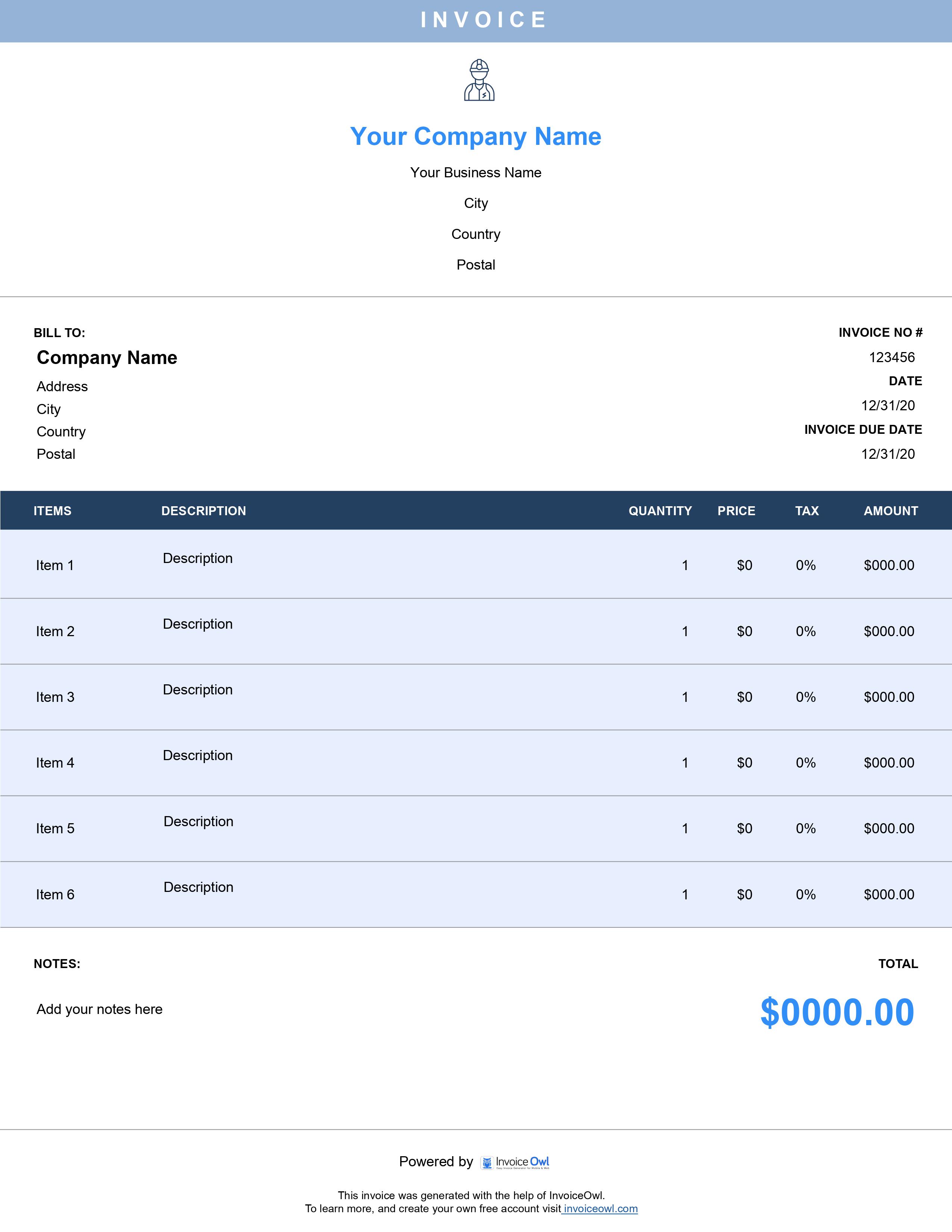
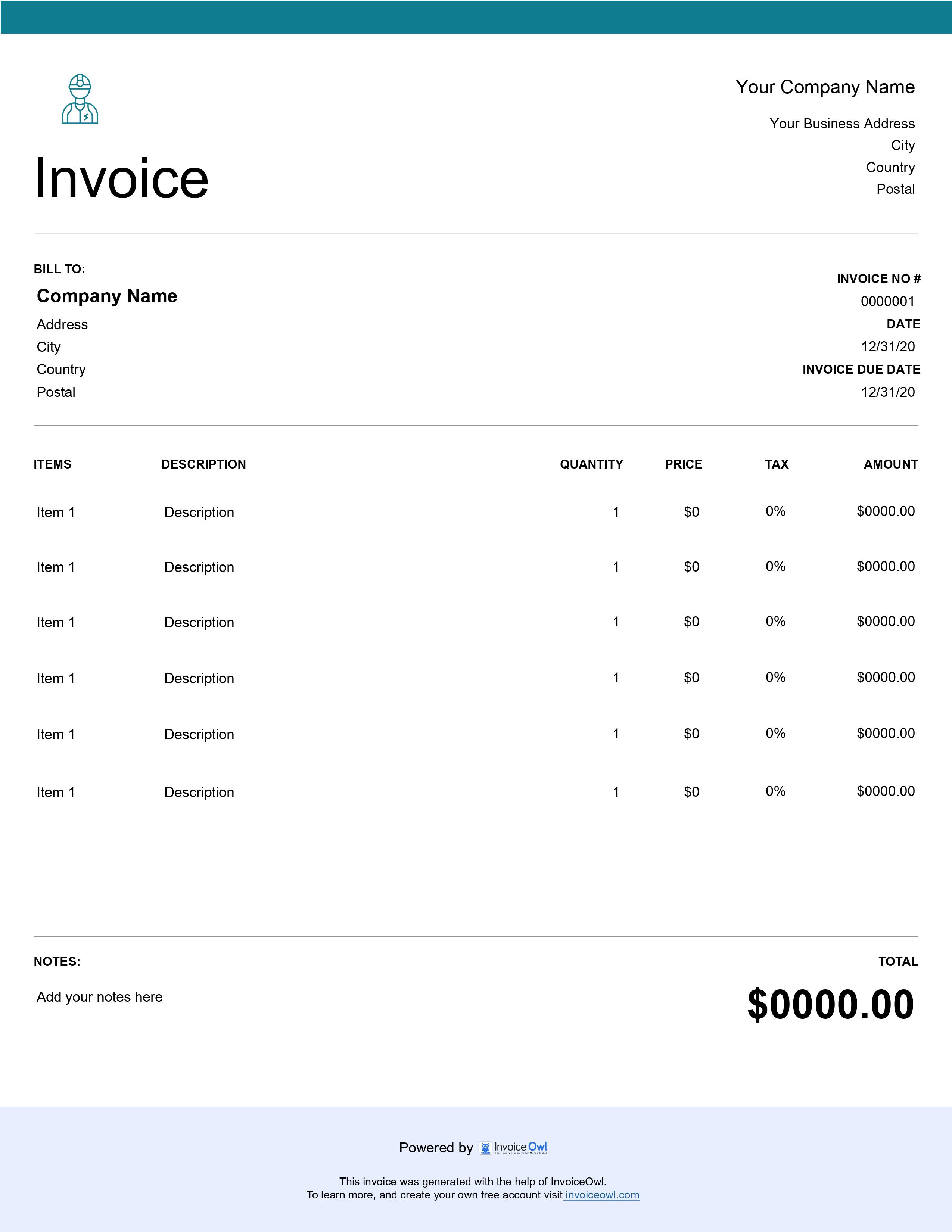
Your electrical invoice must include electrical contractor business name and license number, complete contact information including phone and email, client name and service location address, unique invoice number for tracking purposes, service date and invoice issue date, detailed description of electrical work performed, labor hours and hourly rates or flat fees, itemized materials list with quantities and costs, permit fees and inspection costs if applicable, subtotal, sales tax, and total amount due, payment terms and due date (e.g., Net 30), accepted payment methods and instructions, and warranty information for work performed.
Types of Electrical Work to Invoice
Electrical contractors perform diverse services across residential, commercial, and industrial settings. Your invoices should clearly reflect the specific type of electrical work you've completed.
Electrical Installations - New circuit installations, panel upgrades, lighting fixtures, outlets, switches, and complete electrical system installations for new construction or renovations.
Electrical Repairs - Troubleshooting electrical issues, fixing faulty wiring, replacing damaged circuits, repairing electrical panels, and addressing code violations.
Maintenance Services - Routine electrical inspections, preventive maintenance, testing electrical systems, thermal imaging scans, and scheduled safety checks.
Emergency Services - After-hours electrical emergencies, power outages, electrical fire hazards, and urgent repair services requiring immediate response.
Commercial Projects - Office electrical systems, retail store wiring, warehouse electrical infrastructure, and commercial building electrical installations.
Industrial Work - Heavy machinery wiring, industrial control systems, three-phase power installations, and specialized industrial electrical services.
Streamline Your Electrical Business with InvoiceOwl
InvoiceOwl's electrical estimating and invoicing software simplifies your entire billing process with powerful automated features designed specifically for electrical contractors.
Automated Invoicing Features - Create professional invoices in seconds, resulting in fewer errors and dramatically reduced manual data entry time. Automated templates save hours every week.
Payment Processing Integration - Easily integrate with popular payment systems like PayPal and Stripe. This seamless integration enables clients to pay directly from invoices, resulting in significantly quicker payment collection for your electrical business.
Real-Time Job Tracking - Track all your electrical jobs from estimate to final payment. Monitor invoice status, payment history, and outstanding balances in real-time from any device.
Convert Estimates to Invoices Instantly - Transform approved electrical estimates into invoices with a single click—no retyping required. Save time and eliminate data entry errors.
Automated Payment Reminders - Set up automatic payment reminders for overdue invoices. Reduce the awkwardness of chasing payments while maintaining positive client relationships.
Mobile Invoicing On-Site - Create and send invoices directly from job sites using your smartphone or tablet. Get paid faster by invoicing immediately after completing work.
Cloud-Based Record Keeping - Access all your electrical invoices anytime, anywhere with secure cloud storage. Never lose important billing records again.
Choosing the Right Electrical Invoice Type
As an electrical contractor, choosing the appropriate invoice type for each job ensures accurate billing and smooth payment collection. Different electrical projects require different invoicing approaches.
There's no "one size fits all" approach to electrical invoicing—residential service calls differ from commercial installations, which differ from ongoing maintenance contracts. Ensure your invoice matches the specific needs of each electrical job.
Standard Service Invoice - The most common invoice for electrical work. Perfect for one-time jobs like outlet installations, switch replacements, and basic electrical repairs.
Time and Materials Invoice - Bills clients based on actual hours worked plus materials used. Ideal for troubleshooting jobs, repair work, and projects where scope may change.
Progress Invoice - Used for large electrical projects billed in stages or milestones. Essential for major installations, panel upgrades, and complete rewiring jobs.
Recurring Invoice - Perfect for ongoing electrical maintenance contracts. Automatically bill monthly or quarterly for preventive maintenance services.
Retainer Invoice - Bills clients for pre-paid electrical services or deposits. Common for securing your schedule for large projects.
Emergency Service Invoice - Specifically designed for after-hours emergency calls. Clearly shows premium rates for emergency services while maintaining transparency.
Electrical work invoices typically include several cost components: labor (charged hourly or as a flat rate), materials (wire, conduit, fixtures, panels, breakers), permits and inspection fees, trip charges or service call fees, and applicable sales taxes. Many electrical contractors also include warranty information and payment terms. Being transparent about all costs helps clients understand the value of professional electrical work and reduces payment disputes.
Best Practices for Electrical Invoicing Success
Once you've downloaded your electrical invoice template, follow these proven best practices to ensure professional, complete billing that gets you paid on time.
Invoice Immediately After Job Completion - Don't wait days or weeks to send invoices. Bill immediately after completing electrical work while the job is fresh in everyone's mind.
Include Photos of Work Completed - Add before-and-after photos of electrical installations or repairs. Visual documentation helps clients see the value of your work.
Specify All Code Requirements Met - Note which electrical codes and standards your work complies with. This professional touch builds confidence and justifies your expertise.
Maintain Digital and Physical Records - Keep both digital copies in cloud storage and physical backups of all electrical invoices. Proper record-keeping is essential for warranty claims and taxes.
Offer Multiple Payment Options - Accept various payment methods including credit cards, checks, ACH transfers, and digital payment platforms. More payment options lead to faster payment collection.
Be Transparent About Pricing - Discuss estimated costs before starting work and explain all charges clearly on invoices. Transparency builds trust and prevents payment disputes.
Always include your electrical contractor license number on every invoice. Many jurisdictions require licensed electricians to display their license number on all business documents. Additionally, consider noting that you carry proper liability insurance and workers' compensation coverage—this builds client confidence in your professionalism.
Frequently Asked Questions
An electrical work invoice should include your electrical contractor business name and license number, complete contact information, client details and service location, unique invoice number, service and issue dates, detailed description of electrical work performed, labor hours and rates, itemized materials with quantities and costs, permit and inspection fees, subtotal and total with sales tax, payment terms and due date, accepted payment methods, and warranty information for work completed.
Electrical contractors typically charge using several methods: hourly rates (common for service calls and repairs), flat fees (for standard installations like outlets or switches), time and materials (actual hours plus materials cost), and project-based pricing (fixed price for complete projects). Many electricians also charge trip fees or service call fees, and premium rates for emergency or after-hours work. The chosen method depends on the job type and complexity.
Yes, most jurisdictions require licensed electrical contractors to include their license number on all business documents, including invoices. This demonstrates you're properly licensed to perform electrical work and provides accountability. Including your license number also builds client confidence in your professionalism and legal compliance. Check your local regulations for specific requirements.
Invoice immediately after completing electrical work, ideally before leaving the job site or within 24 hours. Immediate invoicing while the work is fresh in everyone's mind leads to faster payment and fewer disputes. Many electrical contractors using mobile invoicing apps create and send invoices on-site right after the client approves the work, resulting in the fastest payment collection.
Common payment terms for electrical contractors include "Due Upon Receipt" for small residential jobs, "Net 15" or "Net 30" for commercial clients with established payment processes, and progress payments for large projects (such as 50% deposit, 25% at midpoint, 25% upon completion). Clearly state your payment terms on every invoice and discuss them with clients before starting work to avoid confusion.
InvoiceOwl's electrical estimating and invoicing software helps electrical contractors create professional invoices in seconds, convert estimates to invoices instantly, track payment status in real-time, send automated payment reminders, accept online payments, manage client information, generate financial reports, and access all records from any device. The software is specifically designed for electrical contractors and field service businesses, making billing and payment collection significantly faster and easier.
Many electrical contractors include trip charges or service call fees to cover travel time and vehicle costs, especially for service calls and repairs. For larger projects, travel costs may be built into the project price. Be transparent about travel charges by listing them separately on invoices or explaining them in your payment terms. Clients generally understand and accept reasonable travel fees when clearly communicated upfront.