
An estimate approximates the project's total cost; the quote is a more exact measure. Even before a contractor proceeds with executing or planning the execution, they need to provide estimates. These estimates consider the rough scope of work, the approximate timeline for completion, the total workforce required, and finally, the project's cost. Estimates are core to efficiency and help improve the phases and attain milestones. Most businesses that struggle with deliveries have an inefficient planning and estimation system. As part of this article, we will explore what is cost estimation for a project. We will also talk about a business's process for arriving at a realistic cost estimate.
What You'll Learn
- 01Understanding project cost estimation and its fundamental qualities
- 027 key purposes of cost estimation in project management
- 03The 4-step cost estimation process for accurate project budgeting
- 047 different types of cost estimation techniques and when to use them
- 05How to identify direct costs, indirect costs, and contingency expenses
Table of Content
What is Project Cost Estimation?
The process of estimating the costs and other resources required to accomplish a project within a certain scope is known as a cost estimate. Cost estimation generates a total number that establishes a project's budget by taking into consideration all necessary project components. Reliable cost estimates have the following fundamental qualities:
In simple words, cost estimation is the process of identifying the total costs associated with the project. Say you are working on a construction project. As a project manager, you need to ensure sufficient funds to purchase all the required goods and materials. The costs need to be minimized while maintaining project quality. Cost estimates are core to project management. As a project manager, you are entrusted with managing the costs, identifying the approximate budget, and creating the quote. You will also need to ensure minimal to no cost overruns for your project. That's where cost estimates play a pivotal role. It helps predict the costs reliably, considering all aspects of the project. In the case of a construction project, the building materials, resource hiring, labor, and vendor costs are to be included. These costs will also include purchases, hiring, and retention costs. With the correct estimate and scope, you can define the budget for the project.
What is the Purpose of Cost Estimation?
If we talk about the purpose of cost estimation, in brief, it is as follows:
- An estimate of cost helps calculate both the direct and indirect costs involved with project management cost.
- It gives you the complete scope to merge timelines, efforts, and prices for the project to determine if it is profitable.
- It also helps to know if you are managing the right kind of labor.
- Lastly, it helps determine if your project will make a difference or not.
- Let's discuss in detail the purpose of estimating costs and determining a budget before planning or executing the project.
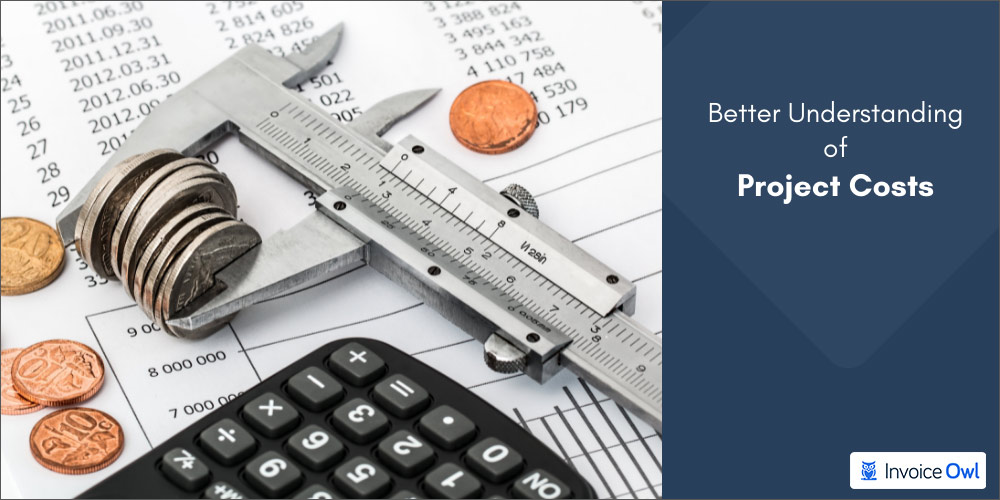
1. Better understanding of project costs
The cost estimation provides the project managers and other people involved with complete visibility into the costs, resource requirements, and other management elements. The stakeholders find it easier to make decisions if there is a detailed understanding of the overall project costs.
As the name suggests, the estimate is an approximation and is subject to change. However, the forecast cannot be too far off from reality. It, therefore, helps to know what would be the profit and overall incurred cost for the project.
Some of the costs involved in projects include:
Direct cost
These costs are interlinked with the project. They include material costs, labor costs, hiring costs, and others.
Labor costs
These include the sum total of wages you will pay the laborers for their efforts and time. You will have to calculate this separately.
Indirect costs
These costs impact the project's budget, but they are not directly connected with your project scope or work. The administration costs, maintenance, infrastructure, and overhead expenses are calculated under this head.
Resources and equipment
The resources' cost needed for the project, such as hardware, software, and licenses
Facilities
The costs associated with using any workspaces that are not owned by the business.
Contractors or vendors
The cost of using independent contractors or third-party vendors.
Risk/contingency costs
Costs that are included in the estimate to account for potential risks or unanticipated project costs.
2. To avail better funding
For a construction project to be successful, you need funders. It is not possible to raise these vast funds all by yourself. That's why you need someone to back your project. However, if you don't have an estimate for the project in terms of timeline, plan, and cost, you may not get the funds. An estimate helps investors know:
- What do you plan to achieve,
- How long it will take,
- The total number of laborers you plan, and
- The rationale behind the project.
It also gives a scope to the project and offers you an insight into the profitability.
3. Determine the materials required
Determining the requirements for all the necessary materials is very important when you are in the contracting business, especially in the construction industry. Additionally, it is equally essential to identify low-cost and high-quality materials.
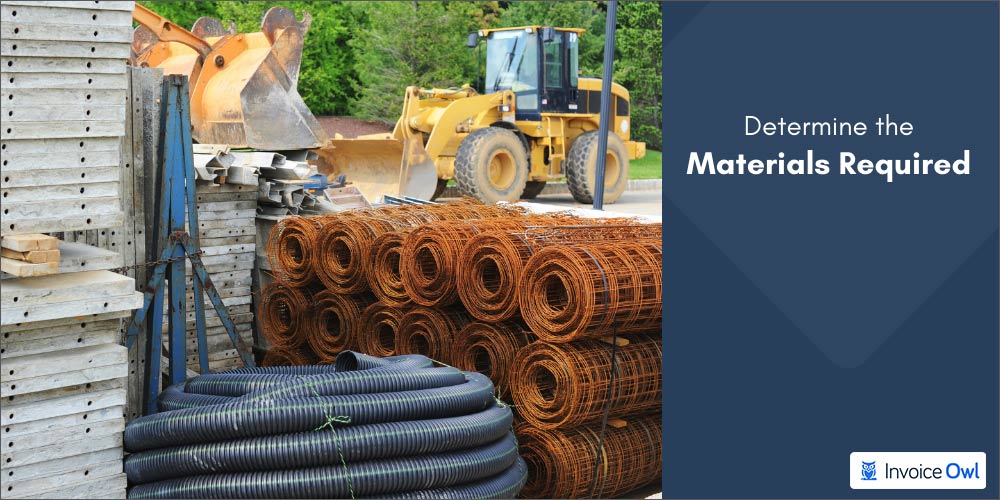
The project estimation costing will give you an insight into the spending allowed for each material, even the smallest screw or bolt needed for the project. As a result, you will approach the vendors accordingly.
4. Know the tools needed
In the planning phase, you also need to know the tools and equipment you require to finish the project. The cost estimates play a pivotal role in identifying the tools and ensuring you have the right equipment by your side. Let's take a bridge construction project. You will need cranes, trucks, blades, and drilling machines to construct the space. How do you get to this part? When you observe the estimate sheet correctly, you will notice that there are aspects of the project you will need the drill machine. The cost estimate helps plan the tools and design the processes.
5. Make resource management efficient
This is one of the most considerable efficiencies you will notice with cost estimation. It allows you to manage hiring, contractual management, and resource planning efficiently. By cost estimation, you denote the number of days and an approximation of the tasks that need to be done. With these details, you will know how many people you need for the particular project. It would help if you had people who would till the land, carry the bricks, and so on. For every activity carried out simultaneously, you will need unique laborers. At the same time, if you need some specialists for the activities involved in managing the project, you will need to appoint them accordingly. The estimates are an excellent way to identify the same.
6. Analyze the cost-benefit ratio
The cost-benefit analysis is important if you want to know whether or not the project is profitable.
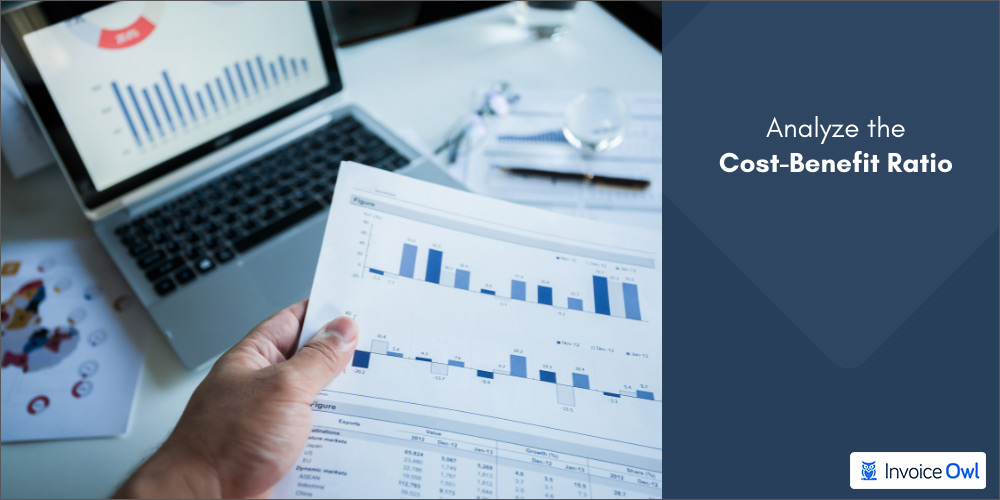
Imagine a project where the cost is x. Your efforts were higher as you had to finish the project within a specific timeline. When you are done with the project, you realize it is not earning the big money you had projected. Either the idea failed or you had not analyzed the benefit against the costs involved. That's why cost-benefit ratio analysis is essential. For the cost, resource investment, and other aspects of project management, you need to study the benefits you will gain. For example, in the case of a construction project, if more people are buying the flat/commercial project, then it is a hit with the people. That means the investment was beneficial to your business. However, if no one buys the plot or residential flat, you might incur losses. In that case, the cost was not beneficial. Instead of analyzing this fact after the project is executed, you can do that in the pre-planning phase. When estimating the direct costs and the overheads, you can also analyze if the project will benefit your business.
7. Make the costing efficient
When you work on cost estimates, you also ensure that the costs aren't too high. For example, you will work on the variables and the fixed factors. You will try to identify where you can reduce the outflow to reduce the overall budget needed. The cost control estimate needs a defining along with an all-inclusive estimate that caters to all aspects of the project.
What is the Cost Estimation Process?
It is essential to take the proper steps to craft a high-quality cost estimate to ensure you have met the budget requirements. Here we will take you through the entire process of estimate creation.
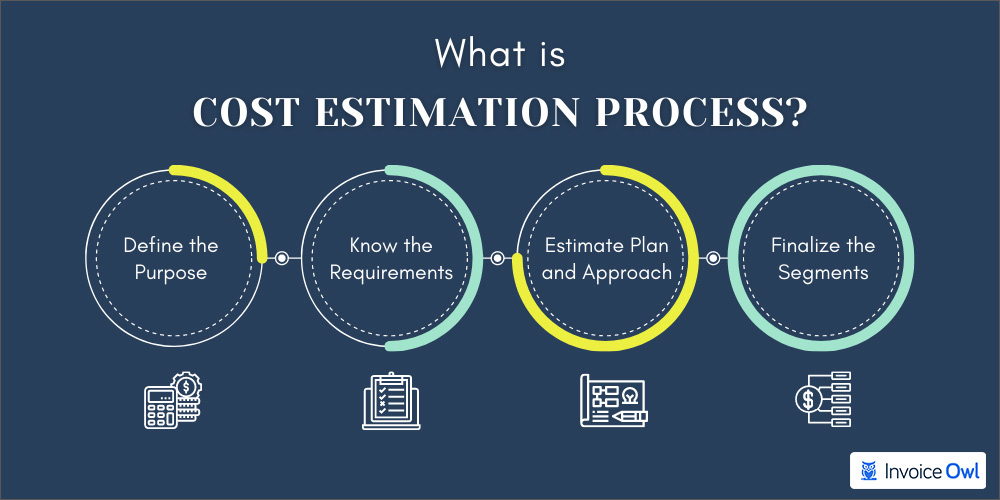
1. Define the purpose
Start by knowing why estimating project costs is important. Do you want to attract investors to fund your project? Are you looking to identify the overall budget for your project? When you are clear with the purpose, you should know the overall vision of the estimate and what are the different things you want to see in an accurate cost estimate. Similarly, you should also determine the details you need in the forecast.
2. Know the requirements
When you plan to create the cost estimate for the project, you should know everything there is about the project. It should include the type of project, what the business aims to achieve, some of the initial requirements, and other details. It will help build the scope of the project, which will eventually translate into the estimate. Let's take time and cost estimates for projects example. To estimate cost for a construction project, surveying the land is an essential requirement. You will need to add the resources, cost, and timeline for this phase. If you aren't aware of the project requirements or scope, you won't be able to determine this estimate.
3. Estimate plan and approach
You must choose the right plan and approach to arrive at the cost estimate. The bottom-up estimate analysis method and a parametric model can help you arrive at the correct estimate for your future costs. Which type of estimate procedure will be most suitable? For example, if the requirements are already available, you might want to ditch this step in the approach. If your assessment depends on the past project cost estimation, you will need to check that.
4. Finalize the segments
What all headings will your estimate cover? Let's take a cost estimate example of a remodeling project. If you plan a remodeling project, you will need to include a demolition phase. You should know the costs involved in demolition, which consist of labor, equipment, efforts, and material costs.
What are the Various Types of Cost Estimates in Project Management?
It is important to know the various approaches and types of estimates in project management that can help you define a successful quote for a future contract. If you are looking for the answer to your question about how to estimate project costs, then you can use one of these various types of cost estimation tools and techniques.
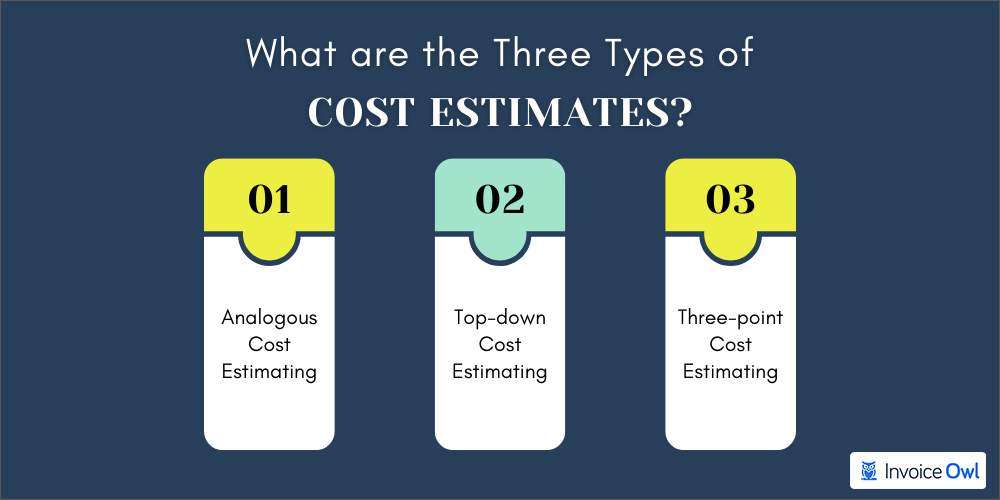
1. Analogous cost estimating
The analogous estimating method depends on past projects and their budgets to estimate current costs and resources. It will also consider the project manager's experience in handling similar projects. This estimating approach is primarily used to identify the scope and duration of the project. It also involves knowing if there are other similar projects and how much they cost. Lastly, you will be basing the estimation on the past budget and timelines.
2. Parametric estimating
In parametric estimating, specific project expenses are given a monetary value using statistical modeling and historical data. With this method, the core unit project cost for a certain project component is identified. Although it takes more initial data to effectively predict costs, it is far more exact than analogous estimation.
3. Top-down cost estimating
In this technique, the project manager budgets the entire project. After that, they break the costs into individual categories and sub-categories (Top-down cost estimating). Lastly, they break it down to the minutest detail, such as materials. It involves step-by-step estimating, starting from the top of the project scope.
4. Bottom-up estimating
Bottom-up estimating is time-consuming but more detailed than any other estimating technique. It utilizes estimates of individual jobs and then adds them up to calculate the entire project's cost. It is one of the most commonly used cost estimation techniques in construction projects and other complicated projects with many variables.
5. Three-point cost estimating
There are three approaches to three-point cost estimating project cost management- the positive approach, the pessimistic approach, and the likely approach. After coming through all three assessments, a final estimate is created for the project.
6. Reserve analysis
The amount of the necessary contingency reserve is determined by the reserve analysis. This strategy seeks to manage uncertainty.
7. Dynamic solutions
Whenever you're in the process of cost estimating, using an online tool to compile all of your estimated project costs might be helpful. Many of these strategies may be utilized in conjunction with estimating and invoicing software, like InvoiceOwl, to streamline the estimating procedure. You can use our software to create professional, clear, and accurate estimates. You can even send the estimate to the client with just a click and get approval quickly.
Create Estimates In Minutes!
Generate customizable, professional, and accurate estimates with just a few clicks using InvoiceOwl.
Start Your FREE TrialFrequently Asked Questions
Project cost estimation is the process of identifying the total costs and resources required to accomplish a project within a certain scope. It generates a total number that establishes a project's budget by considering all necessary project components including direct costs, indirect costs, labor, materials, equipment, and contingency reserves.
Cost estimation helps contractors secure funding, manage resources efficiently, determine material and tool requirements, analyze cost-benefit ratios, and create competitive quotes. It provides complete visibility into project costs and helps ensure minimal cost overruns while maintaining project quality.
The main types include analogous cost estimating (based on past projects), parametric estimating (using statistical modeling), top-down estimating (starting from total budget and breaking down), bottom-up estimating (adding individual task costs), three-point estimating (using optimistic, pessimistic, and likely scenarios), and reserve analysis (for managing uncertainty).
Direct costs are interlinked with the project and include material costs, labor costs, and hiring costs. Indirect costs impact the project's budget but aren't directly connected to project scope or work, such as administration costs, maintenance, infrastructure, and overhead expenses.
The cost estimation process involves four key steps: 1) Define the purpose of your estimate, 2) Know all project requirements and scope, 3) Choose the right estimation plan and approach, and 4) Finalize the segments and headings your estimate will cover.
Conclusion
A cost estimate for businesses acts as the first step in planning your project. It not only assists in project cost estimating but also helps with indirect costs that impact your success. When you approach cost estimates, you should consider suitable cost estimating techniques. Not all approaches will help you achieve the budget and improve your quotes. It is also the stepping stone to project planning and enhancing the project goals. You will be able to plan and execute your project with the help of accurate project cost estimates.
Related Resources
15 Best Flooring Estimating Software: Complete Guide
Compare the top 15 flooring estimating software solutions. Detailed reviews, pricing, and features to help contractors make informed decisions.
Read more
How to Bid a Paint Job- Complete Estimation Process
Master bidding for paint jobs with expert insights on pricing, materials, labor, and insurance. Complete guide for painting contractors to boost profitability.
Read more
What is a Quote or Quotation for Contractors?
A price quote can either be a document or verbal communication that gives a fixed price for a project. Learn the rules of sending out a price quote in business.
Read more
How to Price Drywall Jobs: Everything About Drywall Pricing & Estimation
Learn how to price drywall jobs and what factors you should consider as a drywall contractor when estimating drywall costs.
Read more
6 Best Construction Estimating Software Contractors Should Try
Associated with the construction industry for a while? Explore 6 most popular estimator software to reduce your business paperwork. Follow the given steps to make construction estimates using automated accounting software.
Read more
Construction Profit Margins: How to Track and Increase it
Learn how to track and increase construction profit margins with expert strategies. Maximize profits and ensure sustainable business growth. Start today.
Read more
Can You Charge for an Estimate as a Contractor?
Complex projects involving detailed designs and multiple revisions may incur some charges for estimates. Learn when to charge for an estimate as a contractor.
Read more
An Ultimate Contractor Pricing Guide for 2026
As a contractor, pricing your services might be a little tricky. Here's a comprehensive contractor pricing guide for building a profitable business.
Read more15 Best Flooring Estimating Software: Complete Guide
Compare the top 15 flooring estimating software solutions. Detailed reviews, pricing, and features to help contractors make informed decisions.
Read moreHow to Bid a Paint Job- Complete Estimation Process
Master bidding for paint jobs with expert insights on pricing, materials, labor, and insurance. Complete guide for painting contractors to boost profitability.
Read moreWhat is a Quote or Quotation for Contractors?
A price quote can either be a document or verbal communication that gives a fixed price for a project. Learn the rules of sending out a price quote in business.
Read moreHow to Price Drywall Jobs: Everything About Drywall Pricing & Estimation
Learn how to price drywall jobs and what factors you should consider as a drywall contractor when estimating drywall costs.
Read more6 Best Construction Estimating Software Contractors Should Try
Associated with the construction industry for a while? Explore 6 most popular estimator software to reduce your business paperwork. Follow the given steps to make construction estimates using automated accounting software.
Read moreConstruction Profit Margins: How to Track and Increase it
Learn how to track and increase construction profit margins with expert strategies. Maximize profits and ensure sustainable business growth. Start today.
Read moreCan You Charge for an Estimate as a Contractor?
Complex projects involving detailed designs and multiple revisions may incur some charges for estimates. Learn when to charge for an estimate as a contractor.
Read moreAn Ultimate Contractor Pricing Guide for 2026
As a contractor, pricing your services might be a little tricky. Here's a comprehensive contractor pricing guide for building a profitable business.
Read more15 Best Flooring Estimating Software: Complete Guide
Compare the top 15 flooring estimating software solutions. Detailed reviews, pricing, and features to help contractors make informed decisions.
Read moreHow to Bid a Paint Job- Complete Estimation Process
Master bidding for paint jobs with expert insights on pricing, materials, labor, and insurance. Complete guide for painting contractors to boost profitability.
Read moreWhat is a Quote or Quotation for Contractors?
A price quote can either be a document or verbal communication that gives a fixed price for a project. Learn the rules of sending out a price quote in business.
Read moreHow to Price Drywall Jobs: Everything About Drywall Pricing & Estimation
Learn how to price drywall jobs and what factors you should consider as a drywall contractor when estimating drywall costs.
Read more6 Best Construction Estimating Software Contractors Should Try
Associated with the construction industry for a while? Explore 6 most popular estimator software to reduce your business paperwork. Follow the given steps to make construction estimates using automated accounting software.
Read moreConstruction Profit Margins: How to Track and Increase it
Learn how to track and increase construction profit margins with expert strategies. Maximize profits and ensure sustainable business growth. Start today.
Read moreCan You Charge for an Estimate as a Contractor?
Complex projects involving detailed designs and multiple revisions may incur some charges for estimates. Learn when to charge for an estimate as a contractor.
Read moreAn Ultimate Contractor Pricing Guide for 2026
As a contractor, pricing your services might be a little tricky. Here's a comprehensive contractor pricing guide for building a profitable business.
Read more