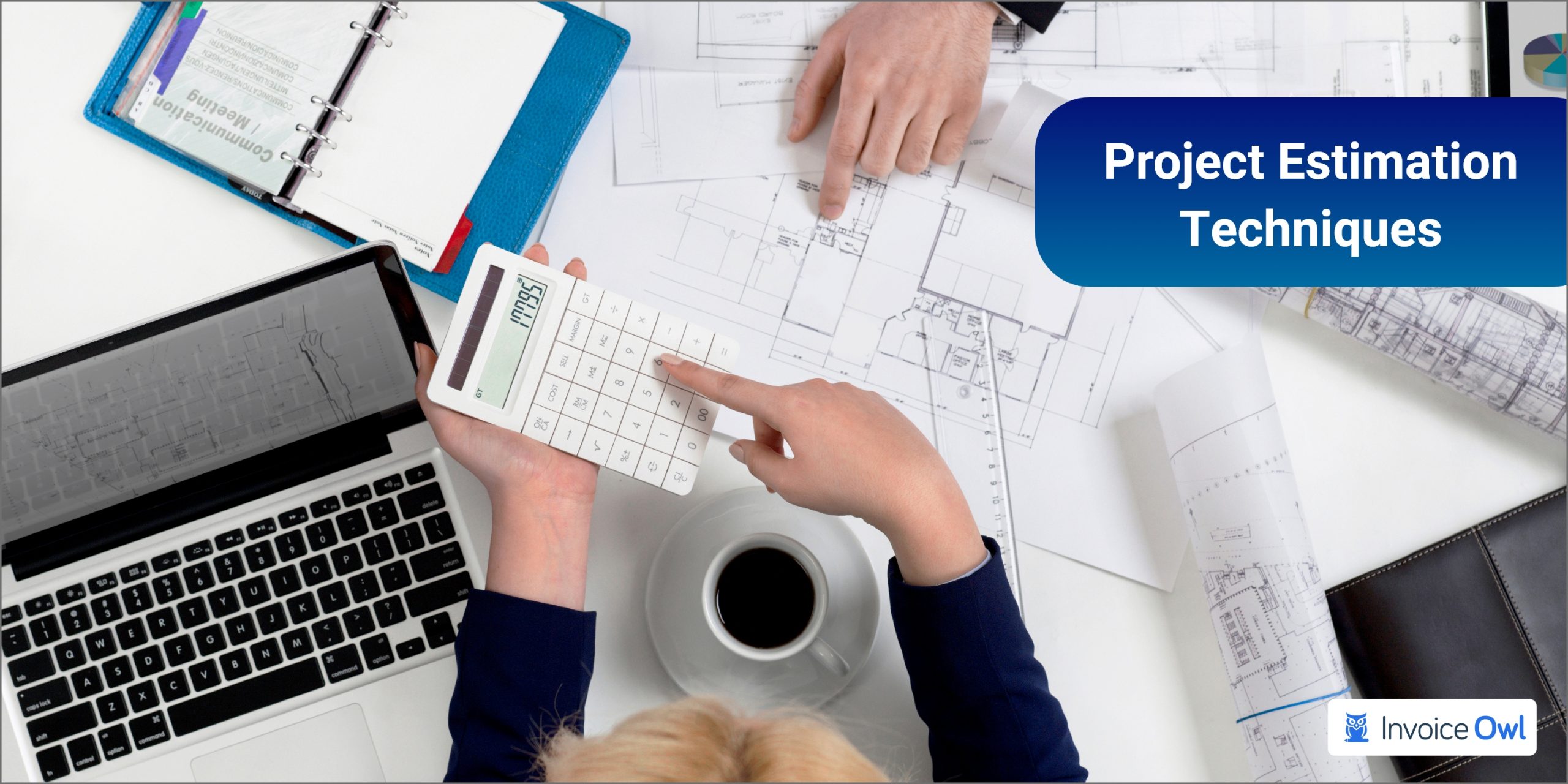
Estimation is a complex yet essential part of your project management. Say you were to start working on a new building project. You are responsible for more than just the construction part; you manage the work from start to end. In this case, you must determine the goals, narrow down the scope, and define the cost. Getting the exact number may not be feasible for any project manager right at the start. You will onboard contractors for the different parts of the project. You just welcomed your architect and asked them to define the blueprint for the building. They will send you an estimate of the cost involved, the timelines, and the overall scope. Once you confirm it, this will convert into a budget. No two project estimates are alike and confined to the same methodology. With each estimation needed, the project estimation techniques change too. There are pros and cons and use cases attached to each estimation technique. As part of this guide, we will look into the need for project estimation, the different methods, and how to choose the most suitable one.
Key Takeaways
- 01Understanding why project estimation is crucial for better resource allocation and cost management
- 02Learning 5 proven project estimation techniques including analogous, parametric, and bottom-up methods
- 03Identifying key factors to choose the right estimation technique for your project type
- 04Determining when to use software tools vs manual estimation methods
- 05Best practices for improving estimation accuracy and project success rates
Table of Content
- The Need for Estimates
- What are the Different Methods of Estimation?
- What is the Best Way to Estimate a Project?
- What are Project Estimation Techniques in Software Engineering?
- Conclusion
The Need for Estimates
When project managers are asked to share estimates or call for them, they ask why. Do you need an assessment to get started? Isn't a quote enough? The answer is yes; you need an estimate. It is the starting point to devise the quote and raise the bid. Here, we will talk about the benefits of working on an estimate and how it helps get started.
Better Resource Allocation
When you estimate the project, as a project manager, you better understand how many people you need to complete the project. You need to finish the full tiling and interiors of a building project in 3 months. If the building is enormous and the timeline comparatively less, you should consider hiring more resources. Similarly, if your software project needs more hands on the deck, you can hire freelancers and independent workers. You don't always need to engage your team to get the job done. Estimates can help decide whether you need to hire a permanent member or a freelance resource.
Effective Cost Management
When you have the estimates ready at your disposal, you know the actual cost of the project. For example, three-building units need three different sets of the same material. So, effectively your bill of material costs is multiplied by three. You will add the labor charges, the overall construction charges, and other details into the cost estimates. Eventually, you will have a total budget for the development in your hand to share with the project management team. On approval, your budgets are sanctioned, and your project goes on the floor. You can get to a defined budget when you estimate the overall cost after going through the entire scope and project timelines.
Determine the Scope
When you set out to define the estimate for the project, you also involve yourself with determining the project scope. You know what the project entails regarding days, the fundamental things you need to get done, the goals, tasks, and even the sub-tasks. For example, when you start on a construction project, the scope would involve land, identifying how to till the ground to make it construction friendly, creating the blueprints, 3D rendering, the groundwork, and other tasks. Each task would have numerous subtasks. The scope estimation is part of your project estimate, which will help determine resources and costs.
Assess the Project
The whole deal boils down to feasibility and profits. You need to be sure if the project is doable and profitable. If for some reason, the project doesn't fit well with your profit goals or isn't part of your vision, you will know it through the estimates. The scope helps determine whether the project will score a profit or loss for your business. If it is a loss-making business, you can easily decide not to proceed with it.
What are the Different Methods of Estimation?
You are now completely aware of the need for estimating your projects. It is now time to understand how to calculate the cost and scope. Here we will discuss the top five project estimation techniques that will help you determine the costs and timeline.
Choose your estimation technique based on data availability and project complexity. Simple projects benefit from analogous estimation, while complex ones require bottom-up approaches.
Analogous Estimation
When your past projects are considered while estimating the current ones, you will get the analogous estimation method. In this method, the manager looks at all the past projects and how they are managed. It helps understand:
- If there are similarities between the current and past project
- Has the business handled a project similar to this one in the past?
- Insights into the cost, efficiency, and resource allocation for the past projects
The above image shows how analogous estimating is done in projects. With the correct data and proper analysis, the managers can get accurate data on the approximate cost and scope of the current project. Project managers should be well-versed with analytics and data management to estimate using this technique. At the same time, the data for all the past projects should be readily available.
Parametric Estimation
This estimation technique links the different project parameters and their relationship with cost and scope estimation. For instance, if you were to add five features, the cost would be specific to the software project. However, if the number of features increases, your project cost automatically increases. To determine the estimate, you will need to link the different parameters with the project cost. For this estimation to work in your favor, you will need to list all the factors related to project scope and price. You will also need to introduce scalability to your estimation for a more accurate result.
Bottom-up Estimation
Bottom-up Estimation is one of the best project estimation techniques for when you have a project team and have already defined the project scope. This is best suited for a project where details are broken down into different segments. You will consider each element of the project and evaluate the individual scope. You will estimate the cost for every detail and work out how to make it cost-efficient. When using this estimation technique, you will be appointing different members to help you manage the costs. You will individually define the cost breakup and then calculate the total budget.
Three-point Estimation
In this case, the project manager will calculate three different values
- Positive valuation: the lowest possible cost estimate
- Pessimist valuation: the highest possible cost estimate
- The probable valuation: this is the exact estimate that is possible for the particular project
A continuous valuation is developed using these three points of estimation. You will consider all three values to define the ultimate estimate for the project.
Case Points
You consider the use cases, define the software project and finally define the project requirements. Before finalizing the project scope and timelines, you will also consider the environmental and technical factors. One of the detailed project estimation techniques is where you need to determine the overall project details to realize project estimates.
Comparison of Project Estimation Techniques
| Technique | Best For | Data Required | Accuracy Level |
|---|---|---|---|
| Analogous Estimation | Similar past projects | Historical data | Moderate |
| Parametric Estimation | Scalable projects | Parameter relationships | High |
| Bottom-up Estimation | Detailed projects | Comprehensive scope | Very High |
| Three-point Estimation | Risk assessment | Multiple scenarios | High |
| Case Points | Software projects | Use cases & requirements | High |
What is the Best Way to Estimate a Project?
The selection of a suitable estimation technique is important to successful project development. Here, we will take you through the factors to consider when estimating a project.
Goals of the Project
Is your estimation technique used to determine the risk associated with the project? Are you looking to define the scope of the project? Do you already have a defined scope and want to establish the estimates along those lines? What is the goal of the estimation technique? What do you want to establish in terms of scope? Once you have defined the same, it will help you identify the best technique.
Availability of Data
This is important when you are considering the different estimation techniques. In certain cases, you will need past data to estimate the project cost and timelines. If the data is not available, you will not be able to define the estimates. Before you choose the estimation technique, make sure to consider the availability of the data.
Clarity of Requirements
It is important to note that your estimation technique choice also depends on the clarity of requirements. If your scope is clear, you can choose the three-point estimation technique. However, if it is changing or unclear, you will need to use the technique that helps establish the scope as well.
Type of Project
Is this a project that you have done earlier? In that case, the project estimation technique previously used can be taken into consideration. However, if this is a first-time project, you might want to estimate the entire project from scratch. At this point, you will need to use a technique best suited for ground-up projects.
What are Project Estimation Techniques in Software Engineering?
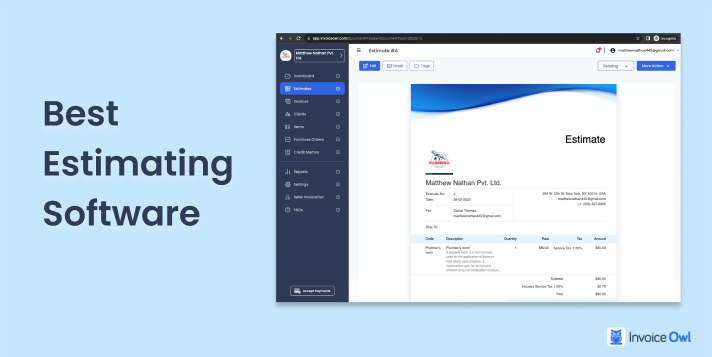
As a project manager who needs to provide the estimates for the upcoming project, you need to have all the right techniques up your sleeve. However, if you don't want to indulge in manual techniques and the cumbersome affairs involved with calculating the scope and timelines using a calculator, you can use the software tools available. These tools help you automate the estimate creation process, translating the estimates to quotes and then invoices. They help identify the best solutions for your project estimation requirements.
When choosing estimation software, prioritize tools that align with your budget, solve your specific pain points, and offer the internal features your team needs to succeed.
To find the right tool, you need to consider the following factors
Budget
Whether you are investing in software tools or an expert project manager, you need to define the budget for it. It will help you choose the tool that best fits your requirement. Setting aside the budget from your project management costs can help you identify the appropriate tool.
Pain Points
Identify the inherent challenges that you want to resolve with the tool. Is the manual work time-consuming? Do you want to automate estimation? Are you looking at estimation tools to improve your project estimates? When you define the pain points, choosing the tools becomes easy.
Internal Features
What are some of the features that you need in the tool? If you are an experienced project manager, you would want tools that can help convert data into insights. This tool will help with the analogous estimation technique. Make sure you have a list of requirements to choose the apt tool.
Create Lightning-Fast Estimates and Invoices With InvoiceOwl
Cut short the time you spend on estimating system and invoicing by using the InvoiceOwl. It helps you with predesigned templates and autofill data to create accounting documents 10x faster.
Try for FREE Now!Frequently Asked Questions
Bottom-up estimation is generally the most accurate because it breaks down the project into detailed components and estimates each individually. However, it also requires the most time and effort. Three-point estimation is also highly accurate as it considers multiple scenarios.
Use analogous estimation when you have limited time, need a quick estimate, and have access to historical data from similar past projects. It works best in the early stages of project planning when detailed information isn't yet available.
Analogous estimation uses historical data from similar projects as a whole, while parametric estimation uses statistical relationships between variables and project costs. Parametric estimation is more precise when you have reliable parameters to work with.
Three-point estimation calculates optimistic, pessimistic, and most likely scenarios, providing a range of possible outcomes. This helps project managers identify potential risks and prepare contingency plans for different scenarios.
Yes, combining techniques often yields better results. For example, you might use analogous estimation for high-level planning and bottom-up estimation for detailed phase planning. Using multiple techniques provides validation and improves overall accuracy.
The best tool depends on your needs. InvoiceOwl is excellent for contractors who need to create estimates and convert them to invoices quickly. For complex projects, tools with analytics capabilities help with analogous estimation by turning historical data into insights.
Conclusion
As a project manager, in charge of a big project, you should use the right project management techniques. It is important to choose the technique that best fits your estimate needs. For example, if you have enough data, then analogous estimation is suited for you. However, if you are planning to break down a major project into smaller bits, you can opt for bottom up estimation. It is equally important to settle for a good estimation software like InvoiceOwl. This software will help you speed up estimation and win the projects successfully without spending more than a few minutes. Moreover, the estimate and invoice software will automate all the other accounting work as well like creating invoices, credit memos, purchase orders, receiving & managing payments, and reports. Start your FREE Trial TODAY and explore many other features of the software.
Related Resources

Are estimates free? Know When Can You Charge for Estimates
Are you stuck between deciding whether to offer free estimates or charging a fee for them? Here are the general guidelines for charging for estimates.
Read more
6 Best Construction Estimating Software Contractors Should Try
Associated with the construction industry for a while? Explore 6 most popular estimator software to reduce your business paperwork. Follow the given steps to make construction estimates using automated accounting software.
Read more
Can You Charge for an Estimate as a Contractor?
Complex projects involving detailed designs and multiple revisions may incur some charges for estimates. Learn when to charge for an estimate as a contractor.
Read more
A Step-by-Step Guide to Convert an Estimate to an Invoice
Follow our comprehensive guide to converting an estimate to an invoice and getting paid faster. Learn how to streamline your invoicing process with InvoiceOwl.
Read more
How to Bid a Construction Job
Looking for how to prepare a constructive bid? Gear up to get more insights on how to bid a construction job for your next construction job. Read more now.
Read more
How to Bid For Landscaping Jobs
Learn how to write a receipt with key elements, templates, and digital solutions for proper formatting and best practices in business record-keeping.
Read more
A Complete Guide on How to Bid on Plumbing Jobs
Want to know how to bid on plumbing jobs in a professional way? Learn how specific plumbing jobs differ and how to calculate pricing in seconds.
Read more
How to Calculate Overhead Cost With 100% Accuracy?
If you are not sure how to calculate overhead cost, here is a comprehensive guide to achieve 100% accuracy and estimate the project better.
Read moreAre estimates free? Know When Can You Charge for Estimates
Are you stuck between deciding whether to offer free estimates or charging a fee for them? Here are the general guidelines for charging for estimates.
Read more6 Best Construction Estimating Software Contractors Should Try
Associated with the construction industry for a while? Explore 6 most popular estimator software to reduce your business paperwork. Follow the given steps to make construction estimates using automated accounting software.
Read moreCan You Charge for an Estimate as a Contractor?
Complex projects involving detailed designs and multiple revisions may incur some charges for estimates. Learn when to charge for an estimate as a contractor.
Read moreA Step-by-Step Guide to Convert an Estimate to an Invoice
Follow our comprehensive guide to converting an estimate to an invoice and getting paid faster. Learn how to streamline your invoicing process with InvoiceOwl.
Read moreHow to Bid a Construction Job
Looking for how to prepare a constructive bid? Gear up to get more insights on how to bid a construction job for your next construction job. Read more now.
Read moreHow to Bid For Landscaping Jobs
Learn how to write a receipt with key elements, templates, and digital solutions for proper formatting and best practices in business record-keeping.
Read moreA Complete Guide on How to Bid on Plumbing Jobs
Want to know how to bid on plumbing jobs in a professional way? Learn how specific plumbing jobs differ and how to calculate pricing in seconds.
Read moreHow to Calculate Overhead Cost With 100% Accuracy?
If you are not sure how to calculate overhead cost, here is a comprehensive guide to achieve 100% accuracy and estimate the project better.
Read moreAre estimates free? Know When Can You Charge for Estimates
Are you stuck between deciding whether to offer free estimates or charging a fee for them? Here are the general guidelines for charging for estimates.
Read more6 Best Construction Estimating Software Contractors Should Try
Associated with the construction industry for a while? Explore 6 most popular estimator software to reduce your business paperwork. Follow the given steps to make construction estimates using automated accounting software.
Read moreCan You Charge for an Estimate as a Contractor?
Complex projects involving detailed designs and multiple revisions may incur some charges for estimates. Learn when to charge for an estimate as a contractor.
Read moreA Step-by-Step Guide to Convert an Estimate to an Invoice
Follow our comprehensive guide to converting an estimate to an invoice and getting paid faster. Learn how to streamline your invoicing process with InvoiceOwl.
Read moreHow to Bid a Construction Job
Looking for how to prepare a constructive bid? Gear up to get more insights on how to bid a construction job for your next construction job. Read more now.
Read moreHow to Bid For Landscaping Jobs
Learn how to write a receipt with key elements, templates, and digital solutions for proper formatting and best practices in business record-keeping.
Read moreA Complete Guide on How to Bid on Plumbing Jobs
Want to know how to bid on plumbing jobs in a professional way? Learn how specific plumbing jobs differ and how to calculate pricing in seconds.
Read moreHow to Calculate Overhead Cost With 100% Accuracy?
If you are not sure how to calculate overhead cost, here is a comprehensive guide to achieve 100% accuracy and estimate the project better.
Read more