

The biggest challenge that an organization faces is determining the efforts and costs associated with a new project. That's why at least 16% of construction projects exceed the estimated cost. And transparent estimation process is the only key to ensuring the projects are on track and within the budget defined.
Traditional approaches to project management and estimation included studying past projects, identifying similar data, and crunching the numbers to estimate the current project costs and timeline. However, it would also mean you may go overboard with your budget or timeline. So this wasn't exactly the best estimation technique.
We were basing the estimations at a macro level, whereas it is essential to go slightly to a micro-level before you completely understand.
The parametric estimation technique is a modern formula that allows you to be slightly more accurate about the cost and timeline definitions.
Here we will take you through everything you need to know about parametric estimates as a project estimation technique.
What You'll Learn
- 01How parametric estimating uses statistical relationships to calculate project costs and timelines
- 02When to use parametric estimating versus other estimation methods
- 03Key advantages including accuracy, speed, and reduced effort
- 04Best practices for implementing parametric estimation in your projects
- 05Common challenges and how to overcome them when using this technique
Table of Content
- Understanding Parametric Estimating
- When to Use Parametric Estimating
- Top Advantages of Using Parametric Estimating
- Best Practices and Applications
- Common Challenges
- Comparison with Other Methods
- How InvoiceOwl Helps With Parametric Estimating
- Conclusion
Understanding Parametric Estimating
This estimation technique is statistically evolved, wherein an equation governs the results. It is one of the most accurate techniques to calculate the total time, cost, and resources for a particular project.
In this technique, the project manager will combine the statistical and historical data to identify a statistical relationship between the variables involved.
Core concepts and principles
For example, in a delivery project, if you are supposed to produce 20 bungalows in a posh area with modern architecture and furnishing. But first, you will check how much time it took for a similar past project.
Say it took six months to complete a project with 40 bungalows involved. So, you use a ratio-proportion connection to identify the total time it will take for 20 homes.
At the time of project planning or project management, business owners utilize parametric estimating techniques for project cost estimation. They may also use it in the middle of the project if adjustments are needed. Once you've developed a formula, you may use it as a guide for future strategies.
Key components of parametric estimating
Parametric estimating uses a systematic approach to create accurate project forecasts. Here are the key components:
The equation that is used to perform parametric estimating is:
E_parametric = A_old/P old * P curr
Parametric estimate = Historical value of the cost and time/historical value of the parameter * value for the new project.
You can use this parametric estimating formula to log your results whenever you want to calculate an approximate estimate for cost, time, or resources. The Project Management Institute identifies it as the process of estimating project parameters by utilizing a statistical link between historical data and other relevant factors.
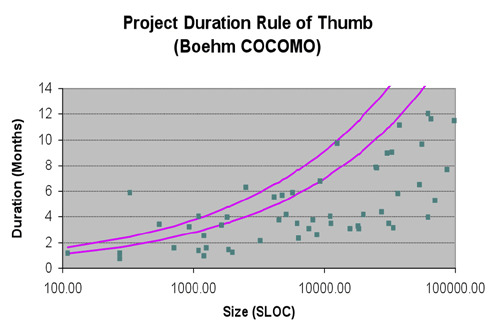
Image via: researchgate.net
When to Use Parametric Estimating
During the design phase of the project, parametric cost estimating is utilized to gain a general idea of the project cost. The goal is to comprehend the project's whole cost on the basis of the weight, measurements, etc. You may assess the anticipated time and resources required to carry out the project after you have an overview or a basic insight.
Although parametric estimating is accurate and precise, it is not always utilized to estimate project values. When using parametric estimating, three requirements must always be satisfied. If one of these requirements isn't met, using this approach may be challenging. Instead, you should consider alternative methods like analogous estimating.
The three requirements are:
Sufficient historical data
Insufficient historical information on any of the factors involved in the entire project prevents a project manager from doing parametric calculations. If you want to conduct a parametric estimate, you must gather data from a variety of sources.
Measurable parameters
As a quantitative approach, parametric estimating requires measurable parameters. Your data should be such that it can easily be transformed into easy - to - understand units, such as dollars, minutes, or hours.
Scalability
Quantitative techniques are used in parametric estimating for the purpose of ascertaining the statistical connection between parameter values. In order to provide precise forecasts regardless of variances between the projects being evaluated, the parameters should be scalable.
The parametric estimate approach, for instance, may only be used if the project team is expandable and if a prior construction project required 400 man-days to finish. The underlying data (regression coefficient) will be extrapolated to get the expected labor expenses for the present construction project.
However, parametric estimate is not a good method for forecasting project costs if the project team is just not expandable and you want to look at alternate project execution strategies (such as outsourcing some parts of the project).
Top Advantages of Using Parametric Estimating
If you are still unsure of whether you should go ahead with parametric estimating, here are a few advantages that you should look at.
Accuracy
One of the biggest reasons for incorporating parametric estimation techniques is its accuracy. Considering it establishes a statistical correlation between the different parameters (historical and current), it provides higher accuracy than other techniques. It also ensures that you can reuse models for other projects to gain accurate results. To make the model reliable, you should include as much raw data as possible.
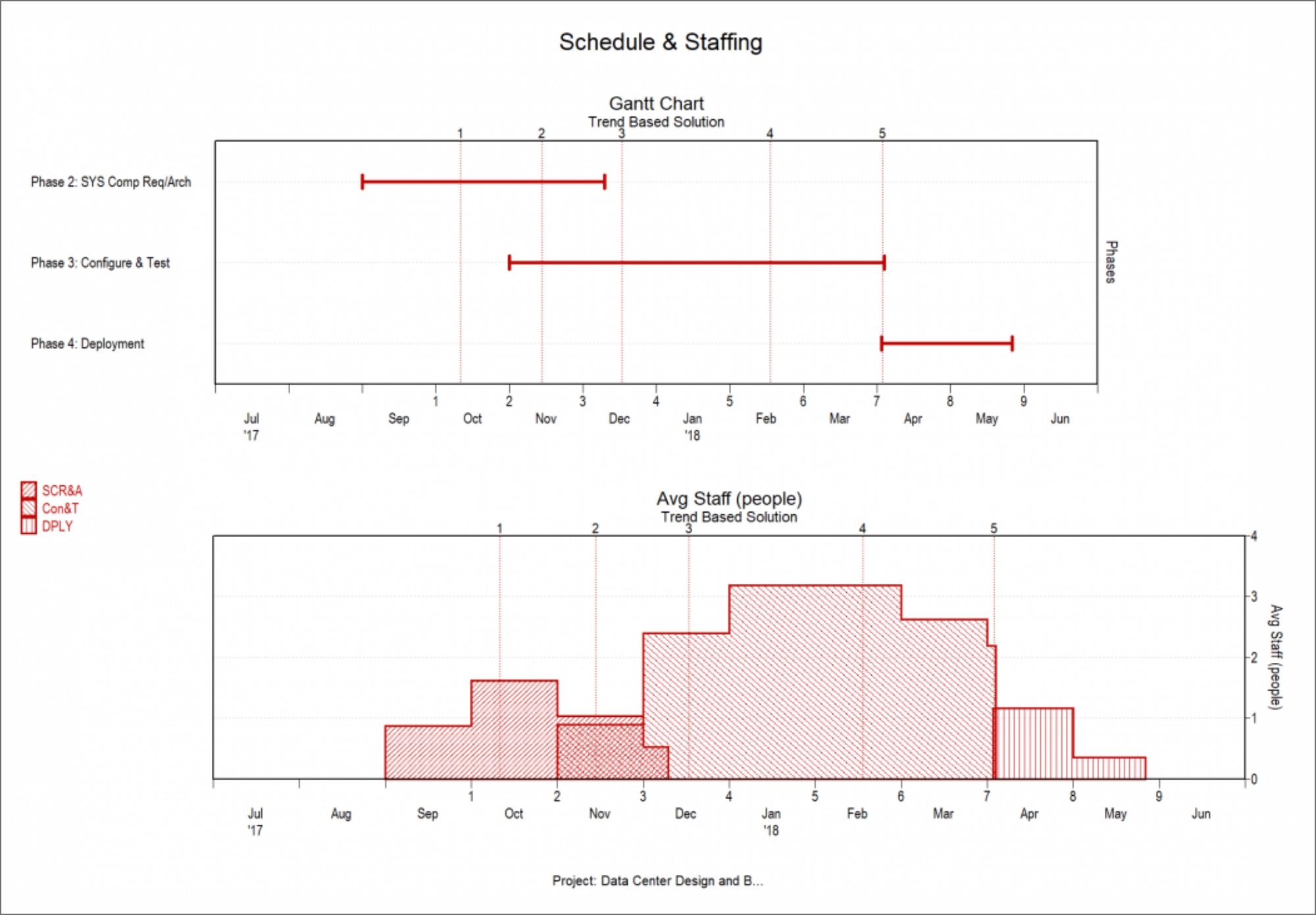
Image via: qsm.com
This image showcases how parametric estimating can accurately define the schedule and staffing for large IT projects.
Up-to-speed outcomes
When you use parametric estimation to deliver the estimates, you are on the positive side of accuracy. More people are likely to believe the outcome of this estimation technique. You would notice that stakeholders will be ready to initiate the project based on this value. As a result, it is a very usable and helpful technique. The outcomes use the past data, but the outcome is not a guesswork. It is entirely dependent on the calculations made from the past data.
Reduced efforts
When estimating for a particular project, you need to be up-to-speed with your results. However, the estimation technique can take time and reduce your project manager's productivity in most cases. That's why parametric estimating is popular. It is not only quick but quite effective too. You don't need to build an assessment at a granular level to gain answers. Instead, you need to have a list of all the operational parameters to identify the total project estimate.
Flexible
Lastly, parametric estimating is flexible as it allows you to maintain the historical data wherever needed to build your estimate. Therefore, you can pick and choose the information you need. However, it will still identify the relationship between the data within the timeline defined.
Best Practices and Applications
When incorporating this technique to enhance your estimation, it is equally important that you establish the best practices. Then, you can improve the outcomes with the proper methods.
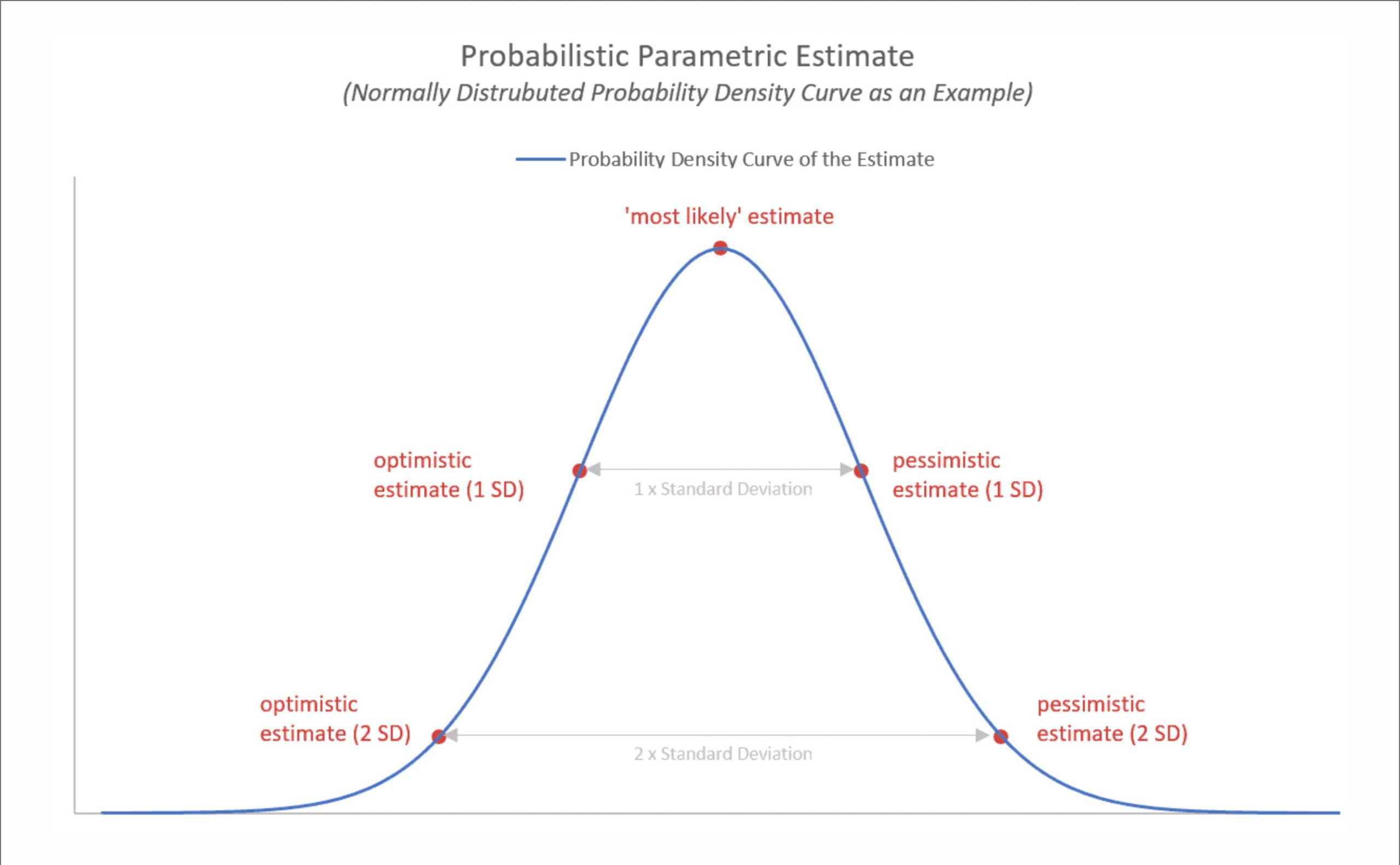
Image via: project-management.info
This image shows how parametric estimating using statistical models is done. It shows how probability methods are used to find the most reliable and successful model.
Incorporating the best practices can help find a reliable and interesting model.
Incorporate the correct determinants
This is the first step toward incorporating the right approach for parametric estimating. If the determinants of the statistical equation are not correct, you may not get a proper estimation.
For example, if you consider the number of units from the previous project but consider the total area of the project delivered, it will determine the estimate incorrectly.
Sit with your data to identify the exact variables that will fetch you desirable results. Once you are sure of the variables, it becomes easier to track the equation.
Identify sufficient raw data
Raw data is essential for parametric estimation. Your entire calculation is based on historical data.
If you haven't done enough work but are aware of someone in the market, get the data from those projects. Once you have relevant information and sufficient historical data, building statistical co-relations and models becomes easier.
You will be able to diversify the scenarios and even identify the variables to define minimal changes in the processes. This will eventually help you create a reliable estimate.
Align estimates to your goal
Before you begin the estimation work, you need to determine the goal of your task. It is possible that you need to identify a cost-efficient model for working on this project. For example, your goal could be to complete the tasks in the said period.
In all these cases, if you work on the parametric estimating technique without focusing on the goal, you won't get the desired results.
It is essential to determine the goal and then build the estimate around it. Then, you will be able to modify or optimize the models to meet your defined objectives.
This best practice will also help you identify this particular project's possible opportunities and challenges.
Incorporate it into strategies
When you have created an estimate using the parametric estimating technique, you should also ensure it is part of the project management strategies. Then, when you incorporate it into your project strategy, you will notice fewer chances of failing your project.
For example, you will know where you have overestimated the timeline and can optimize the resources on the go.
It will also give you a chance to learn from your mistakes on this project while working on other similar projects.
Maintain transparency
This is a prominent practice but seldom used when you begin working on the project or the estimate. Various teams collaborate to identify and offer a suitable parametric estimating output. You will have a research team employing the best practices to get the desired variables and determinants.
It is essential to collaborate and ensure everyone understands how you are planning the project and what are some of the things you will consider when scaling the project.
Asking for feedback from the execution teams while building the project estimate can help you. They can give you a realistic timeline and tell you what things to consider.
It will help you build a more capable and efficient estimate that will help complete the project within the budget and timeline.
Don't estimate on assumptions
There are two things to consider here – don't estimate on assumptions and don't assume your estimates.
When you get data, you should also get a complete understanding of how the data works. Ask your teams to explain the data that you don't understand so that you can estimate with a thorough understanding of how things work.
Secondly, when you have defined an estimate, don't allow people to assume what it means. Instead, sit with your team and explain how you worked on the estimate and its meaning.
Assumptions can kill even the most accurate parametric estimating results from being executed.
Manage within the budget
We have already seen that the budget will be pre-defined in some cases. As the manager, you need to work within this defined budget. Once you have estimated using all the available variables, you can now work on optimizing it. Make sure you have defined the parametric estimation around the budget.
It is important to avoid keeping numbers at their lowest. Instead, you should have a realistic and data-backed estimate.
Identify the risks
During project estimation, you are likely to include the opportunities but miss out on the risks. However, when you start working around the estimate defined, you realize that these risks are pivotal in execution.
You should also include the risks when planning the estimate. Check how you manage the timelines, budget, and resource allocation if it doesn't meet the prepared figures. This contingency plan needs to be developed when estimating and calculating the risks involved.
Create a work breakdown structure
It is essential to break down every project into a series of tasks to establish the best outcomes with your parametric estimation techniques. In addition, when estimating using an accurate system, it is essential to evaluate the timeline, cost, and even the total resources taken for each task.
The breakdown structure presented before you helps you manage the tasks better. When you estimate the tasks individually, it helps establish the tasks better.
This will help you identify the exact execution timeline and the methods to workaround it.
Do the Smartwork, Not the Guesswork!
No need to throw a ballpark figure, now create and send accurate estimates in a zap with InvoiceOwl.
Start Your FREE TrialCommon Challenges
Comparison with Other Methods
Before we dive into analogous versus parametric estimation differences, let's look at the analogous estimation technique.
So, when you use data from similar kinds of previous projects to deliver an estimate, it is known as an analog estimate. You will base your estimations on the experience of the team or the overall project history.
Parametric vs. Analogous
Let's understand the difference between these two estimations.
Parametric vs Analogous Estimation Comparison
| Aspect | Parametric Estimating | Analogous Estimating |
|---|---|---|
| Data-backed estimation | Uses statistical equations to calculate exact timeline and resources based on historical data | Uses historical data for rough calculations based on similar projects |
| Usage | Used when there is a reliably good amount of data available | Primarily used in the early project stages |
| Applicability | Requires reliable data to define an equation or model for calculations | Used only when you get data from projects similar to yours |
| Accuracy | More accurate as it evolves from a model and is calculated based on a statistical equation | Less accurate as it is dependent on assumptions and roughly defined |
| Efforts involved | Higher efforts and costs as it includes statistical tools and models | Lower efforts compared to parametric estimating |
Considering these differences, it is essential to note that you can use both methods as and when required. You should ideally use analog if you want to offer a rough estimate. However, if you build a more reliable estimate, you should go with parametric estimating.
How InvoiceOwl Helps With Parametric Estimating
The creation of a repeatable project management model is facilitated by project estimation methods like parametric estimating. You may track your estimates and invoices in real-time and collect project data pertaining to costs charged, hours worked, and additional expenses incurred, if any, using estimation and invoicing software like InvoiceOwl. This greatly simplifies and improves the effectiveness of parametric estimates for future projects.
For all of your projects, InvoiceOwl offers simple-to-read invoice reports, making it convenient for managers to locate, assess, and make an informed decision on the basis of historical and current information.
Managers can easily determine the time it takes for team members to accomplish work along with the labor costs by looking into financial reports provided by InvoiceOwl. This information can then be used to plan future projects.
So, sign up for a free trial of InvoiceOwl for better and more professional project estimation and invoicing.
Frequently Asked Questions
Parametric estimating is a statistical estimation technique that uses historical data and mathematical equations to calculate project costs, timelines, and resources. It works by establishing a statistical relationship between variables from past projects and applying them to current projects using the formula: E_parametric = A_old/P old * P curr.
Use parametric estimating when you have sufficient historical data and need accurate, detailed estimates. It's ideal for later project stages when you have more information. Use analogous estimating in early project stages when you need quick, rough estimates based on similar past projects but don't have detailed data available.
The three essential requirements are: sufficient historical data from previous projects, measurable parameters that can be converted into quantifiable units like dollars or hours, and scalability where parameters can be adjusted to provide accurate forecasts regardless of project size differences.
The main advantages include higher accuracy through statistical correlation of parameters, faster results that stakeholders trust, reduced effort compared to granular assessments, and flexibility to use historical data as needed while maintaining relationships between variables.
Common challenges include time and resource requirements to build statistical models, the need for reliable and quality historical data, inability to use it for entire projects in most cases, difficulty when parameters differ between old and new projects, and potential unreliability if working with low-quality data.
InvoiceOwl helps by tracking estimates and invoices in real-time, collecting project data on costs, hours worked, and expenses. It provides easy-to-read reports that help managers access historical and current information for making informed decisions and creating more accurate parametric estimates for future projects.
Conclusion
It is important to use the right estimation method at the right time. If your project is in the early stages, parametric estimating may not resolve your issues.
However, if you have enough understanding of the project and can build a good amount of data, you should use parametric estimating. This technique will help accurately identify the total resources needed and the total time you are likely to take.
You should understand the use cases and be clear about the limitations before incorporating the technique.