
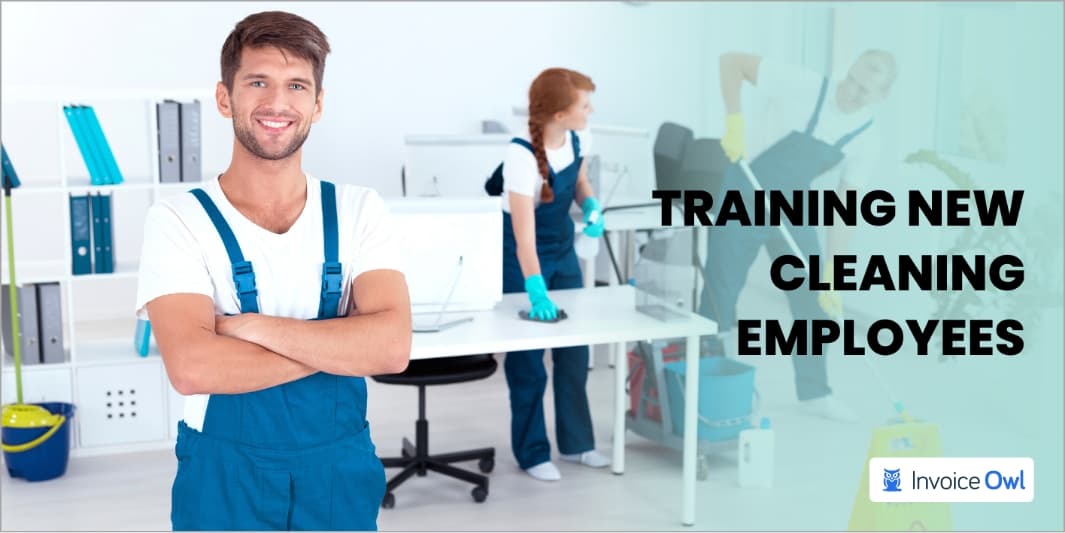
Key Takeaways
- 01Train your employees to improve performance, reduce errors, and increase customer satisfaction
- 02Set clear expectations and goals for your training program to make it more effective and focused
- 03Enhance the effectiveness of cleaning training with hands-on training, role-playing, and visual aids
- 04Retain your cleaning staff to work for you as long as possible by creating a positive environment and offering good compensation
Bringing in new employees is always a great sign for your cleaning business. But with this, there are also some questions you will need to answer.
- How can you warmly welcome them to create a positive impression of your cleaning company?
- How can you ensure they follow your guidelines to provide a thorough cleaning job?
The solution to both these problems lies in training new cleaning employees. And that too in a manner that serves your mission well. So first, let's show you why it is worth the effort.
Table of Content
- 6 Reasons You Should Train Your New Employees
- Setting the Stage for Training
- 5 Key Areas of Cleaning Training
- 4 Tips for Effective Cleaning Training
- 4 Best Practices for Employee Retention
- FAQs
- Conclusion
6 Reasons You Should Train Your New Employees
"Is training my employees really necessary?" If this is the question hanging over your head, look at the 6 benefits it provides:
Improves the quality of service
Proper training ensures that your employees know how to clean effectively, use the right equipment, and follow established procedures.
Thus, a well-trained cleaning staff is more likely to provide high-quality service. This greatly increases customer satisfaction and loyalty.
Reduces the risk of accidents and injuries
Safety of employees and client property should be a top priority for any cleaning business. And training employees on safety protocols, equipment usage, and hazard prevention can help reduce the risk of accidents and injuries.
As an added benefit, proper training can lower workers' compensation costs, minimize damage, and improve overall workplace morale.
Ensures proper use of resources
Employees, especially inexperienced ones, may not know how to properly use cleaning equipment and products.
Training them on how to use equipment, store chemicals, and handle spills can help minimize damage and reduce waste.
Increases efficiency and productivity
Proper training empowers employees to work more efficiently and effectively by teaching them time-saving tips and organizational strategies.
This way, you ensure that your cleaning jobs are completed on time and to the highest standards.
Fosters a culture of learning and development
Offering training and development opportunities creates a positive work environment and fosters a culture of continuous learning.
So by investing in your employees' growth and development, you can build a loyal and motivated team.
Builds a positive reputation for your business
A well-trained cleaning staff can help build a positive reputation for your business by providing high-quality service, promoting workplace safety, and ensuring customer satisfaction.
A positive reputation can help attract new clients, retain existing ones, and ultimately grow your business.
Send branded invoices and estimates with InvoiceOwl to come up as a professional among your clients and stand out from the competition.
Do you see why it is important to train your employees? Then next, let's set the stage.
Setting the Stage for Training
To train your new cleaning staff effectively, it is critical to set up a perfect stage. This means establishing your company culture and values and setting clear employee expectations and goals.
Establishing company culture and values
It involves defining the shared beliefs, attitudes, and behaviors that guide your business. By teaching them how to behave with each other and customers, you can create a positive work environment that promotes teamwork.
Setting clear expectations and goals
You need to communicate your expectations clearly if you want your employees to match them. How? By yourself, getting clarity on them.
Your employees need to know what is expected of them regarding job duties, performance standards, and customer service.
Set SMART goals for your cleaning staff to understand what they need to accomplish and how they will be evaluated. And just in case you are wondering about the full form of SMART, here it is
This creates a solid foundation for training your cleaning staff so that they give their best. Now we will see where your training program should focus.
5 Key Areas of Cleaning Training
Hitting a few key training components right can make all the difference. Focus on them to ensure that your employees are trained for the skills and knowledge they need to excel in their roles.
1. Cleaning procedures and techniques
This involves training your employees on the procedures for cleaning different surfaces and areas, such as floors, windows, and bathrooms.
This will vary depending on whether you are a commercial or residential cleaning company. But regardless, the results you get will stay the same - consistently high cleaning standards.
Recommended: Professional house cleaning checklist
2. Proper use of equipment and cleaning products
Employees need to know how to use cleaning equipment and products safely and effectively.
This includes training on how to use machines such as vacuums and floor scrubbers, as well as how to handle chemicals and cleaning solutions.
3. Safety protocols
Safety should be a priority in training your cleaning staff. This means giving employee training on how to handle sharp objects and hazardous waste.
Safety training doesn't just cover the employees. The safety of your clients and their property is equally important. Ensure your training program addresses both aspects comprehensively.
4. Time management and efficiency
More professional cleaning staff are careful about time management and efficiency. Thus, your training process should include this key component as well.
By training your employee on how to organize their tasks and use their time effectively, you can maximize their productivity.
5. Customer service skills
Your cleaning staff is often the face of your business. So they need to be able to interact with your clients in a friendly and professional manner.
Train them on customer service skills such as communication, problem-solving, and empathy. This way, your customers will always be satisfied with the service they receive.
Now that you know what to focus on, we will show you the best practices to make your training more effective.
4 Tips for Effective Cleaning Training
You don't just want to provide training for the sake of training. You want it to make your desired impact on your employees. Thus, here are the best practices for you to follow:
1. Use hands-on training
Make them get their hands dirty, as it is one of the best ways to teach cleaning techniques and procedures.
By providing your employees with practical experience, they will learn through trial and error and develop their intuition on what to do and what not.
2. Incorporate role-playing and simulations
Role-playing and simulations prepare your staff for real-world scenarios they may encounter on the job. This includes:
- Practicing customer interactions
- Handling difficult cleaning challenges
- Responding to emergency situations
3. Provide visual aids and demonstrations
You can complement your program with training videos, diagrams, charts, etc. Visual aids and demonstrations reinforce learning and make it easier for employees to understand complex concepts.
4. Offer ongoing training and development
Training that lasts for only a few initial days for your employees hardly makes any difference. You need to make it regular and ongoing because learning never ends.
Provide continuous training to help your staff improve their skills and stay up-to-date with the latest cleaning techniques and trends. Regular training sessions show employees they're valued and help maintain high service standards.
By following these tips, your training program will be engaging and effective. However, once you invest in training, you must retain your employees long enough to give you an appropriate ROI.
4 Best Practices for Employee Retention
The longer an employee works for you, the better it is for your business. But retaining staff gracefully by creating a win-win situation for both of you is an art. And here is how you do it:
1. Offer competitive pay and benefits
It is hard to leave a well-paying employer. Thus, providing competitive pay and benefits packages attracts and retains top cleaning talent.
Also, consider offering bonuses, healthcare benefits, and other perks to show your employees you value their hard work.
2. Create a positive work environment
Who doesn't love a positive work environment? Creating a positive work environment is key to motivating your cleaning staff. For this:
- Encourage open communication
- Recognize and reward good work
- Foster a culture of respect and collaboration
3. Provide ongoing training and development
Again, we would like to emphasize the importance of providing training continuously. Why? Because apart from monetary growth, employees also love growth in their skills as it makes them feel valued and supported.
Thus, offering ongoing training and development opportunities will keep your employees engaged and motivated.
4. Listen to feedback and act on it
Everybody loves to be heard, isn't it? So listen to your cleaning staff's feedback and take action to address their concerns. This improves their job satisfaction and shows them that their opinions are valued.
Recommended:
By implementing these 4 practices, you can create a supportive and engaging work environment that helps to retain your cleaning staff.
Streamline Your Cleaning Business Operations
Take your cleaning business to the next level with InvoiceOwl. Create professional invoices, track payments, and manage your team all in one place.
Start Your FREE TrialFrequently Asked Questions
Online training can be very cost-effective and time-saving as you can replay a recorded session to your new employees. It works particularly well for theoretical content like safety protocols and cleaning product knowledge, though it should be complemented with hands-on practical training for best results.
Measuring the effectiveness of cleaning training can be done by tracking the performance of your cleaning staff based on metrics such as cleaning times, quality of their work, customer satisfaction ratings, and adherence to safety protocols. Feedback from the staff can also be collected to determine if they found the training beneficial.
If a cleaning staff member doesn't meet the training requirements, you can provide additional training sessions to help them further. Consider offering one-on-one coaching, identifying specific areas where they need improvement, and creating a personalized development plan to support their growth.
Related Resources
Cleaning Industry Trends and Statistics for Contractors in 2026
Discover the latest cleaning industry trends for contractors in 2026 including the impact of technology, automation, sustainability and customer preferences.
Read more
How Much Do Pool Cleaning Services Cost?
Are you planning to start your own pool cleaning service business? Then read our pricing strategy on how much do pool cleaning service cost as a contractors.
Read more
Appointment Reminder Templates for Contractors
Here are some appointment reminder templates that you can use for emails and text! It can be used to remind customers of service and get rid of your no-shows!
Read more
10 Best Apps for Cleaning Business in 2026
Discover the 10 best apps for cleaning businesses in 2026 to streamline operations, improve productivity, and maximize efficiency. Upgrade your business today!
Read more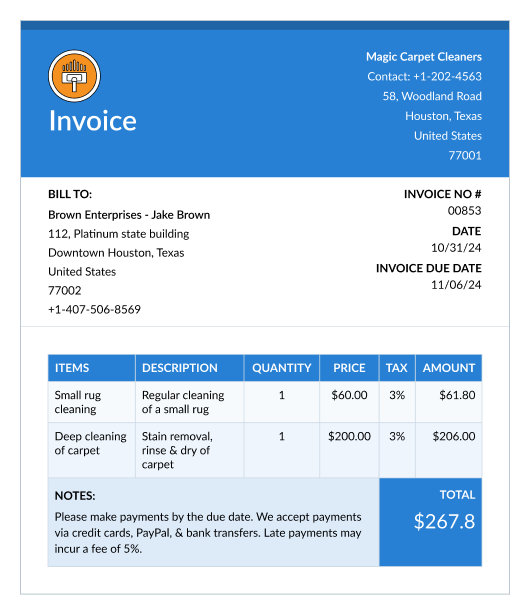
Carpet Cleaning Invoice Template
Carpet cleaning invoice template
Read more
Cleaning Invoice Template
cleaning invoice template
Read more
Free Construction Invoice Template | Customize and Download
Free Construction Invoice Template | Customize and Download
Read more
Contractor Invoice Template
Contractor Invoice Template
Read moreCleaning Industry Trends and Statistics for Contractors in 2026
Discover the latest cleaning industry trends for contractors in 2026 including the impact of technology, automation, sustainability and customer preferences.
Read moreHow Much Do Pool Cleaning Services Cost?
Are you planning to start your own pool cleaning service business? Then read our pricing strategy on how much do pool cleaning service cost as a contractors.
Read moreAppointment Reminder Templates for Contractors
Here are some appointment reminder templates that you can use for emails and text! It can be used to remind customers of service and get rid of your no-shows!
Read more10 Best Apps for Cleaning Business in 2026
Discover the 10 best apps for cleaning businesses in 2026 to streamline operations, improve productivity, and maximize efficiency. Upgrade your business today!
Read moreCarpet Cleaning Invoice Template
Carpet cleaning invoice template
Read moreCleaning Invoice Template
cleaning invoice template
Read moreFree Construction Invoice Template | Customize and Download
Free Construction Invoice Template | Customize and Download
Read moreContractor Invoice Template
Contractor Invoice Template
Read moreCleaning Industry Trends and Statistics for Contractors in 2026
Discover the latest cleaning industry trends for contractors in 2026 including the impact of technology, automation, sustainability and customer preferences.
Read moreHow Much Do Pool Cleaning Services Cost?
Are you planning to start your own pool cleaning service business? Then read our pricing strategy on how much do pool cleaning service cost as a contractors.
Read moreAppointment Reminder Templates for Contractors
Here are some appointment reminder templates that you can use for emails and text! It can be used to remind customers of service and get rid of your no-shows!
Read more10 Best Apps for Cleaning Business in 2026
Discover the 10 best apps for cleaning businesses in 2026 to streamline operations, improve productivity, and maximize efficiency. Upgrade your business today!
Read moreCarpet Cleaning Invoice Template
Carpet cleaning invoice template
Read moreCleaning Invoice Template
cleaning invoice template
Read moreFree Construction Invoice Template | Customize and Download
Free Construction Invoice Template | Customize and Download
Read moreContractor Invoice Template
Contractor Invoice Template
Read more