
Key Takeaways
- 01HVAC service contracts protect both contractor and client interests by clarifying responsibilities and payment terms
- 02Five main contract types exist: preventive maintenance, full-service, performance, equipment-specific, and custom contracts
- 03Well-drafted contracts increase customer loyalty, revenue, and provide upselling opportunities
- 04Key contract components include service scope, payment terms, duration, responsibilities, and termination clauses
- 05Service contracts build trust, ensure quality assurance, and demonstrate professionalism to clients
It is always boring to read the "fine print." Isn't it? How many times have we all agreed to the terms blindly just to catch a breath away from the dense bushes of terms and conditions?
Yet those fine print in your HVAC service contract protects the interest of your business and your client. Now you may be wondering:
- What is a service contract?
- How can you create one?
- How will it help you?
Hold your horses. In this blog post, you will find the answers to all of these questions and more as we will squeeze every drop out of the basics of an HVAC service contract.
Table of Content
- What is an HVAC Service Contract?
- Types of HVAC Service Contracts
- What Terms are Included in an HVAC Service Agreement?
- How Will an HVAC Service Contract Help HVAC Contractors?
- FAQs
- Conclusion
What is an HVAC Service Contract?
A service contract is a written agreement between you and your client on the responsibilities each party has for the service.
If a businessman hires you to repair the air conditioning system of his office, you can specify the exact services you will provide, among other terms.
Usually, its purpose is to resolve any kind of disputes that may occur in the future as everything is cleared and agreed upon before the start of the service.
An HVAC service contract can also be referred to as
1. HVAC service agreement 2. HVAC maintenance contract 3. HVAC maintenance agreement
Types of HVAC Service Contracts
With different services, you may need different contracts. Thus, here are the 5 most common types of HVAC service contracts:
Preventive Maintenance Contract
This is for clients who are looking for regular maintenance services from you to keep their HVAC systems up and running for a long time.
Full-Service Contract
As the name suggests, a full-service contract includes all your HVAC-related services, such as maintenance and emergency repair.
Performance Contract
A performance contract focuses on improving the energy efficiency of the HVAC systems of clients who undertake it.
Equipment-Specific Contracts
This type of contract takes care of a particular HVAC equipment of your client, such as a boiler, air conditioner, etc. It usually covers the maintenance and repair of the chosen equipment.
Custom Contracts
Custom contacts give your clients the flexibility of customized HVAC services as per their unique needs.
Even though these contracts are different, there are some common terms that should be included in them. Let's look at those next.
What Terms are Included in an HVAC Service Agreement?
An HVAC maintenance contract is a complex thing in itself. There are many things you can decide to include or exclude, depending upon the service. But here are the most common terms usually included in a contract:

1. Service you will provide
Just stating that you will "service the heating system" is not enough. It is vague and unclear.
- What will you do if you find some damage?
- Are you going to repair it?
- Will you replace the spare part?
- Or is it just a routine maintenance service?
You will have to be more clear in stating what your service does and doesn't include.
2. Payment terms
This section of your HVAC maintenance contracts serves to specify the details related to the payments between you and your client, such as:
- The amount to be paid and when
- Mode of the transaction - cash, debit/credit card, etc.
- Taxes
- Refund scenarios
- Late payment charges
Money can turn into a very disputable topic. Thus, clarity and agreement on this will ensure that you get timely payments for your HVAC services.
3. Duration of your service
Let's say you take a maintenance contract to service the heating system of a business for 6 months. So when does your service start and end? Specify the exact dates and duration so nobody can claim the service beyond the end date.
4. Responsibilities
Responsibilities state what you are liable (and not liable) for.
If you are repairing an AC for an issue and it stops working altogether, will you hold yourself responsible or just rub it off your shoulders?
Mostly it happens that the HVAC company doesn't take any responsibility for the device failure during the repair. But you need to mention it nonetheless.
Apart from this, the other terms you can include are a liability for any on-premise damages or injuries and responsibility for the recurrence of the solved issue, among others.
5. Inspection schedules
In some cases, you may strike a deal to inspect the HVAC system of a client for the specified duration and the number of times.
Here you can specify details like what you will do in each of these inspections and when will each of those occur.
If you provide your client the flexibility to call you for an inspection as per its need, you can specify how often you will be available for the service.
6. Termination
Sadly, such events may occur when you need to terminate some of your HVAC service agreements. So what's going to happen then?
Termination can happen from any side - you or your client. So in such cases, the interest of the other party needs to be protected.
A client may fail to make payments on time and even stays unresponsive when sent notices. You can then use your right to hold your services until the previous payments are cleared.
Or, due to some reasons, you may be unable to fulfill your promise, which your client has paid you in advance. Thus, you can hold yourself liable to pay your client an appropriate refund.
The best HVAC maintenance agreement is the one that serves you as well as your client.
While this isn't a complete list of sections, we recommend you talk to any legal consultation company to ensure your contract is comprehensive and legally sound.
Now you may have got an idea about an HVAC maintenance contract. Next, let's look at how exactly it will help you.
How Will an HVAC Service Contract Help HVAC Contractors?
HVAC maintenance agreements serve in many ways. Here are they:

1. Protection
With every detail mentioned first and signed properly by both parties, you save yourself from trouble later on.
Of course, an event in which you need to exercise the power of a service contract rarely comes. But when they do arrive, you will thank yourself for having a signed contract.
Otherwise, some disputes can suck up a lot of your time, effort, and even money to resolve.
While providing your services, you may further damage the HVAC equipment or system. So you can refrain your client from compensating anything if such a term was mentioned in the service agreement details.
2. Loyalty and increased revenue
A contract for a specified duration means that your client will stay with you for at least as long. This serves both of you well. How?
A contract inclines a client to stick to your HVAC service company for a longer duration. This increases the lifetime value of a customer for your business and, thus, brings you more revenue.
On the other side, the client also gets a reward for the loyalty it is willing to provide. The longer a contract, the better a deal the client will have. So it will benefit the client in terms of lesser cost per service taken.
3. Quality assurance
With pre-agreed terms for the services you will provide, you will need to maintain their quality. This will help you in keeping your services consistent among all your clients.
And don't you think that consistent quality is the mark of great companies? This is another way of building trust and, in the process, attracting more clients.
4. More opportunities for upselling
Apart from increasing the lifetime value of a client, providing you with upselling opportunities is another way a service contract increases your revenue.
How exactly? With a longer duration of your relationship with the client, more such instances are likely to pop up where it will need more of your services. That's your chance to upgrade your contract with a client.
Once getting an HVAC maintenance contract from a client for his office, he may be willing to expand your services to his home or other offices.
5. Increased trust and professionalism
People love HVAC companies that are transparent right from the beginning. And having a contract enforces the fact that you are transparent and professional about your services.
We agree that service contracts are not the most lovely reads. Yet, ironically, it can increase the perceived value of your HVAC business in the mind of your client.
This shows that you value clarity and are willing to work with a client upon a strong foundation of honesty.
So, these were the benefits of an HVAC maintenance contract. And now that we are talking about trust and professionalism, another way you can build it is using InvoiceOwl.
It is your one-stop solution for creating branded and professional-looking estimates and invoices from anywhere.
Create and Send Branded HVAC Invoices From Anywhere
Try InvoiceOwl for free to bring your whole invoicing system into your device and send invoices at your convenience.
Start Your FREE TrialFrequently Asked Questions
As one of the purposes of contracts is to protect you from any legalities, it is a good idea to connect with a legal consultant. This will only make your contract much stronger as the consultant will look at it from a perspective you might have overlooked.
Have you ever heard the phrase - It's better to be safe than sorry? A service contract keeps you and your business safer. So you need to think of having it if you provide any kind of HVAC services.
The standard components of an HVAC contract are:
- Services included and their description
- Timeline
- Inspection schedules
- Responsibilities and liabilities
- Payment terms
- Cancellation/Termination policy
Conclusion
A small ignorance on your part can turn costly for you. Thus, remember to wear the seat belt in the form of a service contract while driving your HVAC business. Who knows when a pothole might occur in your path?
Related Resources
How to Price HVAC Jobs? (7 Steps to Maximize Profit)
Know the best way to price HVAC jobs and make the maximum profit. This blog helps you know how to calculate the best price that covers your labot, material used, subcontractor fees, and taxes.
Read more
10 Best Apps for Painting Contractors in 2026
Are you a painting contractor looking to boost productivity? Here are the best apps for painting contractors that can help scale your business to new heights.
Read more
6 Best Construction Estimating Software Contractors Should Try
Associated with the construction industry for a while? Explore 6 most popular estimator software to reduce your business paperwork. Follow the given steps to make construction estimates using automated accounting software.
Read more
Top 10 HVAC Apps for Technicians in 2026
Go through the leading HVAC apps required to run your service business smoothly and ensure that you deliver a quality customer experience to your clients.
Read moreHVAC Estimate
InvoiceOwl's HVAC estimate and invoicing software helps contractors send estimates, purchase orders, and track paid & unpaid invoices in one place. Try free!
Read more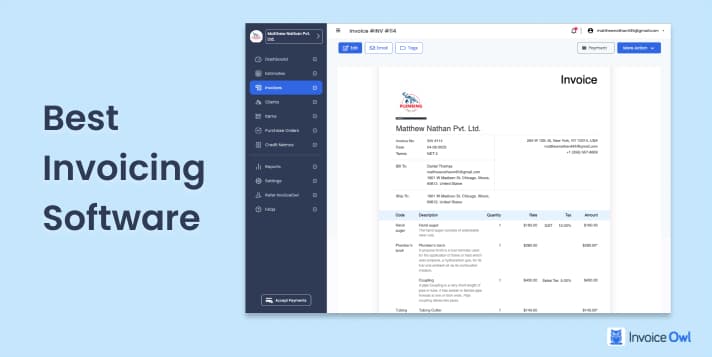
Best Invoicing Software for Small Businesses (2025)
Compare the top invoicing software solutions for small businesses and contractors. Find detailed reviews, pricing, features, and user feedback to choose the right tool for your needs.
Read moreBest Invoicing Software for Small Businesses and Contractors
Pick the best invoicing software for your contracting business by comparing the best 11 invoicing software curated referring the user reviews on various platform.
Read more
15 Best Flooring Estimating Software: Complete Guide
Compare the top 15 flooring estimating software solutions. Detailed reviews, pricing, and features to help contractors make informed decisions.
Read moreHow to Price HVAC Jobs? (7 Steps to Maximize Profit)
Know the best way to price HVAC jobs and make the maximum profit. This blog helps you know how to calculate the best price that covers your labot, material used, subcontractor fees, and taxes.
Read more10 Best Apps for Painting Contractors in 2026
Are you a painting contractor looking to boost productivity? Here are the best apps for painting contractors that can help scale your business to new heights.
Read more6 Best Construction Estimating Software Contractors Should Try
Associated with the construction industry for a while? Explore 6 most popular estimator software to reduce your business paperwork. Follow the given steps to make construction estimates using automated accounting software.
Read moreTop 10 HVAC Apps for Technicians in 2026
Go through the leading HVAC apps required to run your service business smoothly and ensure that you deliver a quality customer experience to your clients.
Read moreHVAC Estimate
InvoiceOwl's HVAC estimate and invoicing software helps contractors send estimates, purchase orders, and track paid & unpaid invoices in one place. Try free!
Read moreBest Invoicing Software for Small Businesses (2025)
Compare the top invoicing software solutions for small businesses and contractors. Find detailed reviews, pricing, features, and user feedback to choose the right tool for your needs.
Read moreBest Invoicing Software for Small Businesses and Contractors
Pick the best invoicing software for your contracting business by comparing the best 11 invoicing software curated referring the user reviews on various platform.
Read more15 Best Flooring Estimating Software: Complete Guide
Compare the top 15 flooring estimating software solutions. Detailed reviews, pricing, and features to help contractors make informed decisions.
Read moreHow to Price HVAC Jobs? (7 Steps to Maximize Profit)
Know the best way to price HVAC jobs and make the maximum profit. This blog helps you know how to calculate the best price that covers your labot, material used, subcontractor fees, and taxes.
Read more10 Best Apps for Painting Contractors in 2026
Are you a painting contractor looking to boost productivity? Here are the best apps for painting contractors that can help scale your business to new heights.
Read more6 Best Construction Estimating Software Contractors Should Try
Associated with the construction industry for a while? Explore 6 most popular estimator software to reduce your business paperwork. Follow the given steps to make construction estimates using automated accounting software.
Read moreTop 10 HVAC Apps for Technicians in 2026
Go through the leading HVAC apps required to run your service business smoothly and ensure that you deliver a quality customer experience to your clients.
Read moreHVAC Estimate
InvoiceOwl's HVAC estimate and invoicing software helps contractors send estimates, purchase orders, and track paid & unpaid invoices in one place. Try free!
Read moreBest Invoicing Software for Small Businesses (2025)
Compare the top invoicing software solutions for small businesses and contractors. Find detailed reviews, pricing, features, and user feedback to choose the right tool for your needs.
Read moreBest Invoicing Software for Small Businesses and Contractors
Pick the best invoicing software for your contracting business by comparing the best 11 invoicing software curated referring the user reviews on various platform.
Read more15 Best Flooring Estimating Software: Complete Guide
Compare the top 15 flooring estimating software solutions. Detailed reviews, pricing, and features to help contractors make informed decisions.
Read more