
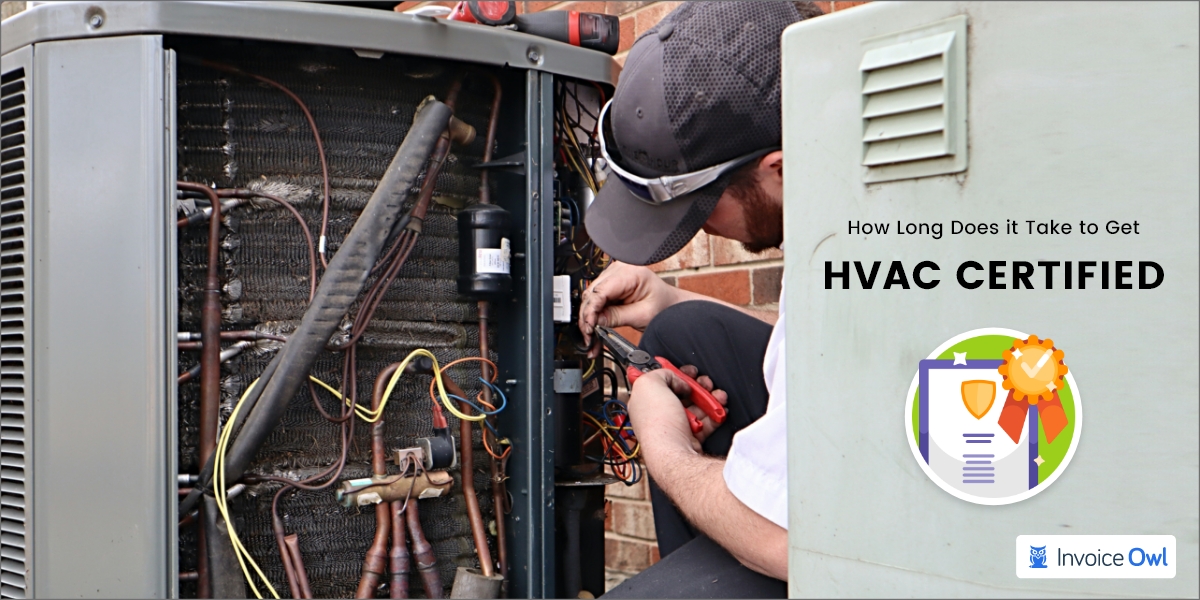
Key Takeaways
- 01It takes approximately six months to two years to become HVAC certified
- 02HVAC certification requires a high school diploma or GED, technical training, and passing EPA Section 608 exams
- 03Three certification levels exist: Apprentice, Journeyman, and Master HVAC certificates
- 04Licensed HVAC professionals earn a median annual salary of $48,730 in the US
- 05HVAC certification provides job security in a high-demand field with projected industry growth
The demand for HVAC professionals skyrockets in the coming years due to the nature of the job. People either require air conditioners to beat the heat or heating systems installed at home or office to keep themselves warm during snowy days. It indicates an HVAC technician doesn't remain idle like any other seasonal business contractor.
But the question arises, how long does it take to get HVAC certified? It takes around six months to two years to become an HVAC-certified professional.
And this blog discusses what it takes to acquire an HVAC certificate. Moreover, you would even know how much beneficial is obtaining an HVAC certificate. So keep reading this post and get every single detail about HVAC certification.
Introduction to HVAC Certification
HVAC certification is perfect for professionals who wish to advance in the field of heating, ventilation, and air conditioning. This certification allows the technicians to test and hone their skills, knowledge, and expertise in this high-demand field. Additionally, it enables trained professionals to potentially have high-earning job opportunities.
Steps to Becoming HVAC Certified
Let's quickly break down the steps to become HVAC certified:
Meet Basic Education Requirements
Ensure that you are equipped with a high-school diploma or GED. Almost every HVAC program requires a minimum education level.
Enroll in a Recognized HVAC Program
Based on your convenience, take part in a recognized HVAC program either at a technical school or community college. These programs offer classroom instructions and hands-on training in heating, cooling, and ventilation systems.
Gain Hands-On Experience
Although it's not compulsory to take part in an internship but working under trained professionals is one of the most effective methods to get hands-on training.
Obtain EPA Section 608 Certification
If you're willing to make your way into refrigerants, then it's necessary to get an EPA Section 608 certification. Based on your qualifications and interests you can get any one of the four certificates.
Pursue Additional Certifications
Improve your skill set and land a better job opportunity with additional certifications like NATE or HVAC Excellence.
Check State Requirements
Remember to check your state's requirements for HVAC technicians, as some require specific licenses and exams.
Maintain Certification Through Continuing Education
Keep your skills current through continued education and any recertification exams needed because HVAC certifications often require periodic renewal.
Let's discuss the requirements in detail so that you can get started with HVAC certification without any hassle.
Education Requirements
To begin the path toward HVAC certification, one must meet specific education prerequisites. Typically, aspiring HVAC technicians are required to complete a high school diploma or GED. Following this, many opt for vocational training or an associate degree in HVAC, where they gain foundational knowledge in thermodynamics, electrical systems, and equipment diagnostics.
Certification Details
Various certification options exist for HVAC professionals, each covering different skill levels and specialties. Common certifications include the EPA Section 608 certification, which is federally required for handling refrigerants, and certifications from organizations like NATE (North American Technician Excellence) and HVAC Excellence. Each certification has its own exam and renewal requirements, designed to keep technicians up to date with industry standards and best practices.
The EPA Section 608 certification is federally mandated for any technician who handles refrigerants. Without this certification, you cannot legally work with equipment that uses ozone-depleting refrigerants.
Get Yourself a Degree or Attend HVAC-Related Courses
Firstly, you must get yourself enroll in a high school, trade school, or vocational school. It takes two years of technical training to become an HVAC professional. Click here to check the top 10 HVAC schools to get admitted.
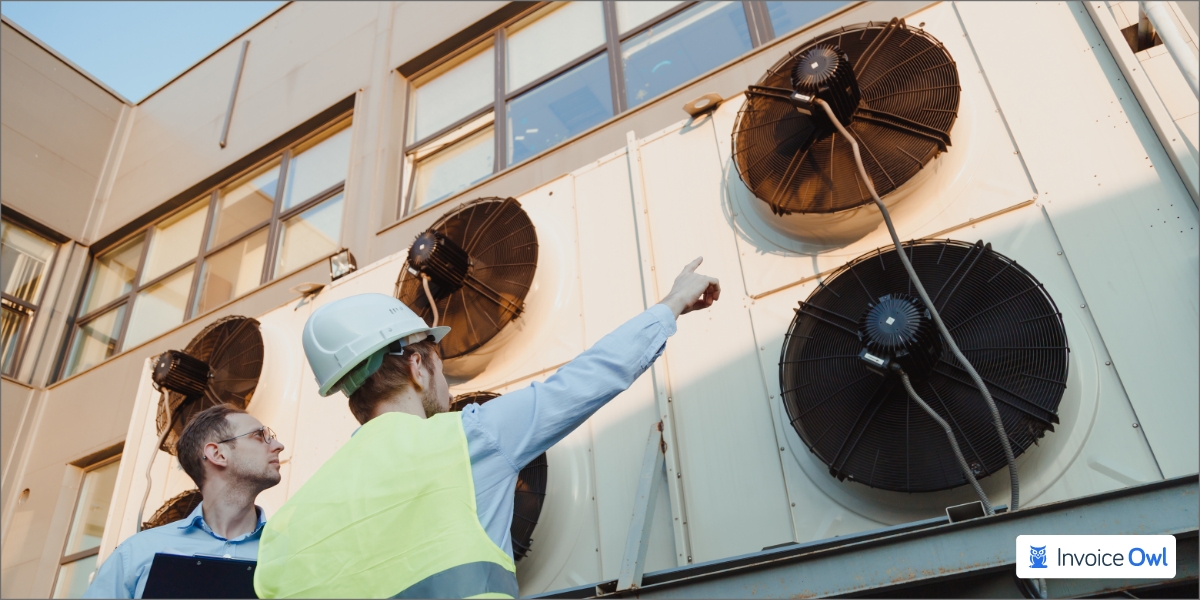
Another method through which you can at least get entry-level employment is by enrolling in various HVAC certification courses on:
Upon completion of graduation, you can get on-the-job training and understand HVAC technician roles and responsibilities by working as:
- HVAC journeyman
- HVAC technician
- HVAC assistant
That's how you would get an education on being an HVAC professional. Now let's put some lights on HVAC certification.
Become a Certified HVAC Professional
Obtaining a certificate is another major area where your time gets reserved. Several authorities grant HVAC certificates, but they all are technicians. The S-290 job task analysis certification, available from the National Environmental Balancing Bureau, applies to all HVAC devices and systems.
The Environmental Protection Agency, the Air Conditioning Contractors of America, and the Refrigeration Service Engineers Society are further certifying organizations. A person might need to pass a written test and attend a seminar class to become certified by one of these organizations.
Besides, there are three levels of HVAC certificates, which are as follows:
HVAC Certification Levels
HVAC Apprentice Certificate
States provide apprenticeships or equivalent programs for persons undergoing training in HVAC. People must operate under the direction of a master or contractor technician, and no prior experience is necessary.
HVAC Journeyman Certificate
Upon finishing the apprenticeship program, technicians can go for the HVAC Journeyman certification. You need to complete some years of training under the guidance of a contractor or master technician and then pass a certification exam. While the work authorizations granted by a journeyman certificate or license might vary, they typically contain job capabilities with certain limitations.
HVAC Master Certificate
This certificate is intended for technicians who've already attained a level of experience above that of a journeyman. It often requires passing an exam and has no constraints on the kind of job a technician may perform.
Comply With State Requirements for HVAC License
"Technicians who maintain, service, repair, or dispose of equipment that could emit ozone-depleting refrigerants into the atmosphere must be qualified," according to Code of Federal Regulations Section 608 of the Clean Air Act.

To obtain Section 608 Technician Certification, an industry- and equipment-specific certification, technicians must complete an EPA-approved test. A certifying entity that has received EPA approval must conduct the tests. Your certification is valid after you receive it.
In addition to potentially harming the environment, refrigerants are used for cooking food in refrigerators and air conditioning systems.
Although there is no federal legislation requiring hvac technician certification to get this certification, if you work in the field, it is anticipated that you are aware of the regulations to safeguard you and the environment when handling refrigerants.
A person may need to have several years of on-the-job training and experience in HVAC to become an HVAC technician. These are a few experiences:
Enjoy the Benefits of an HVAC License
Here are the key advantages of obtaining an HVAC license:
1. Demand for HVAC professionals: A license gives HVAC professionals the ability to demand higher salaries and wages than those who do not.
2. Job security: Those with a license will have no trouble finding employment as long as the need for HVAC technicians continues to grow in the years to come.
3. Professional recognition: Having a license displays a degree of expertise in the subject that customers and employers can recognize.
4. Exclusive employment opportunities: A license may be necessary for some HVAC positions, such as those in commercial or government environments.
5. Possibility of job advancement: Possessing a license may present prospects for internal promotion within a business or for transitioning into a management or leadership position.
6. Legal defense: A license guarantees that the technician is abiding by rules and regulations in the business, offering legal defense in the event of problems or complaints.
7. Learning: Continuous education is required to retain HVAC licenses, which keeps specialists abreast of the newest advances and technology in the field.
8. Possibilities for networking: Having a license as an HVAC technician can provide you the chance to connect with other industry experts, forge bonds, and perhaps even find new employment prospects.
5 Common Challenges and Tips
With that being said let's quickly go through the challenges that fall under HVAC certifications followed by a solution.
1. Seasonal Demand and Cash Flow
The demand for HVAC fluctuates every season. This phenomenon ultimately affects income stability.
The solution to this problem is to offer off-season maintenance plans or emergency service packages. This will allow the companies to ensure year-round cash flow.
2. Keeping Up with Technology and Codes
Keeping up with rapid tech advancements is no joke. Sometimes evolving regulations also pose a challenge for HVAC professionals.
With regular training and certification updates, you can prepare yourself for the worst. Stay competitive and compliant to remain relevant in the market.
3. Building Customer Trust
The growing competition makes it hard for new players to make their own space. To stand out building trust and reputation is very important.
This problem can be addressed by offering free trials and competitive pricing. Using clients to build credibility helps to build long-lasting relationships.
4. Competing on Value, Not Price
One cannot compete only on pricing and expect to grow overnight. There should be more to the business strategy.
By providing value-added services like energy audits and preventive plans to differentiate your offerings.
5. Keeping Certifications Up-to-Date
It is not uncommon for professionals to face issues like expired certifications. This causes a lot of problems moving ahead as the documents remain no longer valid.
Set reminders for renewal dates and take advantage of continuing education courses offered by industry organizations.
Streamline Your HVAC Business Operations
With InvoiceOwl, you no longer need to wait for creating estimates or invoices. Manage your HVAC business professionally from day one.
Start Your FREE TrialFrequently Asked Questions about HVAC Certification
Yes, licensed HVAC contractors with the proper education and training may earn a respectable $48,730 per year. By the way, it is the median annual pay in the US for HVAC installers, mechanics, and technicians.
Yes, there is a huge need for HVAC specialists around the country due to the expanding infrastructure, construction sites, and technology advancements. Obtaining a degree in the area is lucrative since the profession continually expands and the job outlook is positive.
HVAC technicians, mechanics, and installers earn $23.43 per hour, according to the United States Bureau of Labor Statistics (BLS) (average median income). You'll be able to demand better wages for your services if you have experience in the field.
Yes, InvoiceOwl is the perfect software for an HVAC technician. InvoiceOwl helps professional HVAC technicians create estimates and invoices with a professional appearance in just a few minutes!
In general, HVAC certification costs apprenticeship: $500 to $2,000, vocational education: $1,000 to $15,000, college/university: $5,000 to 15,000 per year. Depending on the state's licensing laws and the kind of training you select to fulfill those laws, the cost of obtaining the HVAC certification varies.
Not all jurisdictions have licensing requirements for HVAC work. Some states allow entry-level technicians to practice without a license under the guidance and supervision of master technicians. However, you risk facing severe financial penalties and legal charges if you are discovered operating without a license in an area that requires it.
There are perks to obtaining an HVAC license when you work for some businesses, it's expected. Certifications or licenses frequently imply that you have practical experience, so you'll be able to begin working sooner. A certification in HVAC will give you an advantage over your competitors in the future. You may be able to charge extra for your services if you have certification.
Related Resources

How to Become a Certified HVAC Technician?
Learn the steps to become a certified HVAC technician, including training, certification requirements and tips for success. Start your journey today! Read more!
Read more
How to Start an HVAC Business? An Ultimate Guide to Follow
Learn the step-by-step process of starting an HVAC business with our ultimate guide. Discover tips on licensing, marketing, and more to help you succeed.
Read more
Top 10 HVAC Apps for Technicians in 2026
Go through the leading HVAC apps required to run your service business smoothly and ensure that you deliver a quality customer experience to your clients.
Read more
22 Best HVAC Blogs to Follow in 2026
To stay ahead of the competition in the HVAC industry and offer customers top-notch services and excellent delivery, these are the best HVAC blogs to follow.
Read more
HVAC Invoice Template
HVAC Invoice Template
Read more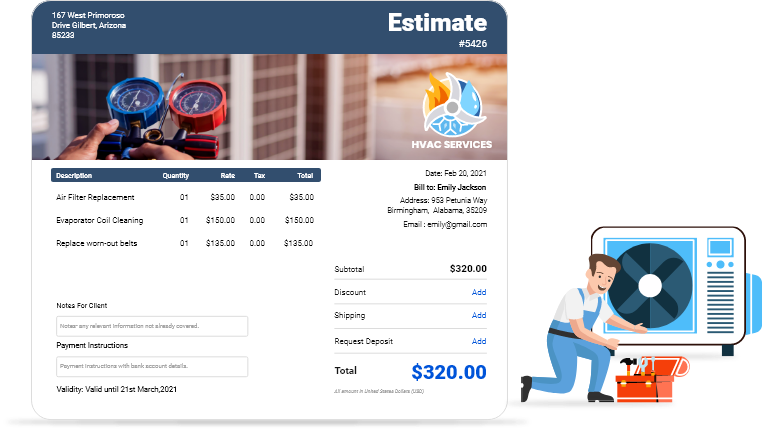
HVAC Estimate Template
HVAC Estimate Template
Read more
California Handyman License: A Complete Guide
Have you decided to become a professional handyman in California? Check this blog and explore the step-by-step process of obtaining a handyman license.
Read more
How to Get Florida Handyman License? A Complete Guide
Are you planning to become a handyman in Florida? Herein you will find a complete guide on how to get a handyman license in Florida. Read more information.
Read moreHow to Become a Certified HVAC Technician?
Learn the steps to become a certified HVAC technician, including training, certification requirements and tips for success. Start your journey today! Read more!
Read moreHow to Start an HVAC Business? An Ultimate Guide to Follow
Learn the step-by-step process of starting an HVAC business with our ultimate guide. Discover tips on licensing, marketing, and more to help you succeed.
Read moreTop 10 HVAC Apps for Technicians in 2026
Go through the leading HVAC apps required to run your service business smoothly and ensure that you deliver a quality customer experience to your clients.
Read more22 Best HVAC Blogs to Follow in 2026
To stay ahead of the competition in the HVAC industry and offer customers top-notch services and excellent delivery, these are the best HVAC blogs to follow.
Read moreHVAC Invoice Template
HVAC Invoice Template
Read moreHVAC Estimate Template
HVAC Estimate Template
Read moreCalifornia Handyman License: A Complete Guide
Have you decided to become a professional handyman in California? Check this blog and explore the step-by-step process of obtaining a handyman license.
Read moreHow to Get Florida Handyman License? A Complete Guide
Are you planning to become a handyman in Florida? Herein you will find a complete guide on how to get a handyman license in Florida. Read more information.
Read moreHow to Become a Certified HVAC Technician?
Learn the steps to become a certified HVAC technician, including training, certification requirements and tips for success. Start your journey today! Read more!
Read moreHow to Start an HVAC Business? An Ultimate Guide to Follow
Learn the step-by-step process of starting an HVAC business with our ultimate guide. Discover tips on licensing, marketing, and more to help you succeed.
Read moreTop 10 HVAC Apps for Technicians in 2026
Go through the leading HVAC apps required to run your service business smoothly and ensure that you deliver a quality customer experience to your clients.
Read more22 Best HVAC Blogs to Follow in 2026
To stay ahead of the competition in the HVAC industry and offer customers top-notch services and excellent delivery, these are the best HVAC blogs to follow.
Read moreHVAC Invoice Template
HVAC Invoice Template
Read moreHVAC Estimate Template
HVAC Estimate Template
Read moreCalifornia Handyman License: A Complete Guide
Have you decided to become a professional handyman in California? Check this blog and explore the step-by-step process of obtaining a handyman license.
Read moreHow to Get Florida Handyman License? A Complete Guide
Are you planning to become a handyman in Florida? Herein you will find a complete guide on how to get a handyman license in Florida. Read more information.
Read more