

Key Takeaways
- 01The US drywall and insulation market is valued at $56.2 billion with over 20,000 active businesses
- 02Starting a drywall business requires less capital than other construction businesses
- 03Proper licensing, insurance, and professional certifications are essential for credibility
- 04Average drywall installers earn $48,350 per year with potential for growth
- 05Effective marketing and efficient invoicing systems are crucial for business success
If you are interested in starting a construction industry business, you probably must start a drywall business. The US market size of the drywall and insulation installers industry is $56.2 billion as of 2022. Though there are 20,046 drywall and insulation installers and businesses actively operating in the US, so, there is high demand for this service. Thus, it is high time you start a drywall contracting business. But how? Well, you will find a step-by-step guide on how to start a drywall-finishing business.
Table of Content
15 Steps to Start Your Own Drywall Business
The drywall business is one of the most effective and highly profitable sectors in the construction field. If you are planning to start one, follow the below-given steps. 1. Understand the industry and conduct market research 2. Narrow down to a particular niche to concentrate on 3. Know your industry's competitors 4. Start from scratch or buy a franchise 5. Be prepared for possible threats and challenges 6. Choose a suitable legal entity 7. Select your drywall business name 8. Invest in the best insurance policies 9. Get the necessary professional certification 10. Get the necessary legal documents 11. Create a business banking account 12. Raise the capital for your business 13. Choose a suitable location for your drywall business 14. Hire employees for your technical and workforce needs 15. Write a marketing plan packed with ideas and strategies
1. Understand the industry and conduct market research
Studying the industry and doing a market survey gives a better understanding of the market conditions, get more insights into demand and supply, and, importantly, financial returns from the business. Starting a drywall contracting business requires less capital and is highly profitable. Especially if you have the expertise, the capacity to deliver quality jobs, and a good network in the industry, before starting a drywall business, know the industry trends to sail along and fetch more fish. As aforementioned, the demand for drywalls is huge. So, you already have many customers to avail yourself of your services. But, while starting locally, you must choose the best location with a high need for this service. Next, do market research in demographics and psychographics and target everyone who needs your service within and outside your business location. So, don't restrict the drywall contracting business to government agencies within your location. Try exploring different locations and be ready to expand once your business picks up.
2. Narrow down to a particular niche to concentrate on
This is the second crucial aspect to consider while starting any business. But, in the drywall-finishing business, there is no sub-niche. Your work primarily entails helping your clients lay out and install gypsum wallboards and gypsum wallboard assemblies.
3. Know your industry's competitors
Though there is no sub-niche, this contracting line of business has tough competitors. Do your cup of research to get a better idea of your major competitors in the industry. Learn what they do with their business idea, find their loopholes, and fill them out.

However, when you plan and deliver the work correctly, promote your services in the right way, and have a strong client base, despite the intense competition, you can survive and go ahead easily.
4. Start from scratch or buy a franchise
It is often said that franchising is better than starting from scratch. But the problem is, it is super hard to get a franchise for a drywall contracting company. In terms of starting a drywall business, it is less stressful than other businesses in the construction industry. In fact, today's top drywall companies started from scratch and have come to this spot.
Starting a drywall business from scratch gives you complete control over your business model, pricing, and growth strategy. Today's top drywall companies all started from humble beginnings.
5. Be prepared for possible threats and challenges
Before you start your own drywall business, be aware of the possible threats and challenges in your industry. In general, if the country is experiencing sluggish growth or is in bad shape, the drywall contracting industry is less likely to get orders from old clients and welcome new ones. Also, some unfavorable government policies can affect the growth of your drywall contracting business.
6. Choose a suitable legal entity
General partnership, limited liability company (LLC), and sole proprietorship are the three options for a drywall contracting business.

If you start as a small-scale drywall contracting business and handle only selective construction projects, then a sole proprietorship is your ideal business structure. A general partnership or LLC is the best if you are confident about growing the business and handling big drywall installation projects across key cities in the US and other countries worldwide. If you want to protect your drywall contracting business from personal liability risk, then set up an LLC. Only the money you invested in the company will be at risk, not your personal assets. Research properly before you choose a legal entity for your drywall contracting business. If you plan to expand your drywall contracting business, ensure that your quotation and invoicing processes are more efficient. To cut the hassle of invoicing your customers, invest in the best invoicing and estimating software, such as InvoiceOwl. It creates error-free invoices within minutes and even tracks them efficiently.
Business Structure Comparison
| Structure | Best For | Liability Protection |
|---|---|---|
| Sole Proprietorship | Small-scale operations with selective projects | No personal liability protection |
| General Partnership | Two or more owners sharing responsibilities | Limited liability protection |
| LLC | Growing businesses with expansion plans | Full personal asset protection |
7. Select your drywall business name
You must be extra creative and careful for choosing your drywall business name. Because the business name is the face of your company, and the brand highlights what your business is about and goes a long way.
8. Invest in the best insurance policies
Having a basic insurance policy is important in any country to run a business. So, don't forget to allocate a budget for insurance and consult an insurance broker to choose the most appropriate insurance policies for your drywall contracting company.
9. Get the necessary professional certification
The licensing requirements to work legally on construction projects differ from one US state to another. In short, it is the US state's responsibility to define the requirements. Do you know what makes drywall contractors stand out in the industry? It's their licensing and other professional certifications. Why? Because they give them authority, validate your competency, and act as proof that you are highly skilled and up-to-date in the business.
Professional certifications validate your competency, give you authority in the industry, and act as proof that you are highly skilled and up-to-date in the business. They help you stand out from competitors and build client trust.
Some important certifications and licenses you need to run your own drywall contracting company are:
- Professional Home Builder Certifications
- Certified Graduate Remodeler (CGR)
- Universal Design Certified Professional (UDCP)
- Any construction and civil engineering-related certification, high school diploma, or degree.
Despite all this, you can still start and run a drywall contracting company in the US without professional certifications. Yes, without any business degree or any course related to this field, you can get started using your experience as your biggest weapon.
10. Get the necessary legal documents
Before launching the business, it is important to have the necessary documentation in hand. In fact, you can't run any business in the US without proper documentation. So, you must at least have the basic legal documents to legally run your drywall contracting business.
11. Create a business banking account
What is the one common mistake made by all new start-up firms? They use their personal banking account for their business. Well, this is wrong because it will create chaos, and highly not recommended to mix your personal and business money in the same account.
Never mix your personal and business money in the same account. This creates financial chaos and makes it difficult to track business expenses, file taxes, and maintain professional credibility.
12. Raise the capital for your business
If you are starting your own business on a small scale, you don't need huge capital. But it is expensive to start a standard large-scale drywall contracting business. Investing in heavy-duty equipment, tools and drywalling supplies requires a hefty investment to secure a space for your company. So, where to get the capital to start on a large scale? First, write a compelling and practical business plan and take it to the investors, your bank, your family members, or friends and ask them to invest in your business.
13. Choose a suitable location for your drywall business
It is crucial to start a business in a location where there are high construction and real estate activities.
14. Hire employees for your technical and workforce needs
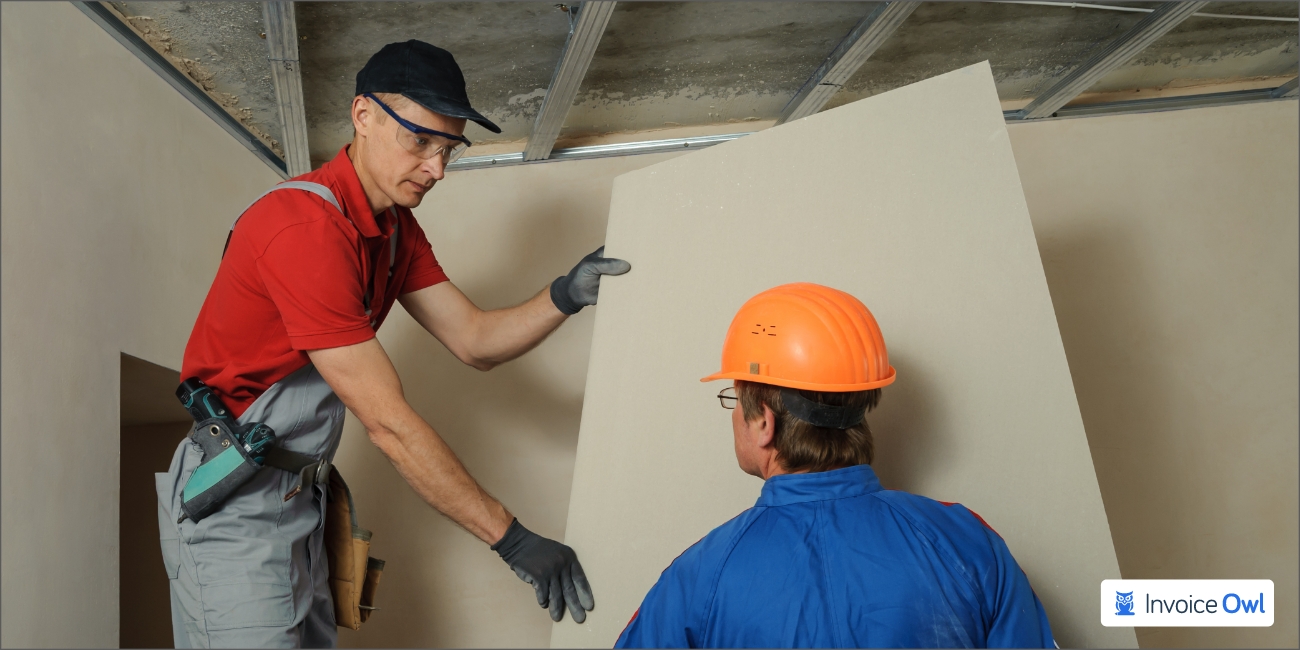
Once you have launched your business successfully, as a drywall business owner, you must recruit employees for your company. If you are starting small, hiring a few trained and qualified personnel is enough. On the other hand, if you are starting a standard company, then you must hire different roles in your organization.
15. Write a marketing plan packed with ideas and strategies
The essential part of the drywall business is handling the right marketing strategy. The drywall contracting business can't be overhyped beyond what you can deliver. But, somehow, you must promote your business because marketing correctly helps you win your first customers and run a successful company. In short, your marketing efforts can quickly increase brand awareness and create a corporate identity.
Go Door-to-Door
Reach out to new customers in your local area by personally introducing your services. This direct approach builds personal connections and trust.
Create Online Presence
Build a professional website and establish active social media profiles to showcase your work, share testimonials, and attract digital-savvy customers.
Increase Word-of-Mouth
Deliver exceptional service to encourage satisfied customers to recommend you to friends and family. Word-of-mouth is the most powerful marketing tool.
Distribute Marketing Materials
Hand out flyers and door hangers in neighborhoods with active construction or renovation projects to generate local awareness.
As a drywall contractor, when you expand your business, you may find it challenging to get the payments properly from your clients. In fact, invoicing itself might seem a hard task. But not anymore. Get an invoicing and estimating software such as InvoiceOwl and design a drywall quote template for your business.
How to Become a Drywall Contractor?
To become a drywall contractor, follow the below-given steps:
Get a High School Diploma or Equivalent
While not always mandatory, many training programs require this basic education. It provides foundational knowledge for business and technical skills.
Obtain a First Job for Training
Start with an entry-level position that offers formal training, typically completed within a year. This provides hands-on experience and teaches you how to operate a drywall contracting business. A formal apprenticeship is highly recommended.
Get a License
Obtain the necessary contractor's license for your state. Requirements vary by location, so check your state's specific regulations before applying.
Start Your Own Drywall Business
With years of experience and in-depth training, you'll be ready to launch your own business. Alongside technical skills, learn accounting and small business management.
Be A Professional Not Only In Drywall Installation But Also In Estimating & Invoicing
Show your professionalism by quickly creating estimates and invoices using our industry-specific templates. InvoiceOwl streamlines your workflow so you can focus on what you do best.
Start Your FREE TrialFrequently Asked Questions
As a drywall installer or plasterer and finisher/lather, you will mostly work indoors designing interior walls, along with some outdoor work. You may work alone or with other construction crew members. However, the job is physically demanding because you will be on your feet most of the time, while installing sheetrock and doing other such work.
Yes, owning a drywall business is profitable. According to the US Bureau of Labor Statistics, the average median pay for drywall installers makes $48,350 per year. Now is a good time to start if you are thinking about starting your own drywall contracting business, and as you gain experience, you can earn more.
There are more upvotes stating that drywall work is hard. But the reality is, with the right tools, a person to assist, and some patience, hanging drywall will not seem that difficult. When one learns how to hang drywall, one will also learn how to tape and finish the installed drywall to give professional-quality results.
Conclusion
Though drywall installation and finishing work are a bit messy and quite tiring, it is a profitable business you can start in the US. The drywall work requires some practice to master it. But, once you get the workflow and learn the nuances, you can easily become a master in this business. Research well and do a cost analysis of what most companies charge, and then fix your rates strategically.
Related Resources
How to Price Drywall Jobs: Everything About Drywall Pricing & Estimation
Learn how to price drywall jobs and what factors you should consider as a drywall contractor when estimating drywall costs.
Read more
14 Actionable Accounting Tips for Small Business Owners
New to finance? Discover 14 simple small business accounting tips to track revenues, expenses, and costs, and grow your business effectively.
Read more![What is the Accounts Payable Process? [Definition, Challenges & Full Cycle]](/images/2021/06/accounts-payable-process.jpg)
What is the Accounts Payable Process? [Definition, Challenges & Full Cycle]
Understand in detail what is the accounts payable process and why it is significant for small business owners. Also, check out what are the challenges faced during the process before going through its full cycle.
Read more
Maximize Your Margins With Profitability Tips for Appliance Repair Businesses
Discover strategies to increase profitability in your appliance repair business and boost your margins with essential tips for success.
Read more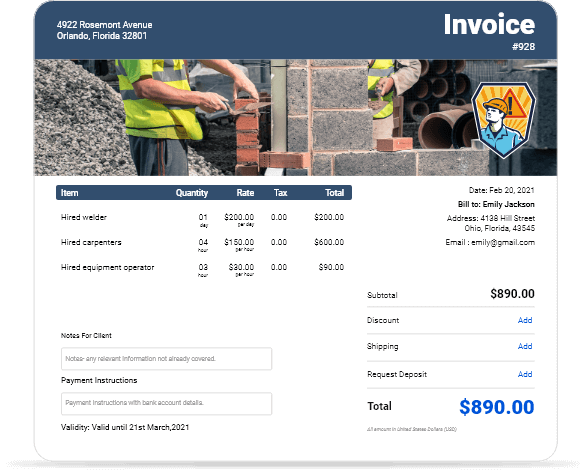
Contract Labor Invoice Template
Contract Labor Invoice Template
Read more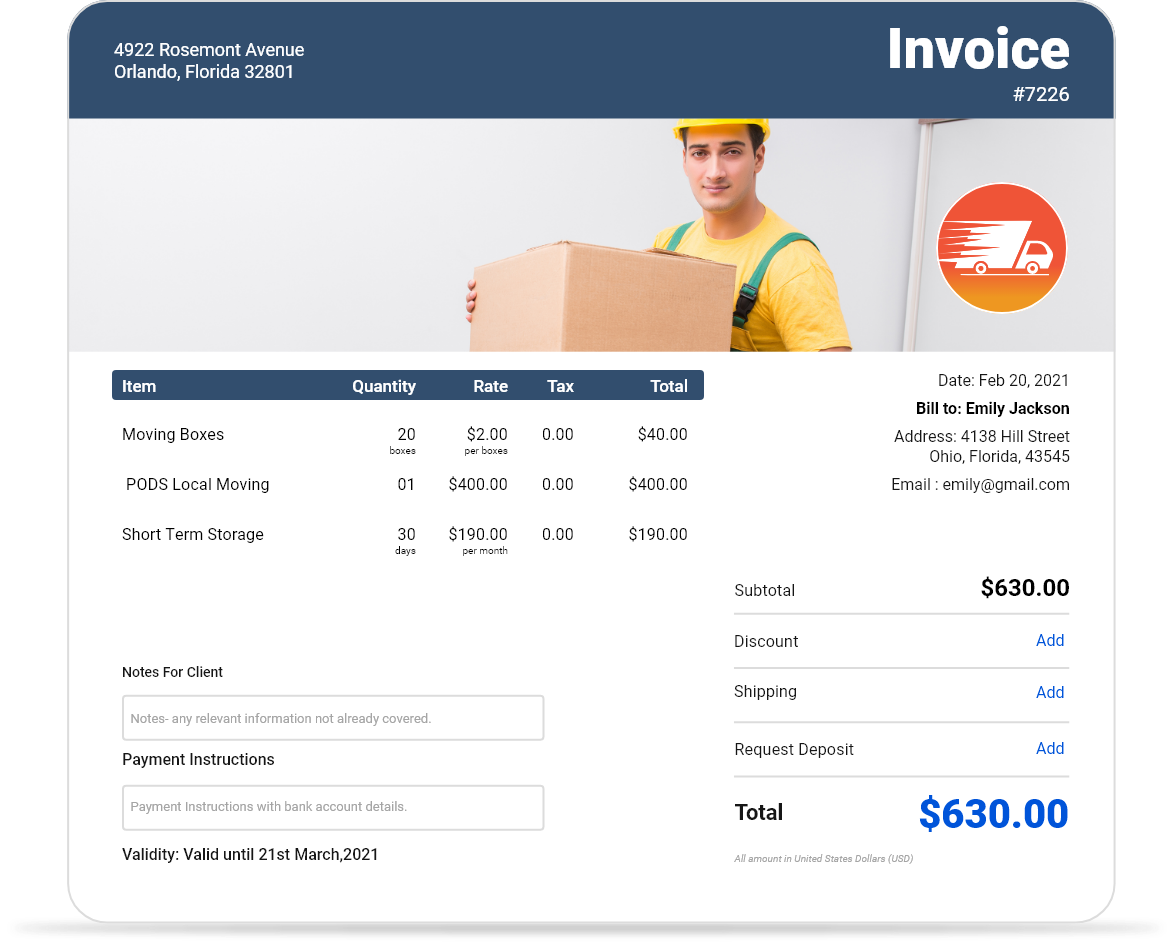
Moving Company Invoice Template
Moving Company Invoice Template
Read more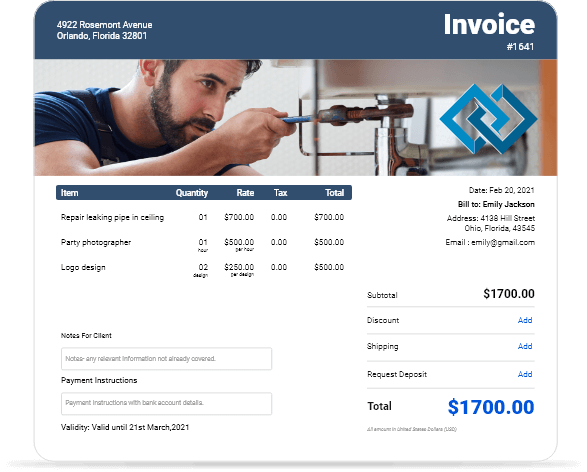
Small Business Invoice Template
Small Business Invoice Template
Read more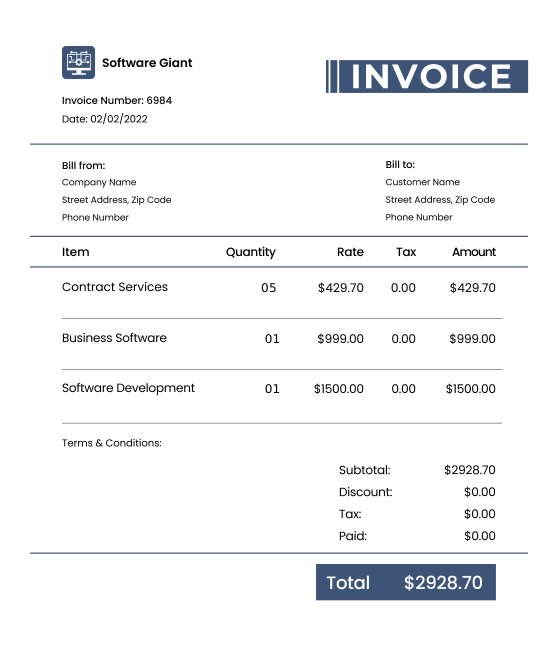
Software Development Invoice Template
Software Development Invoice Template
Read moreHow to Price Drywall Jobs: Everything About Drywall Pricing & Estimation
Learn how to price drywall jobs and what factors you should consider as a drywall contractor when estimating drywall costs.
Read more14 Actionable Accounting Tips for Small Business Owners
New to finance? Discover 14 simple small business accounting tips to track revenues, expenses, and costs, and grow your business effectively.
Read moreWhat is the Accounts Payable Process? [Definition, Challenges & Full Cycle]
Understand in detail what is the accounts payable process and why it is significant for small business owners. Also, check out what are the challenges faced during the process before going through its full cycle.
Read moreMaximize Your Margins With Profitability Tips for Appliance Repair Businesses
Discover strategies to increase profitability in your appliance repair business and boost your margins with essential tips for success.
Read moreContract Labor Invoice Template
Contract Labor Invoice Template
Read moreMoving Company Invoice Template
Moving Company Invoice Template
Read moreSmall Business Invoice Template
Small Business Invoice Template
Read moreSoftware Development Invoice Template
Software Development Invoice Template
Read moreHow to Price Drywall Jobs: Everything About Drywall Pricing & Estimation
Learn how to price drywall jobs and what factors you should consider as a drywall contractor when estimating drywall costs.
Read more14 Actionable Accounting Tips for Small Business Owners
New to finance? Discover 14 simple small business accounting tips to track revenues, expenses, and costs, and grow your business effectively.
Read moreWhat is the Accounts Payable Process? [Definition, Challenges & Full Cycle]
Understand in detail what is the accounts payable process and why it is significant for small business owners. Also, check out what are the challenges faced during the process before going through its full cycle.
Read moreMaximize Your Margins With Profitability Tips for Appliance Repair Businesses
Discover strategies to increase profitability in your appliance repair business and boost your margins with essential tips for success.
Read moreContract Labor Invoice Template
Contract Labor Invoice Template
Read moreMoving Company Invoice Template
Moving Company Invoice Template
Read moreSmall Business Invoice Template
Small Business Invoice Template
Read moreSoftware Development Invoice Template
Software Development Invoice Template
Read more