

Key Takeaways
- 01The flooring market is growing 4% annually from 2023 to 2032, offering steady demand
- 02Starting a flooring business requires $10,000-$20,000 for licensing, tools, vehicle, and insurance
- 03Essential skills include flooring expertise, sales, communication, and business management
- 04An LLC structure with business insurance protects your personal assets from liability
- 05Securing your first client before major investments helps mitigate financial risk
Flooring is a key piece in every real estate. Ever seen an office or a house without a floor? It's crucial not just because it can't be ignored, but it also adds a star to the decor of the estate. Thus, the demand for flooring won't ever fade away. In fact, it is anticipated to grow 4% every year from 2023 to 2032. Just observe around yourself to see how many new buildings are under construction. Those are a pie of the flooring market. The actual cake is even bigger. And since you understand this, we are going to teach you how to start a flooring business so that you can take advantage of this never-ending demand. So first, let's start with understanding your responsibilities.
Table of Content
What Does a Flooring Installation Business Do?
"Isn't it obvious?" you must be thinking. But there is more depth to it that we need to explore. So have a look at what your responsibilities will look like.
1. Installing a new floor
Usually, any new building or house under construction will need to install flooring. So, you can look to grab a contract from a constructor for flooring all its current and upcoming projects.
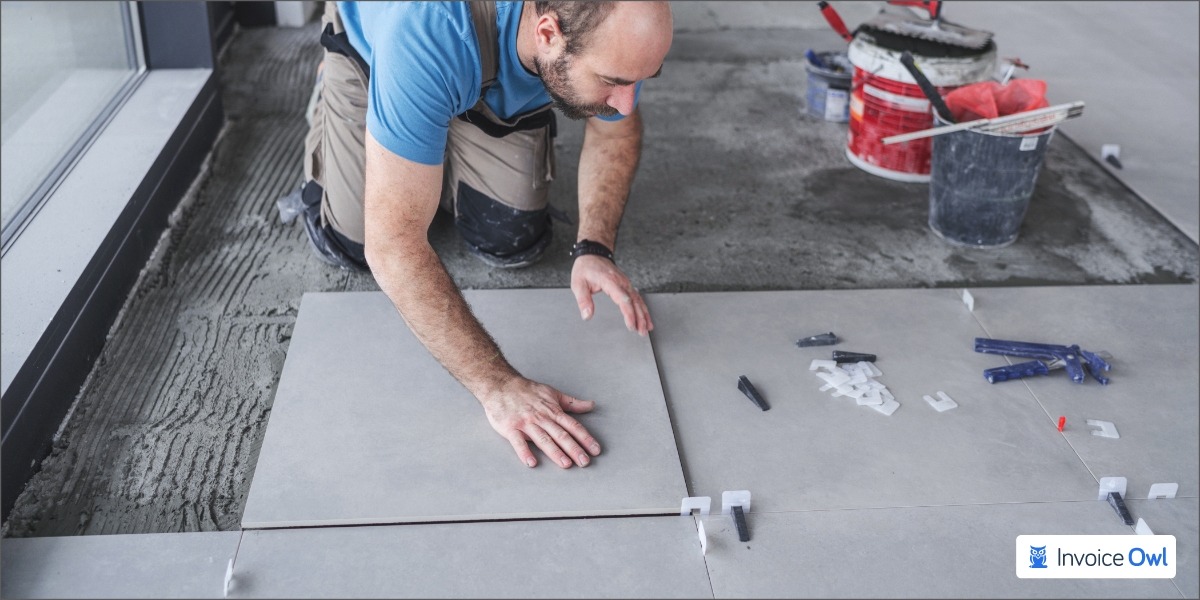
This one is very important because it holds the power to be your majority source of income. Reliable and elegant flooring is something that no constructor can ignore.
2. Replacing an old floor
Sometimes, you may find yourself taking out the old floor and replacing it with another. But frankly speaking, a need to replace a floor doesn't happen often. Ask yourself when was the last time you replaced the floor of your home. However, it offers good money once given a contract to do it.
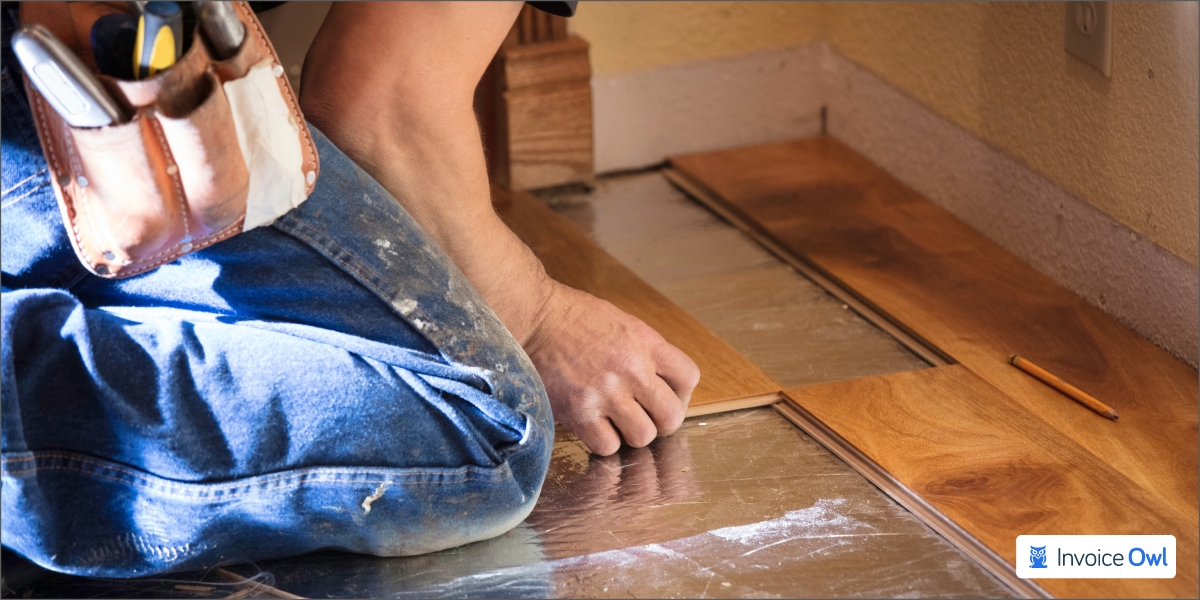
3. Maintaining or repairing a floor
The opportunities for maintaining or repairing a floor can also pop up from time to time. For example, you may be required to replace the broken tiles of a floor or refinish the whole altogether.
Now that you know what you will be doing, you should also realize that no business can thrive without the required set of skills needed for it.
5 Essential Skills for a Flooring Installation Business
Flooring Installation and Repairing
Expertise is essential to stand out in today's competitive market. Gone are the days when having average skills was enough. Contractors and homeowners now have access to numerous flooring businesses. To come on their radar, you need to gain their trust with your expertise. Make sure you or someone on your team can provide quality flooring services consistently.
Communication
Every day, you will talk to your clients about their requirements and communicate those requirements to your team. If not done well, this could end up giving your clients unwanted upsets. Make sure that you listen properly first and then pass it on without dropping anything. Written communication with your clients and your team will also add a lot of clarity.
Sales
Money is the fuel of all businesses, and to refill the tank, you need to make regular sales. As a flooring service business owner, you should look to strike a long-term deal with a contractor. This will ensure you some cash flow in the time to come to keep the business afloat.
Financing and Accounting
This skill saves you from any legal trouble and shows you how fast you need to run to cover expenses and make a profit. Thankfully, you do not need to learn it from the bottom up. You can hire a professional to do this for you.
Leadership and Management
The fate of a business heavily relies on its leader. For instance, if you need to complete a wood flooring project within a tight deadline, your composure and ability to motivate your team will decide its result. You need to ensure smooth coordination between your employees to get things done on time.


Apart from skills, you will also need some initial investment to launch your business. But relax. It does not need to be from your own pocket. Yes, it would be great if you have the required money to invest. If not, you can approach a bank for a business loan or look for a partner willing to invest in your venture. However, the important question that comes up here is how much money you need.
What is the Cost of Starting a Flooring Business?
There are some costs that you cannot overlook even when you are just starting your business. So, here is a list of prerequisites and their cost.
Startup Cost Breakdown
Essential expenses for launching your flooring business
| Type | Cost | Priority |
|---|---|---|
Business name and legal structure LLC registration fees | $40 - $500 | High |
State license Depends on business permit type | $50 - $550 | High |
Business insurance Business Owner's Policy (BOP) | $350 - $900/year | High |
Tools Essential installation equipment | $3,000 - $5,000 | High |
Vehicle For transporting materials | $1,500 - $3,000 | Medium |
Materials for first project Based on client requirements | Varies | Medium |
Worker wages Based on agreement with workers | Varies | Medium |
Total estimated startup cost: $10,000 - $20,000
So, you can safely assume that you will need around $10,000 - $20,000 to lay the foundation of your flooring business.
You can try to persuade your client to pay you in advance to buy the required materials with it.
Now that you have got an overview of the flooring installation industry, you are ready to start taking the steps to build your flooring company.
7 Steps to Start a Flooring Company
1. Plan your business
A successful floor installation business needs a plan to reach success. Yes, we understand that you cannot plan everything beforehand. However, spending some time to plan things out will help you set your priorities.
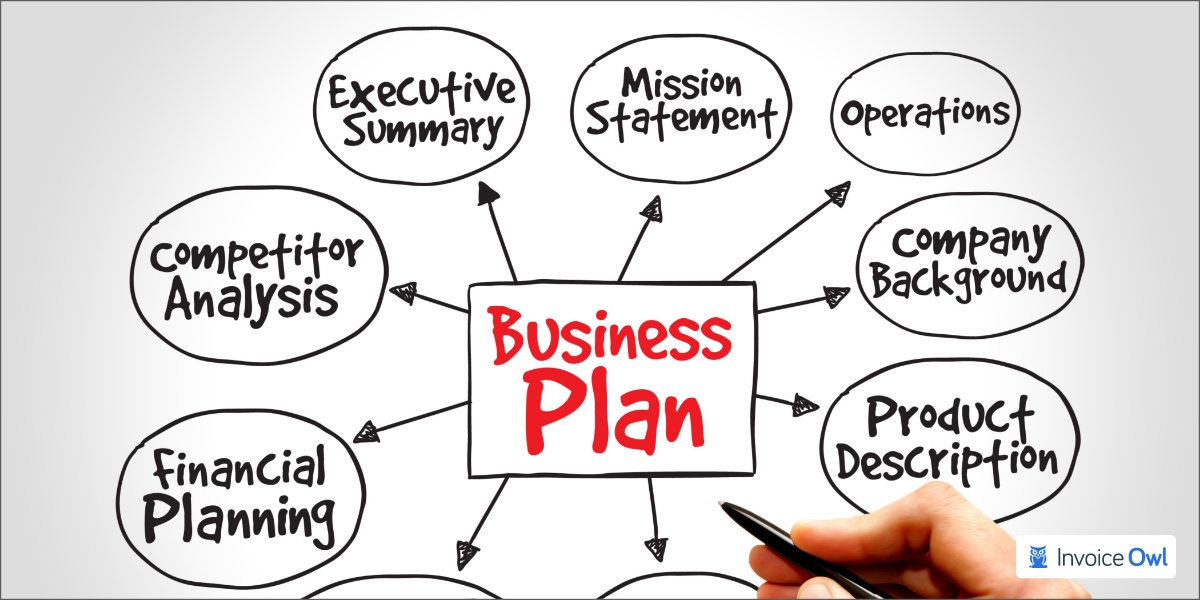
So below is a list of things that you need to include in your business plan.
Once you have planned your business, the next step is to make your business official.
2. Complete the legal formalities
Legal formalities like business structure and the state license are important as you may not get any contract without them. Clients trust a defined business rather than a person who fell on their path to provide the service they want.
First things first, decide what will be your legal structure. Your flooring business can take forms such as a sole proprietorship, a partnership, an LLC, or a corporation. Usually, you should go for an LLC. But if you want to dive into the details of each of these, we recommend you to read this blog post.
Once you have registered your business' legal structure, you will need to apply for a license to start a business in your state. Here is a great guide to getting you a business license.
Voila! Now you are a Flooring installation business owner. But the work is not done yet.
3. Find your first client
At this point, you will be tempted to hire your team and buy the needed equipment. But wait. That can be risky. Before that, you need to ensure that you have enough potential cash flow coming your way to fulfill those expenses and make a profit.
So hit the road, pitch your proposal to your target audience, show your earlier experience, get leads, and convert them. A clear USP, as explained earlier, will act as a spring while making this steep climb.
Upon finding your first client, make an estimation of the project and the materials, tools, and people you will need for it. The next milestone in this journey is to arrange the finances for your first project.
4. Arrange the finances required for your business
Now that you have a client ready to pay, you have mitigated your risk to a huge extent. This gives you a green single to make further investments as you have ensured a return with your initial client.
So this is the point where you need to find your business fuel - money. The best case scenario would be to convince your client to pay you an advance to arrange the requirements. But the world is not ideal. Thus, the other options you can look to arrange the funding are -
- Your savings
- A bank
- A business partner
- Your friends and family
Having a ready client will make it easier to attract money from banks or investors. Upon having the funding, purchase the required tools and materials, and hire the people needed to complete your project.
5. Create a business bank account
You may be thinking that can't you use your personal bank account. But that would actually be a mistake. Having a separate business account will ensure that your personal assets are protected in the event of bankruptcy. This is also why we recommend you register your business as an LLC. A sole proprietorship or partnership will hold you personally liable for losses.
Thus, the effort to create an LLC and a business bank account are worth it. The next step is to save your business even before the occurrence of any mishappening.
6. Purchase business insurance
The sea of business doesn't give entrepreneurs a smooth sail. In other words, you will most probably get into some financial trouble. At that point, you need to minimize your losses.

But its foundation is laid when everything is going fine. Thus, invest in business insurance early on to make sure that if your business hits an iceberg, you have a side boat to sail you through.
There are many types of business insurance with different coverages. But usually, LLC owners buy Business Owner's Policy (BOP). But if you want to explore further, here are other insurance options for small businesses, as per Forbes.
7. Set up an accounting system
A proper accounting system keeps a track of stuff like taxes, expenses, profits or losses, and salaries. Basically, an accounting system has a role to play in anything that involves money. You can keep an Excel Spreadsheet or invest in accounting software for ease. But along with that, we also recommend you try InvoiceOwl which takes complete care of your invoices.
So how does it feel now that you have a path laid to enter the floor installation industry with your business? But our job isn't over until we answer your probable questions.
Invoicing Has Never Been This Easier!
InvoiceOwl brings professionalism to your flooring company by helping you create branded estimates and invoices that get you paid faster.
Start Your FREE TrialFrequently Asked Questions
As per Home Guide, a client pays $6 to $10 per square foot of flooring. But it can increase or decrease further depending on the type of flooring. For the flooring of an average-sized living room, you can get around $1,660 to $4,620.
This is the cost per square foot that a flooring company can charge:
- Hardwood - $10 - $18
- Linoleum - $3 - $10
- Porcelain tile - $3 - $10
- Laminate - $6 - $9
We recommend forming an LLC (Limited Liability Company) as it protects your personal assets from business liabilities while being easier to manage than a corporation. An LLC separates your personal finances from business debts and legal issues.
Yes, business insurance is essential before taking on your first project. A Business Owner's Policy (BOP) typically costs $350-$900 per year and protects you from accidents, property damage, and other liabilities that could otherwise bankrupt your business.
Conclusion
So you are equipped with all the information you need to start a flooring business. But this information is useless if you don't act on it. Start with making a business plan to get a sense of direction and then move along to the further steps. It's time to make the leap.
Related Resources
How to Start a Carpet Cleaning Business?
From investing in the right equipment to creating a marketing plan, here's all you need to know on how to start a carpet cleaning business and deliver quality.
Read more
14 Actionable Accounting Tips for Small Business Owners
New to finance? Discover 14 simple small business accounting tips to track revenues, expenses, and costs, and grow your business effectively.
Read more![What is the Accounts Payable Process? [Definition, Challenges & Full Cycle]](/images/2021/06/accounts-payable-process.jpg)
What is the Accounts Payable Process? [Definition, Challenges & Full Cycle]
Understand in detail what is the accounts payable process and why it is significant for small business owners. Also, check out what are the challenges faced during the process before going through its full cycle.
Read more
Maximize Your Margins With Profitability Tips for Appliance Repair Businesses
Discover strategies to increase profitability in your appliance repair business and boost your margins with essential tips for success.
Read more
15 Best Flooring Estimating Software: Complete Guide
Compare the top 15 flooring estimating software solutions. Detailed reviews, pricing, and features to help contractors make informed decisions.
Read moreFlooring Estimate
Explore how InvoiceOwl helps flooring contractors win jobs, get paid faster, and save time with instant estimates and professional invoices on web and mobile.
Read more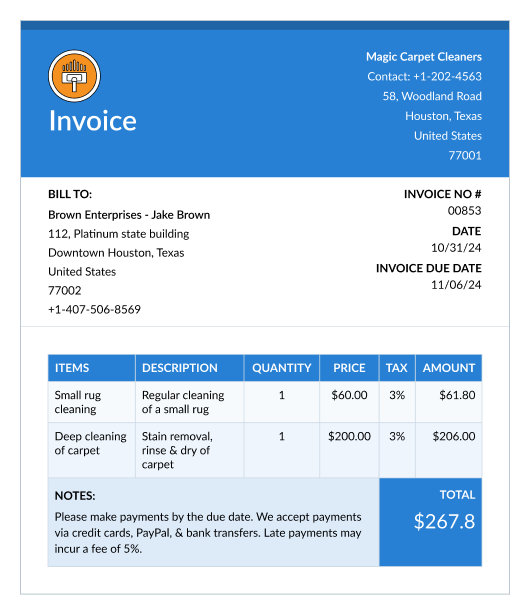
Carpet Cleaning Invoice Template
Carpet cleaning invoice template
Read more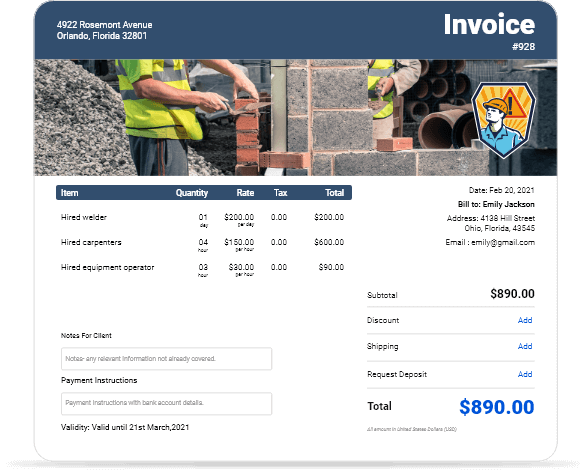
Contract Labor Invoice Template
Contract Labor Invoice Template
Read moreHow to Start a Carpet Cleaning Business?
From investing in the right equipment to creating a marketing plan, here's all you need to know on how to start a carpet cleaning business and deliver quality.
Read more14 Actionable Accounting Tips for Small Business Owners
New to finance? Discover 14 simple small business accounting tips to track revenues, expenses, and costs, and grow your business effectively.
Read moreWhat is the Accounts Payable Process? [Definition, Challenges & Full Cycle]
Understand in detail what is the accounts payable process and why it is significant for small business owners. Also, check out what are the challenges faced during the process before going through its full cycle.
Read moreMaximize Your Margins With Profitability Tips for Appliance Repair Businesses
Discover strategies to increase profitability in your appliance repair business and boost your margins with essential tips for success.
Read more15 Best Flooring Estimating Software: Complete Guide
Compare the top 15 flooring estimating software solutions. Detailed reviews, pricing, and features to help contractors make informed decisions.
Read moreFlooring Estimate
Explore how InvoiceOwl helps flooring contractors win jobs, get paid faster, and save time with instant estimates and professional invoices on web and mobile.
Read moreCarpet Cleaning Invoice Template
Carpet cleaning invoice template
Read moreContract Labor Invoice Template
Contract Labor Invoice Template
Read moreHow to Start a Carpet Cleaning Business?
From investing in the right equipment to creating a marketing plan, here's all you need to know on how to start a carpet cleaning business and deliver quality.
Read more14 Actionable Accounting Tips for Small Business Owners
New to finance? Discover 14 simple small business accounting tips to track revenues, expenses, and costs, and grow your business effectively.
Read moreWhat is the Accounts Payable Process? [Definition, Challenges & Full Cycle]
Understand in detail what is the accounts payable process and why it is significant for small business owners. Also, check out what are the challenges faced during the process before going through its full cycle.
Read moreMaximize Your Margins With Profitability Tips for Appliance Repair Businesses
Discover strategies to increase profitability in your appliance repair business and boost your margins with essential tips for success.
Read more15 Best Flooring Estimating Software: Complete Guide
Compare the top 15 flooring estimating software solutions. Detailed reviews, pricing, and features to help contractors make informed decisions.
Read moreFlooring Estimate
Explore how InvoiceOwl helps flooring contractors win jobs, get paid faster, and save time with instant estimates and professional invoices on web and mobile.
Read moreCarpet Cleaning Invoice Template
Carpet cleaning invoice template
Read moreContract Labor Invoice Template
Contract Labor Invoice Template
Read more