

Key Takeaways
- 01Pricing is the process of fixing what you are planning to charge for your company's products or services
- 02A practical pricing strategy helps you build trust with clients and save time on job estimates
- 03Calculate labor costs by adding base salary and overhead, then multiplying by your profit margin
- 04Include all material costs, overhead expenses, and taxes in your job pricing
- 05Compare competitor prices to ensure you're charging competitively without undervaluing your work
- 06Review and adjust your pricing strategy annually to account for inflation and changing costs
"How much should I charge?" is among the most asked questions among peers starting as contractors. We understand how important this question is.
Currently, there are over 36,310 general contractors employed in the United States. If you are starting as a self-employed person, first remember there is competition out there. So, you must plan out everything correctly to stand out, especially since the pricing strategy must be on point. Because most amateurs often miss out on this part.
Since the contracting job can differ, setting consistent pricing consumes time. Also, following a pricing strategy is important as it can save time and help you build trust with your clients.
So, this article has a simple guide on how to price a job as a contractor. Also, you will learn the benefits of pricing a job correctly. Without any ado, let's get started.
Table of Content
- Importance of Having a Pricing Strategy as a Contractor
- How to Price a Job as a Contractor for Profit?
- Pricing Strategy Best Practices
- FAQs
- Conclusion
Importance of Having a Pricing Strategy as a Contractor
As a contractor, following a practical pricing strategy is crucial as it offers several benefits:
How to Price a Job as a Contractor for Profit?
Pricing a job can be overwhelming initially, but with practice and effort, you will get it fluent. When starting, ensure to keep a list of all the things you need to consider for pricing and forget to skip or miss out on any factor. You must ensure you are paid fairly or charge your customer a fair price.
1. Understand the scope of work to quote correctly
It is essential to understand the scope of work before you come up with your pricing.
Before you quote, consider the following:
- Job Location: Is the job location close to your office or remote? You need to consider the traveling costs here.
- Job site size: You must measure everything relevant to the job. For instance, if it's a construction business, measure every inch of the area where you have planned to build.
- Check for existing damage, accessibility issues, or safety hazards: A quick walk around the place can give you a clear picture of everything you want to check. Take pictures and attach them to your customer's profile for reference.
- Consider time constraints: If it's an urgent construction project, then difficulties accompany it. So ensure to charge more for the tight timeframe.
- Considering special requests: Consider the time and expertise required if your clients have special requests and quote additional costs. Whether you are providing standard or specialized services?
- Materials needed: Consider the materials you need to complete your quoted job. Remember to add a markup and overhead for the materials.
- Time required: How much time do you need to complete the job? This equals labor, and labor equals cost.
2. Estimate the labor cost
One of the crucial parts of construction job costs is the labor cost.
To estimate the labor cost for a job:
Step 1: Add your base salary and overhead costs together
Step 2: Multiply this total by your profit margin
Step 3: Now divide the total by your annual billable hours to get your hourly rate
Step 4: Finally, multiply your hourly rate by 8 to reach your day rate.
Don't forget to include the employee's wages, taxes, worker's compensation, and other employee-related expenses. Overall, we recommend a 20% reliable markup for hourly labor rates.
3. Count in the total material costs and overhead
To calculate this, first list all the materials you need for the job and add the cost for each, then add the markup and calculate the total. You will get your material costs.
Now you must calculate the overhead costs for a specific time frame, i.e., for a week, month, or quarterly.
4. Consider taxes
As a business contractor, you need to pay taxes. So, don't forget to include the tax estimations for each job. You can also add annual business taxes such as income tax estimations into your overhead costs or even apply them with materials and resources taxes on a job-to-job basis. Make sure to include them, as they can impact your overall revenue.
5. Compare your competitor's price
When you have curated a base rate for your construction job, it's time to check how much your competitors offer for the same services. It is a healthy thing to compare because you will get the idea that if you are doing it right. Charging too high or too low can affect your business. So, by comparing, you can adjust your pricing as needed and even deliver your services at a competitive price.
6. Estimate profit
Estimating profit is the next essential step in job costing. You must keep the margin in your net sales revenue minus the labor, material, and overhead costs to get the most accurate estimate. This is expressed as a percentage.
The outcome is the profit. If you are unsatisfied with the profit number, consider adjusting the numbers in your quote, your markup percentage calculation, or your profit margin and then calculate again.
These overhead expenses include the following:
- Office rent
- Office supplies
- Marketing
- Legal fees
- Utilities
- Accounts and Insurance bills
- Other office expenses
To calculate your overhead costs:
- Add up your overhead fees during a specific time
- Find the number of labor hours worked for a particular period
- Divide overhead costs into hours worked to get your hourly overhead cost
- Multiply your hourly overhead cost by the hours you or your employees worked on the job
- Ping a professional organization or a trade association in your field. You will get good information on what other independent contractors charge in your area
- You can directly pitch any independent contractor and ask about their charges
- Talk to potential clients and existing networks to gather more information about your business
However, manual calculations can go wrong, or consume effort and time. This is why it is necessary to get your hands on the best-estimating software, such as InvoiceOwl. This invoice and estimate software like InvoiceOwl makes your estimating job easy. It is ideal for all kinds of contractors and allows you to create professional-looking estimates and invoices within minutes.
Pricing Strategy Best Practices
To stand out from other contractors, following some best pricing strategy best practices is essential:
Create Professional Estimates in Just Minutes
Stop wasting time on manual calculations. InvoiceOwl helps you create professional-looking estimates and invoices for contractor jobs instantly.
Start Your FREE TrialFrequently Asked Questions
In general, contractors don't charge on an hourly basis. Rather, they set charge 10% to 20% of the overall cost of the construction project in a practice which is known as cost-plus. If it is a bigger project, the contractor may charge a fee of up to 25%.
General contractors typically calculate markups based on the work and its cost to complete the job.
Formula: Markup = Gross Profit x 100
For example, the typical markup will be between 7.5 and 10% in terms of materials. Meanwhile, some contractors will mark up materials as much as 20%.
Tried calculating markups manually, and now it's time to leverage the automated markup calculating tool.
A cost estimate for a construction job can be done by identifying how much it costs you per hour in labor and multiplying the cost by how many hours were worked.
Labor costs are more flexible than material costs, often considered when budget cuts are needed. However, material costs can be influenced by the type and grade of materials used in the construction project.
Conclusion
Being a self-employed contractor, you are responsible for handling your job well. There are multiple factors you must create and control. One such thing is pricing the job.
Pricing an entire job as a contractor isn't an easy process. But once you have figured it out, there is no stopping by. However, ensure to regularly review your pricing. To be precise, adjust your pricing strategy every year.
Because some overhead expenses, such as vehicle or rent costs, tend to change yearly with inflation. So, don't forget to review your pricing from time to time to ensure you are making a profit and scaling it up.
Related Resources
Construction Profit Margins: How to Track and Increase it
Learn how to track and increase construction profit margins with expert strategies. Maximize profits and ensure sustainable business growth. Start today.
Read more
An Ultimate Contractor Pricing Guide for 2026
As a contractor, pricing your services might be a little tricky. Here's a comprehensive contractor pricing guide for building a profitable business.
Read more
7 Practical Strategies to Make Most Profit in Construction
Facing tough times in your construction business? Use these strategies to skyrocket your business profit without losing your old and new customers. Understand the reason behind calculating exact service costs.
Read more![How to Make Money in Construction Business [10 Key Strategies]](/images/2022/08/How-to-Make-Money-in-Construction-Business.jpg)
How to Make Money in Construction Business [10 Key Strategies]
Discover useful tips on how to make money in the construction business. We've included excellent techniques to cut costs, and increase profitability.
Read more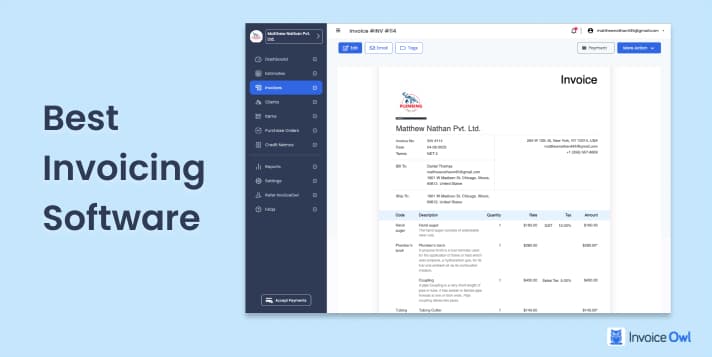
Best Invoicing Software for Small Businesses (2025)
Compare the top invoicing software solutions for small businesses and contractors. Find detailed reviews, pricing, features, and user feedback to choose the right tool for your needs.
Read more
15 Best Flooring Estimating Software: Complete Guide
Compare the top 15 flooring estimating software solutions. Detailed reviews, pricing, and features to help contractors make informed decisions.
Read more
How to Bid a Paint Job- Complete Estimation Process
Master bidding for paint jobs with expert insights on pricing, materials, labor, and insurance. Complete guide for painting contractors to boost profitability.
Read more
What is a Quote or Quotation for Contractors?
A price quote can either be a document or verbal communication that gives a fixed price for a project. Learn the rules of sending out a price quote in business.
Read moreConstruction Profit Margins: How to Track and Increase it
Learn how to track and increase construction profit margins with expert strategies. Maximize profits and ensure sustainable business growth. Start today.
Read moreAn Ultimate Contractor Pricing Guide for 2026
As a contractor, pricing your services might be a little tricky. Here's a comprehensive contractor pricing guide for building a profitable business.
Read more7 Practical Strategies to Make Most Profit in Construction
Facing tough times in your construction business? Use these strategies to skyrocket your business profit without losing your old and new customers. Understand the reason behind calculating exact service costs.
Read moreHow to Make Money in Construction Business [10 Key Strategies]
Discover useful tips on how to make money in the construction business. We've included excellent techniques to cut costs, and increase profitability.
Read moreBest Invoicing Software for Small Businesses (2025)
Compare the top invoicing software solutions for small businesses and contractors. Find detailed reviews, pricing, features, and user feedback to choose the right tool for your needs.
Read more15 Best Flooring Estimating Software: Complete Guide
Compare the top 15 flooring estimating software solutions. Detailed reviews, pricing, and features to help contractors make informed decisions.
Read moreHow to Bid a Paint Job- Complete Estimation Process
Master bidding for paint jobs with expert insights on pricing, materials, labor, and insurance. Complete guide for painting contractors to boost profitability.
Read moreWhat is a Quote or Quotation for Contractors?
A price quote can either be a document or verbal communication that gives a fixed price for a project. Learn the rules of sending out a price quote in business.
Read moreConstruction Profit Margins: How to Track and Increase it
Learn how to track and increase construction profit margins with expert strategies. Maximize profits and ensure sustainable business growth. Start today.
Read moreAn Ultimate Contractor Pricing Guide for 2026
As a contractor, pricing your services might be a little tricky. Here's a comprehensive contractor pricing guide for building a profitable business.
Read more7 Practical Strategies to Make Most Profit in Construction
Facing tough times in your construction business? Use these strategies to skyrocket your business profit without losing your old and new customers. Understand the reason behind calculating exact service costs.
Read moreHow to Make Money in Construction Business [10 Key Strategies]
Discover useful tips on how to make money in the construction business. We've included excellent techniques to cut costs, and increase profitability.
Read moreBest Invoicing Software for Small Businesses (2025)
Compare the top invoicing software solutions for small businesses and contractors. Find detailed reviews, pricing, features, and user feedback to choose the right tool for your needs.
Read more15 Best Flooring Estimating Software: Complete Guide
Compare the top 15 flooring estimating software solutions. Detailed reviews, pricing, and features to help contractors make informed decisions.
Read moreHow to Bid a Paint Job- Complete Estimation Process
Master bidding for paint jobs with expert insights on pricing, materials, labor, and insurance. Complete guide for painting contractors to boost profitability.
Read moreWhat is a Quote or Quotation for Contractors?
A price quote can either be a document or verbal communication that gives a fixed price for a project. Learn the rules of sending out a price quote in business.
Read more