
![How to Price a Roofing Job [7-Step Pricing Plan]](/images/2022/08/how-to-price-a-roofing-job.jpg)
Key Takeaways
- 01The roofing industry is expected to grow at 5% annually through 2030, creating strong business opportunities
- 02Accurate pricing requires 7 key components: work scope, measurements, labor, materials, overhead, taxes, and profit margin
- 03Use the pitch multiplier method to calculate exact roofing squares needed for sloped roofs
- 04Choose fixed rates when you have experience and clarity; opt for hourly rates when starting out
- 05Average gross profit margins in roofing range from 20-40% before expenses
The roofing industry can create jobs in the United States at a 5% rate from 2020 to 2030. Even the roofing contractor's market size in the United States is expected to be close to $56.7 billion in 2023.
With the increasing demands, you need to ensure that you price your roofing services accurately to achieve desired profits.
The process of estimating the price of a roofing job can be complicated and takes into account a variety of elements, such as the labor rate and price of supplies, industry standards, and general market circumstances.
In addition to helping the contractor increase their profits, fair and precise pricing guarantees that the client will obtain high-quality services at an affordable cost.
Therefore, in this blog, we'll walk you through the many aspects of how to price a roofing job.
So, without further ado, let's get started.
1. Clarify the Work Scope
You should offer a suitable estimate before submitting a roofing job bid. You must first think about the task scope concerning what it will encompass. When estimating roofing tasks, there are a few factors you must take into account.
Unlock the free roofing estimate template here.
1.1 Meet with the client
Meeting with the client is the first step you should take before estimating the price of the service. Ask the client as many questions as you want. You can ask questions relating to:
- Client's budget.
- Client's roofing requirements and expectations.
- Which type of house or property does the client own?
- Are there any solar panels or satellite dishes on the roof?
Once you have a clear understanding of the work that the customer requires, be sure to inspect and measure the roof. This way you'll have accurate figures to work with.
1.2 Refer to building codes
To make sure you are not utilizing any restricted materials, you should also speak with the town's building inspector and become familiar with the building codes.
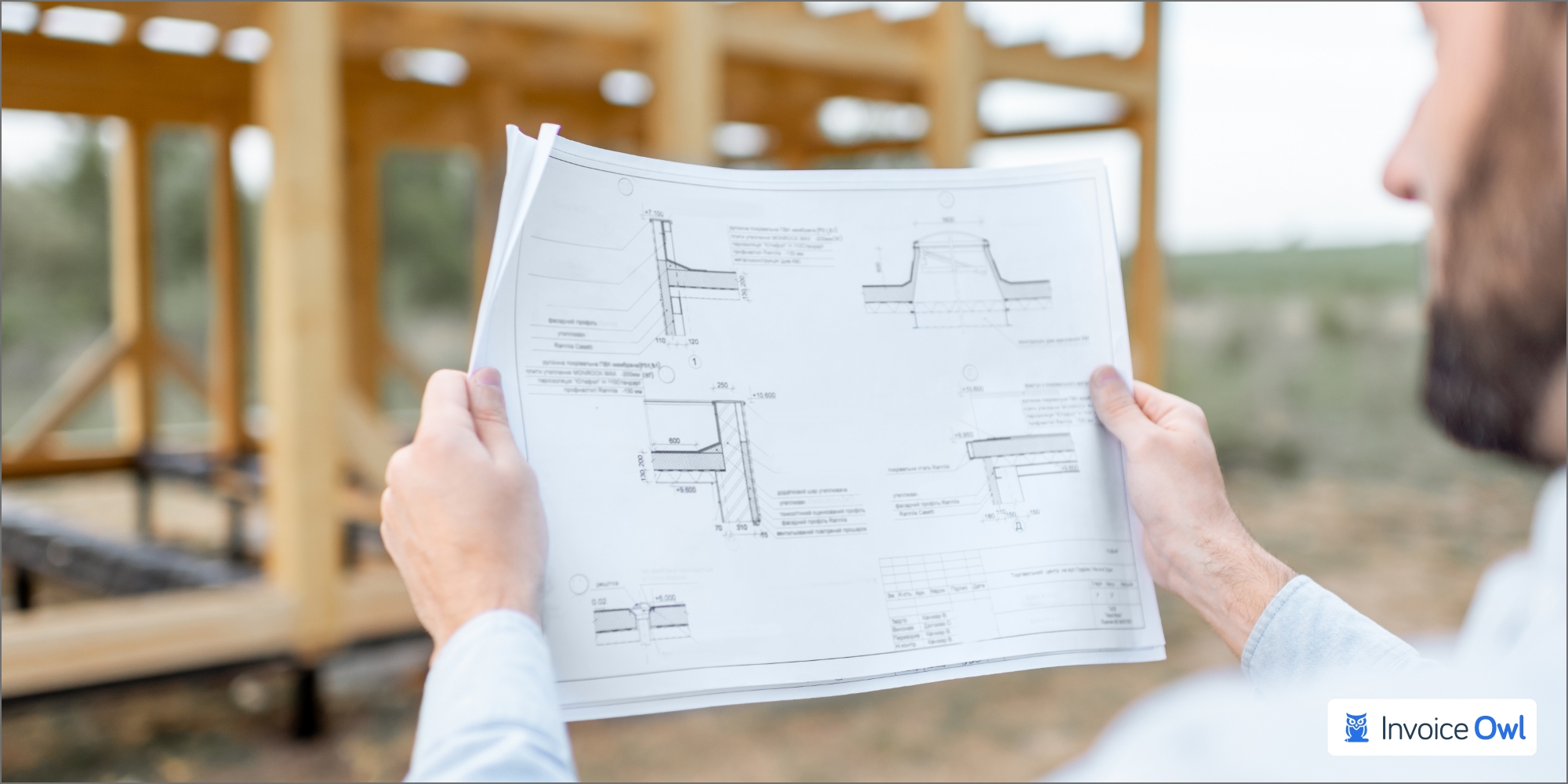
If you work in enclosed housing estates, you need to use specific materials and colors to maintain uniformity in the housing estates.
1.3 Roof inspection
Even if a client points out a particular spot on the roof where they think there is a leak, you should nevertheless do a comprehensive inspection of the whole roof.
The client could be unaware of more damage, and you might help them save money by spotting it before it does more harm. Additionally, this will assist you to gain the client's confidence and sell a bigger task.
Address some of the major issues to the client and mention all the issues in detail while making the estimation.
2. Get Precise Measurements
Getting precise measurements can help you determine how many squares you can install, which can help you estimate the material and labor required. Your client won't have the exact measurement estimate; you should confirm the number yourself even if they do.
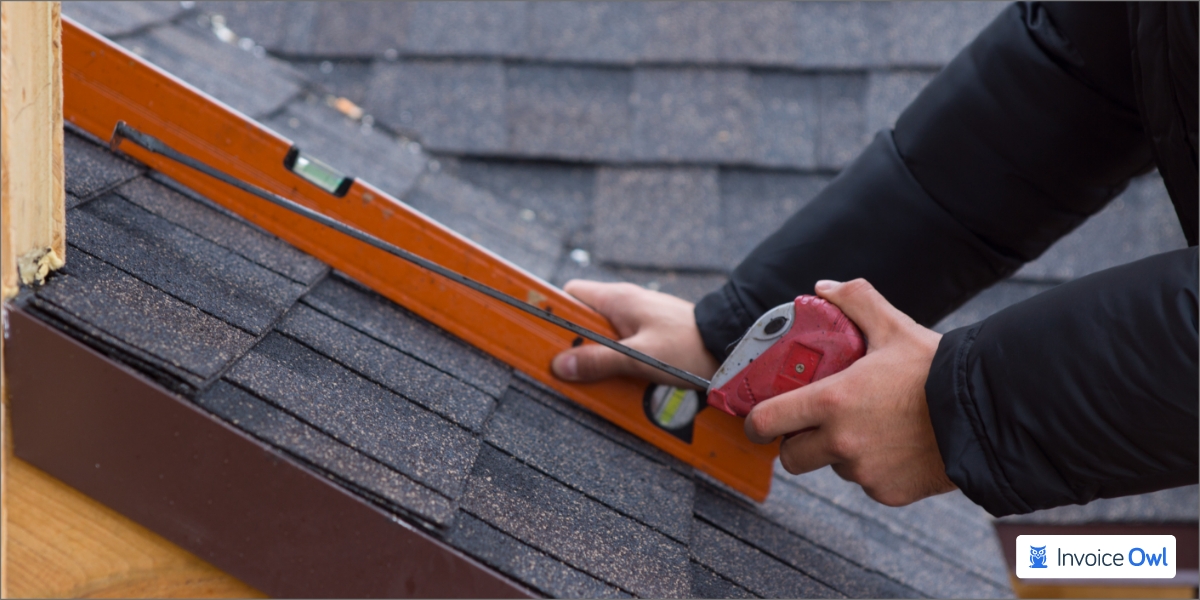
In standard roofing terminology, a single square equals 100 square feet. You can get precise measurements of the roof by following the below-listed procedure.
Determine ground-level squares
Firstly, you need to determine the external dimensions of the house and divide the number by 100.
For example, if the client's space is estimated at around 30 ft. by 50 ft., the external dimension of the area is 1500 square feet. You must divide it by 100 to get the total number of squares required. You need 15 ground-level squares to cover the roofing task in our example.
The result is for the flat roof area, but most houses are pitched, so you need further calculation to get the precise measurement.
Calculate the roof pitch
The steepness or the roof's pitch can be expressed as a ratio. If the ratio is 4:12, for instance, the roof rises 4 feet for every 12 feet of horizontal length.
The roof pitch can be coined as low, high, or medium:
- The house has a low roof pitch if the ratio is 5:12 or lower
- The roof pitch is considered medium if the pitch ranges between 6:12 and 9:12
- For high roof pitches, the ratio should be between 10:12 and 12:12
Multiply the ground-level squares with a pitch multiplier
The final step is to multiply the total number of ground-based squares with the pitch multiplier of the pitch ratios. This will help you to get the exact number of squares required.
Different pitch ratios have their own multipliers that can be used to get the exact measurement of the client's roof.
Roof Pitch Multiplier Reference
| Roof Pitch | Multiplier |
|---|---|
| 3:12 | 1.15 |
| 4:12 | 1.20 |
| 5:12 | 1.24 |
| 6:12 | 1.24 |
| 7:12 | 1.30 |
| 8:12 | 1.35 |
| 9:12 | 1.40 |
| 10:12 | 1.40 |
| 11:12 | 1.55 |
| 12:12 | 1.70 |
If the roof pitch ratio is 4:12, you need to multiply 1.20 with the total ground-level squares. As we calculated the total ground-level square to be 15, the total measurement is estimated at around 18.
Final result: The roof squares required for completing the job are 18. This number helps you estimate the job and effectively cover your expenses and profits.
3. Calculate Labor Costs
The labor cost is the most vital component of your estimation process. You need to consider different factors while finalizing your labor cost.
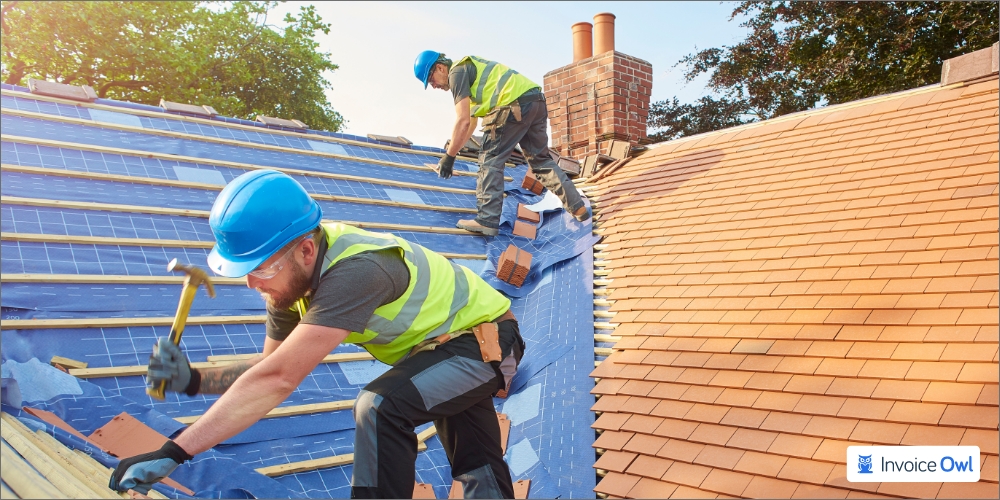
3.1 Finalize the labor hours
You need to calculate the total number of hours it will take for your team to complete the roofing job. Once done, multiply the number of employees by the total hours.
For example, if it can take three people 30 hours to complete the job, then the total labor hours are estimated to be around 90.
You can also look at previous estimates for similar job types, which can help you price the labor hours effectively without any hassle.
3.2 Calculate the hourly labor cost
You also need to focus on the total cost of labor by adding the hourly wage, taxes, insurance, and worker's compensation you pay to your employees.
If you can't do the calculation, you can estimate the average hourly rate of roofers in the industry. Then, you can add a fixed percentage of expenses, like insurance and taxes, to get an exact hourly labor cost for your roofing business.
3.3 Add the total labor cost
Now, you need to multiply the total labor hours by the hourly labor wage of your employees to get the accurate labor cost to complete the roofing jobs.
Don't add up both numbers because that will cause a degradation in profits and increase your roofing business expenses.
4. Calculate Material Costs

Once the labor costs are calculated, it's time to estimate the material costs.
- Based on the requirements, you must prepare the list of roofing materials required for the task's completion.
- Although the most commonly required roofing material is asphalt shingles, materials like solar panels, metal roofing, rubber slate, stone-coated steel, and even green roofs with plants can also be used based on roofing requirements.
- You can get in touch with the supplier that can offer you discounted rates on the bulk supply and deliver excellent quality roofing materials.
- You can calculate the procurement price and sell it to the clients at a retail price, including your roofing job cost.
- You can also offer a slight discount to allure the customers to choose your roofing material and service.
- Tally the material costs thoroughly, including flashing, underlayment, nails, and vents that the roofing contractors can ignore.
- You can also try to upsell the clients with the best roofing material quality that can help you increase your profits.
5. Know Your Miscellaneous or Overhead Expenses
Miscellaneous expenses or overhead costs, including uniforms, office rent, insurance, accounting, and different software integrations, need to be included in your overhead expenses linked with completing the task.
You can either include the overhead expenses in your total roofing cost or list them separately to ensure transparency with your prospects.
You need to calculate the overhead cost per week and then estimate the weekly labor hours. Then, divide the hours by the overhead costs to get an hourly figure.
If the overhead cost per week is $800 and the weekly labor hours are 80, then the hourly figure will be $10.
That implies for every labor hour, you need to charge a minimum of $10 to your client to cover your overhead expenses.
For a 50-hour project: You need $500 to cover the overall overhead expenses.
6. Don't Forget Taxes
You need to include taxes in your roofing cost estimation to ensure that you don't end up paying taxes on your business profits. You can charge your clients taxes on service and roofing material, which can help you save on paying taxes on your business profits.

You need to hire the best accountants to manage your cash flow and the hassles of tax filing. They can assist you in calculating the total taxes per job, which will result in the creation of accurate estimates.
7. Add Your Profit Margin
Once you have estimated the total cost, you need to add the roofing markup percentage to your products and roofing services that can help you drive business profits.
You need to ensure that you don't overprice your job estimate and lose the opportunity to convert the prospect into a client, or underprice the estimate and trim your profits.
You must maintain a balance with your overall profit margin percentage and offer quality roofing company services at a fair price.
These steps can help you finalize an accurate and precise roofing project cost and achieve your desired business outcomes.
As a roofing contractor, you must choose between two pricing standards in the service industry that you must consider during the estimation process.
What Should Be Included in Your Roofing Bid?
When preparing a roofing bid, there are several important elements that should be included to ensure a comprehensive and accurate estimate. Here's what should typically be included in a roofing bid:
Project overview
A detailed description of the roofing project, including the scope of work, the type of roof, and any specific requirements or challenges.
Materials
List all the materials required for the project, including the type and quantity of roofing materials as well as any additional materials needed for repairs or modifications.
Labor
Specify the labor costs, including the number of workers required, hourly rates, and the estimated number of labor hours needed to complete the project.
Removal and disposal
Include the costs associated with removing and disposing of the existing roofing materials, if applicable.
Permits and fees
Identify any necessary permits or fees required by local authorities, such as building permits, dumpster fees, or any other applicable charges.
Site preparation and clean-up
Include any costs related to site preparation, such as protecting landscaping, setting up safety equipment, and post-project clean-up.
Warranty information
Provide details about the warranties offered, including the duration and coverage for materials and workmanship.
Payment terms
Clearly state the payment terms, including any deposits or progress payments required, and the payment schedule.
Project timeline
Provide an estimated timeline for the project, including the start and completion dates, and any potential delays or contingencies that may affect the schedule.
Company information
Include your company's name, contact information, licensing information, and any relevant certifications or memberships.
Exclusions and assumptions
Clearly state any exclusions or assumptions made in the bid, such as the condition of the existing roof deck or any potential hidden damage that may be discovered during the project.
Terms and conditions
Outline the terms and conditions of the contract, including liability limitations, change order procedures, and any other relevant clauses.
It's essential to provide a detailed and transparent roofing bid to ensure that both you and the client have a clear understanding of the project's scope, costs, and expectations. This can help prevent misunderstandings and ensure a successful roofing project.
When to Charge Fix Rates
The fixed rates are ideal for pricing roofing jobs with years of experience in the industry and if you have a crystal clear idea about the project's scope. You need to be thorough with your estimations while charging a fixed price.
But sometimes, complexities can arise in the project, and your team needs to put in extra effort to get the work done within the limited time.
Usually, fixed prices can help you earn great profits. But, if you don't have a smooth business workflow, it can result in limited profits with more effort and pressure management.
If you want to bypass the hassles of fixed prices, you can choose hourly rates as the preferred price estimation base.
When to Charge Hourly Rates
If you are new to the roofing business and have handled a limited number of roofing jobs, then you should choose hourly rates to earn decent profits and deliver a quality customer experience to your clients.
Also, if you are unsure about the project's scope and don't want your employees to come under serious pressure during the project's completion, the hourly estimation pricing model is the ideal choice.
But you need to avoid the manual estimation process to avoid different inefficiencies and human errors that can cause serious business losses.
You need professional commercial roof estimating software, like InvoiceOwl, that can automate and streamline your estimation process and help you achieve your desired goals with maximum efficiency.
Simplify Your Roofing Estimates Today
Stop losing money on inaccurate estimates. InvoiceOwl automates your pricing calculations and helps you create professional roofing bids in minutes.
Start Your FREE TrialFrequently Asked Questions on Roofing Job Pricing
You can add all your roofing operations expenses like labor, roofing materials costs, fuel costs, vehicle maintenance, transportation costs, and other costs involved, then add a markup value to quote the final selling price for the roofing bid.
Yes. The roofing business demand is rising, and the industry requires professionals who can deliver excellent services at a reasonable price. The profit-making scenario is great, and it all depends on how much profit margins you can make. Average gross profit margins range between 20-40%.
An estimation software can remove the inefficiencies of the manual estimation process and help you adapt to the new changing scenarios. It automates calculations, reduces human errors, and helps you create professional estimates quickly.
The average gross profits can range between 20 and 40% in the roofing job. Once the expenses are covered, the net profits are typically reduced to 8-10%.
Conclusion
In conclusion, estimating the price of a roofing job requires careful consideration of a number of variables, including the roofing measurements, the price of the materials and labor, and overhead expenses.
By understanding the pricing components discussed above, roofing contractors can correctly and competitively price their services while also giving their customers the greatest value.
A roofing software may also streamline the pricing procedure and make it simpler for contractors to keep track of all their expenses.
The software solution makes it simpler for contractors to swiftly provide quotations for their clients by automatically calculating prices depending on the materials used, the cost of material and labor, and other considerations.
Related Resources

14 Actionable Accounting Tips for Small Business Owners
New to finance? Discover 14 simple small business accounting tips to track revenues, expenses, and costs, and grow your business effectively.
Read more
Are estimates free? Know When Can You Charge for Estimates
Are you stuck between deciding whether to offer free estimates or charging a fee for them? Here are the general guidelines for charging for estimates.
Read more
Construction Profit Margins: How to Track and Increase it
Learn how to track and increase construction profit margins with expert strategies. Maximize profits and ensure sustainable business growth. Start today.
Read more
Can You Charge for an Estimate as a Contractor?
Complex projects involving detailed designs and multiple revisions may incur some charges for estimates. Learn when to charge for an estimate as a contractor.
Read more
Best Roof Estimating Software 2025: Complete Features & Pricing Guide
Compare top roofing estimate software options with pricing, features, and reviews. Start your free trial today and streamline your roofing estimates.
Read more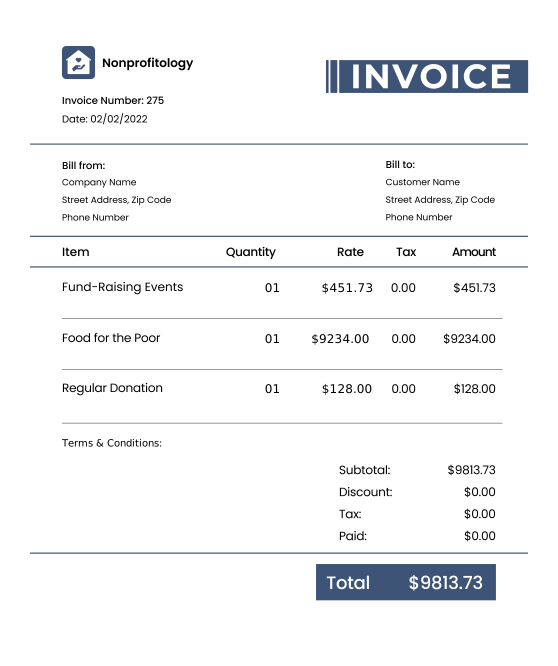
Non-profit Invoice Template
Non-profit Invoice Template
Read more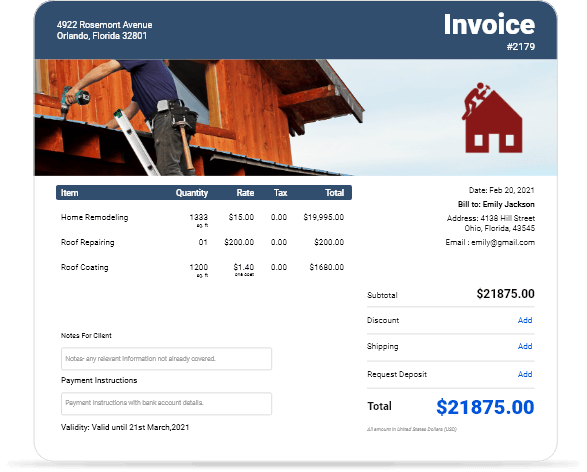
Roofing Invoice Templates
Roofing Invoice Templates
Read moreTowing Invoice Template
Are you done losing track of services and charges for each tow?
Read more14 Actionable Accounting Tips for Small Business Owners
New to finance? Discover 14 simple small business accounting tips to track revenues, expenses, and costs, and grow your business effectively.
Read moreAre estimates free? Know When Can You Charge for Estimates
Are you stuck between deciding whether to offer free estimates or charging a fee for them? Here are the general guidelines for charging for estimates.
Read moreConstruction Profit Margins: How to Track and Increase it
Learn how to track and increase construction profit margins with expert strategies. Maximize profits and ensure sustainable business growth. Start today.
Read moreCan You Charge for an Estimate as a Contractor?
Complex projects involving detailed designs and multiple revisions may incur some charges for estimates. Learn when to charge for an estimate as a contractor.
Read moreBest Roof Estimating Software 2025: Complete Features & Pricing Guide
Compare top roofing estimate software options with pricing, features, and reviews. Start your free trial today and streamline your roofing estimates.
Read moreNon-profit Invoice Template
Non-profit Invoice Template
Read moreRoofing Invoice Templates
Roofing Invoice Templates
Read moreTowing Invoice Template
Are you done losing track of services and charges for each tow?
Read more14 Actionable Accounting Tips for Small Business Owners
New to finance? Discover 14 simple small business accounting tips to track revenues, expenses, and costs, and grow your business effectively.
Read moreAre estimates free? Know When Can You Charge for Estimates
Are you stuck between deciding whether to offer free estimates or charging a fee for them? Here are the general guidelines for charging for estimates.
Read moreConstruction Profit Margins: How to Track and Increase it
Learn how to track and increase construction profit margins with expert strategies. Maximize profits and ensure sustainable business growth. Start today.
Read moreCan You Charge for an Estimate as a Contractor?
Complex projects involving detailed designs and multiple revisions may incur some charges for estimates. Learn when to charge for an estimate as a contractor.
Read moreBest Roof Estimating Software 2025: Complete Features & Pricing Guide
Compare top roofing estimate software options with pricing, features, and reviews. Start your free trial today and streamline your roofing estimates.
Read moreNon-profit Invoice Template
Non-profit Invoice Template
Read moreRoofing Invoice Templates
Roofing Invoice Templates
Read moreTowing Invoice Template
Are you done losing track of services and charges for each tow?
Read more