
![How to Make Money in Construction Business [10 Key Strategies]](/images/2022/08/How-to-Make-Money-in-Construction-Business.jpg)
Key Takeaways
- 01Construction businesses can increase profitability by increasing income and cutting unnecessary expenses
- 02The gross margin for construction businesses averages 17.08-23.53%, with room for improvement
- 03Improving productivity and recognizing costs are fundamental to boosting profit margins
- 04Accurate profit analysis and estimation prevent underpricing and ensure sustainable growth
- 05Effective project management and employee time tracking can significantly reduce wasteful expenses
To build a successful construction business, you can make money and increase profit in two ways:
- By increasing income
- Cutting expenses
Now, you might be thinking of increasing the working hours to increase your income. However, let us tell you it is not a great strategy - for your business and personal health. The other option is cutting your expenses. Keep in mind that we are not telling you to be frugal and under-compensate your workers. We are suggesting you a better business model that doesn't have any unnecessary holes leaking money. Here are some cool techniques to make more money, cut costs and increase the profitability of your construction projects.
Table of Content
10 Strategies for Making Money in Construction Business
The gross margin for construction industry businesses has averaged 17.08-23.53% over 2020. But with the 10 strategies we have discussed below, you can move even further to expand your margins and make more money.
1. Improve productivity
Simply put, productivity is a way to gauge an effective endeavor. Total output divided by input unit is used to calculate productivity rates. Square footage of roofing erected or cubic yards of earth removed could be examples of output in the construction industry, while the input is normally measured in person-hours.

On a job site, maximizing productivity entails working quickly and effectively to keep expenses under control and meet deadlines. Construction companies constantly strive to increase productivity since projects finished on time and under budget typically have larger profit margins. Planning and scheduling your work is necessary to increase productivity. To ensure that work is carried out to maximize the productivity of all project participants, general contractors and trade contractors must cooperate.
Because field employees are a crucial component of productivity, they must understand how to carry out jobs properly and safely. This entails ensuring that each employee has the appropriate instruction and is provided with the equipment and resources needed to perform their duties efficiently.
Poor supply chain management, shoddy scheduling mishaps, and unnecessary rework are additional elements that might affect production, and consequently profitability as well.
2. Recognize your costs
It would help if you understand the costs related to finishing each project with profitability. This covers both your service charges and your construction overhead expenses and how to reduce it. You can't determine your profits if you don't know how much your projects cost to execute.
All expenses directly related to finishing a project are included in costs. These include:
Recognizing your costs and reducing them will give you the following benefits:
- The more you know your sources of expense and how you can mitigate them, the better off you will be in increasing your profits.
- The lower your expense, the more you will be flexible in providing a competitive price and yet stay profitable.
Thus, it is absolutely crucial that you know your numbers and keep them on the positive side.
3. Analyze your profit
As a business owner, you hope to be chosen when you bid on a project. You anticipate making money when you are given the contract after winning the bid. Your projections must be accurate and reasonable for that to occur. No amount of project management or productivity improvements will make you profitable if your estimates are too low.

This is why precisely accounting for your service costs and overhead is crucial. It enables your estimators to calculate markups and apply them appropriately to meet your profit objectives. Make sure to consider the risk factors associated with each project and include a contingency line in your proposal that can absorb extra expenditures if the risk materializes.
For estimators to produce accurate task prices, they also need to be aware of the productivity levels of their field personnel.
Please keep track of the differences between actual and estimated service costs for each project, particularly labor costs and productivity levels. This enables your estimators to assess the accuracy of their projections and decide on any revisions that may be required for your subsequent bid.
By constantly attempting to be the lowest bidder, avoid going for the lowest price. You'll never be lucrative if you undercut your bids to win. Profitability, risk analysis, and your company's ability to do the work should all be considered when you decide whether to bid. The bottom line is not to forgo earnings to secure additional business.
4. Prioritize profitability
Setting profit margin objectives is necessary to increase your company's total profitability. Where does your business plan to be in a year? 5-year period? A decade? Perhaps you want to expand into new areas and countries or build your company. Perhaps you wish to take on larger projects or move from public to private ventures. Setting attainable revenue and profitability targets can help you achieve where you want to be. And knowing your long-term company plans will help you do that. It will also influence the kinds of jobs you embark on and direct your estimators regarding the markup percentage they should aim for on each project.
5. Track costs and manage profitability
Profitability can be increased through effective project management. Focusing on your business side, keep your expenditures low and complete the project by the stated completion date if you want to meet your profit target. Please keep track of the costs associated with modification orders so you can correctly bill for them and raise your profit margin. Never work on a project further until a fee has been decided upon and the client has given their approval.
Keep these points in mind:
- Avoid having employees stand around doing nothing.
- Keep track of your material management
- Organize the job site to maximize worker productivity.
- Provide each employee with the appropriate safety instructions and personal protective gear.
A skilled project manager should be able to recognize the warning signs of a potential problem and take the appropriate action to keep the project on track. They must look for approaches to increase output. Keep thorough records of all the charges associated with your work. It's not necessary to record every screw and nail, but you will need to be able to compare the job's prices to the budget so you can perform a full study after it is finished.
6. Review your findings
There is work to be done when a project is finished. Do a post-mortem analysis with your team to determine how closely your predicted profit matched your actual profit.
Compare Estimates vs. Actual Costs
Did your estimate of the job's expenses match the actual costs? Examine your projections and real expenditures carefully. Note any costs that were higher or lower than you had anticipated so you can improve next time.
Verify Overhead Calculations
Were overhead costs correctly taken into account in your bid? Ensure all indirect costs were properly allocated to avoid profit erosion.
Identify Productivity Issues
Have there been problems at the job site that have cost you money or caused productivity losses? When planning and scheduling your next project, consider training your staff members and looking for strategies to cut downtime.
Profits in construction don't just happen. That isn't how the business is designed to run. Many things could go wrong and ruin a project that would otherwise be successful. It takes perseverance and hard effort to go from scraping by on razor-thin margins to being profitable enough to build your firm and achieve your business goals.
7. Manage your employees

Let everyone on site know how many people will work on each task. For example, FORECAST-framing 70 hours, int. One hundred hours and extended clad. 80 hours. And align the labor distribution according to each person's aptitude - who performs what?
8. Use a project management software
Set your KPIs, understand your data, and act accordingly. For instance, if framing goes over by 20+ hours, discuss it in a toolbox meeting and ask your employee how to get the hours back. It would help if you also allowed all staff to access your project management software so they can feel informed and understand how each person contributed to the project's success.
Here is some project management software you can try:
- Microsoft Project
- RaveBuild
- Co-Construct
- Buildertrend
9. Utilize extra material
Utilize the leftovers from the previous job and apply the remaining material to new projects. Encourage the site to change its "rubbish culture" by offering incentives for material conservation. If you cannot repurpose the materials, return them for a refund (where free returns of extra merchandise may be available), and double-check your orders before proceeding.
Implement a tracking system for leftover materials from each project. Create an inventory of reusable supplies and train your team to check this inventory before ordering new materials. This simple habit can save thousands of dollars annually.
10. Use the correct tools

Get the foreman to inform your crew of their plans for at least two days to gather the necessary equipment. Ensure that every employee always has a "minimum" toolkit on-site:
Here are some rules you can introduce for increased productivity:
- No talking on mobile phones.
- No smoking while working.
- Apprentices must have access to their tools.
Such rules should be followed in construction companies.
Streamline Your Construction Business Finances
Stop losing money to inefficient invoicing and payment tracking. InvoiceOwl helps construction contractors create professional invoices, manage estimates, and get paid faster.
Start Your FREE TrialFrequently Asked Questions
There are several business opportunities in construction including: construction company site management, trade-based businesses, construction cleaning services, construction industry supplier, interior decoration, landscaping, business of painting houses, and administrative support for businesses engaged in construction.
The building industry is tremendously profitable globally and provides numerous business prospects for entrepreneurs. The construction industry is predicted to have 35% global growth in the next 10 years. The majority of business opportunities require an upfront financial investment.
Since the field of construction management is quite active, it can take a lot of effort and a variety of skill sets to run a construction business. But, it is not stressful if you have the right resources and management skills.
Conclusion
To conclude, keep track of all your financial transactions, even when you pay with cash. Search for strategies to boost your margins and consider raising your prices slightly. Use a construction invoice template to keep track of your invoices to enhance your cash flow. And, since every company requires an invoicing system to manage estimates and bills, InvoiceOwl is a invoice software for construction contractors. But it is an excellent option if you have trouble keeping track of paper estimates and bills. With the help of InvoiceOwl, you can quickly create professional-looking estimates and invoices.
Related Resources
Construction Profit Margins: How to Track and Increase it
Learn how to track and increase construction profit margins with expert strategies. Maximize profits and ensure sustainable business growth. Start today.
Read more
An Ultimate Contractor Pricing Guide for 2026
As a contractor, pricing your services might be a little tricky. Here's a comprehensive contractor pricing guide for building a profitable business.
Read more
7 Practical Strategies to Make Most Profit in Construction
Facing tough times in your construction business? Use these strategies to skyrocket your business profit without losing your old and new customers. Understand the reason behind calculating exact service costs.
Read more![How to Price Commercial Lawn Care [Contractors' Guide]](/images/2022/09/how-to-price-commercial-lawn-care.jpg)
How to Price Commercial Lawn Care [Contractors' Guide]
Learn how to price commercial lawn care business by following our comprehensive guide to price the commercial lawn care contract.
Read more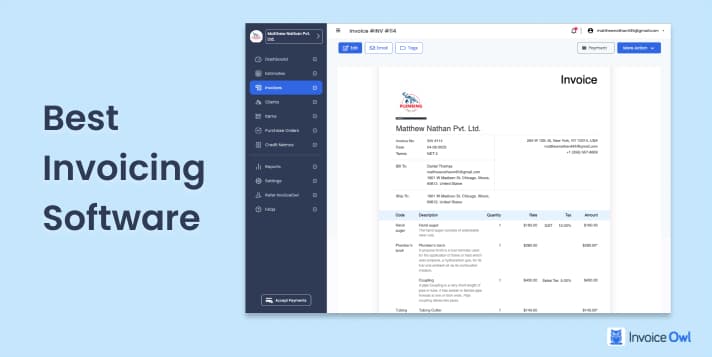
Best Invoicing Software for Small Businesses (2025)
Compare the top invoicing software solutions for small businesses and contractors. Find detailed reviews, pricing, features, and user feedback to choose the right tool for your needs.
Read more
15 Best Flooring Estimating Software: Complete Guide
Compare the top 15 flooring estimating software solutions. Detailed reviews, pricing, and features to help contractors make informed decisions.
Read more
How to Bid a Paint Job- Complete Estimation Process
Master bidding for paint jobs with expert insights on pricing, materials, labor, and insurance. Complete guide for painting contractors to boost profitability.
Read more
What is a Quote or Quotation for Contractors?
A price quote can either be a document or verbal communication that gives a fixed price for a project. Learn the rules of sending out a price quote in business.
Read moreConstruction Profit Margins: How to Track and Increase it
Learn how to track and increase construction profit margins with expert strategies. Maximize profits and ensure sustainable business growth. Start today.
Read moreAn Ultimate Contractor Pricing Guide for 2026
As a contractor, pricing your services might be a little tricky. Here's a comprehensive contractor pricing guide for building a profitable business.
Read more7 Practical Strategies to Make Most Profit in Construction
Facing tough times in your construction business? Use these strategies to skyrocket your business profit without losing your old and new customers. Understand the reason behind calculating exact service costs.
Read moreHow to Price Commercial Lawn Care [Contractors' Guide]
Learn how to price commercial lawn care business by following our comprehensive guide to price the commercial lawn care contract.
Read moreBest Invoicing Software for Small Businesses (2025)
Compare the top invoicing software solutions for small businesses and contractors. Find detailed reviews, pricing, features, and user feedback to choose the right tool for your needs.
Read more15 Best Flooring Estimating Software: Complete Guide
Compare the top 15 flooring estimating software solutions. Detailed reviews, pricing, and features to help contractors make informed decisions.
Read moreHow to Bid a Paint Job- Complete Estimation Process
Master bidding for paint jobs with expert insights on pricing, materials, labor, and insurance. Complete guide for painting contractors to boost profitability.
Read moreWhat is a Quote or Quotation for Contractors?
A price quote can either be a document or verbal communication that gives a fixed price for a project. Learn the rules of sending out a price quote in business.
Read moreConstruction Profit Margins: How to Track and Increase it
Learn how to track and increase construction profit margins with expert strategies. Maximize profits and ensure sustainable business growth. Start today.
Read moreAn Ultimate Contractor Pricing Guide for 2026
As a contractor, pricing your services might be a little tricky. Here's a comprehensive contractor pricing guide for building a profitable business.
Read more7 Practical Strategies to Make Most Profit in Construction
Facing tough times in your construction business? Use these strategies to skyrocket your business profit without losing your old and new customers. Understand the reason behind calculating exact service costs.
Read moreHow to Price Commercial Lawn Care [Contractors' Guide]
Learn how to price commercial lawn care business by following our comprehensive guide to price the commercial lawn care contract.
Read moreBest Invoicing Software for Small Businesses (2025)
Compare the top invoicing software solutions for small businesses and contractors. Find detailed reviews, pricing, features, and user feedback to choose the right tool for your needs.
Read more15 Best Flooring Estimating Software: Complete Guide
Compare the top 15 flooring estimating software solutions. Detailed reviews, pricing, and features to help contractors make informed decisions.
Read moreHow to Bid a Paint Job- Complete Estimation Process
Master bidding for paint jobs with expert insights on pricing, materials, labor, and insurance. Complete guide for painting contractors to boost profitability.
Read moreWhat is a Quote or Quotation for Contractors?
A price quote can either be a document or verbal communication that gives a fixed price for a project. Learn the rules of sending out a price quote in business.
Read more