
Key Takeaways
- 01The pest control industry is expected to grow by 7% between 2021-2031, offering strong job security
- 02You need a high school diploma, in-class training, hands-on experience, and state licensure to become a pest control technician
- 03Median salary for pest control technicians is $37,540 per year, with top earners making over $60,320
- 04Essential skills include attention to detail, time management, customer service, and problem-solving abilities
- 05Most states require licensing and ongoing education to maintain certification
Pest control technicians have a lot of scope for career growth. When conducting a job search, there are opportunities to either start their own business or work for one of the many pest control companies.
Because the pest control industry is booming at a tremendous rate, choosing pest control as a career can turn out to be a lucrative option. The industry is expected to grow by 10% overall in the next decade, according to the Bureau of Labor Statistics (BLS).
Therefore, becoming a pest control technician can be a fruitful option. But do you know the number of pest control technicians is rising, so you need additional skills and educational qualifications to beat the competition?
To learn how to become a pest control technician before starting a pest control company, refer to this blog. Through this article, we will provide you with some vital information regarding pest control jobs, the work profile of pest control technicians, and their average salary.
Who is a Pest Control Technician?
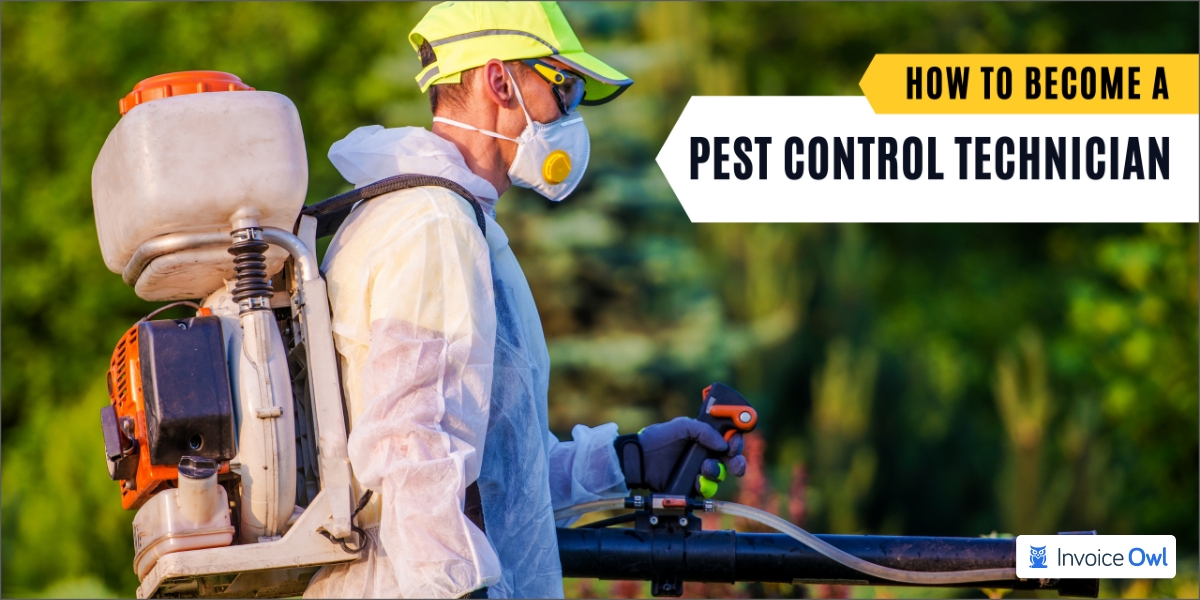
A pest control technician, also popularly known as an exterminator, is a professional responsible for inspecting buildings and properties for signs of pest infestations. The primary responsibility of the pest control operator is to detect unwanted pests such as insects, rodents, and wildlife. He is also responsible for providing relevant solutions that eliminate current infestations and prevent future ones across residential, commercial, industrial, and other premises.
How to Become a Pest Control Technician?
To become a pest control technician, start by securing a high school diploma or its equivalent. Enroll in a training program for theoretical knowledge and gain practical skills through internships, followed by obtaining a licensure by meeting state-specific requirements.
Earn a high school diploma or GED
Employers often prefer high school diplomas, GEDs, or other equivalent credentials. A high school diploma shows employers that you possess the fundamentals of math, science, and communication. Additionally, it is a prerequisite for many hands-on training courses and pest control job opportunities. Therefore, having a high school diploma is necessary for every aspiring pest control technician.
Complete in-class training
You can receive theoretical knowledge about pest control from various educational institutions, such as community colleges, training centers, technical institutions, etc. Verify with your state's pesticide regulating body if the institution or center is accredited. You will get all of your preliminary training in a classroom setting, which will make you ready to pursue a career as a pest control technician (entry-level position). A pest control training center helps you learn about recognizing various pests, characteristics and life cycles of pests, applications for getting rid of and avoiding pests, and optimum pest-specific procedures.
Get hands-on training
In field service industries, gaining practical knowledge is of utmost importance. Submit an application to an employer for an internship or practical field certification program. Some companies may even offer classroom instruction in addition to on-the-job training and field experience. Since on-the-job training helps you polish your skills and become an experienced technician, it is an absolute must for becoming a pest control technician. Depending on the state where you intend to work, you may need varying amounts of on-the-job training. So, before you start your pest control training, check your state's regulations.
Get a pest control license
You must have state pest control accreditation to be hired as a pest control professional. Depending on your state's licensing requirements, you might have to pass an oral exam, a written exam, or a hybrid of the two. These certification exams test your understanding of regional pests, covering native and invasive species, typical infestation indicators, pest diagnostics, and recommended decontamination and pesticide application procedures.
Maintain your license
Simply obtaining the license is not enough; you must also retain it to stay relevant in the pest control industry. Depending on the regulatory body in your state, you might need to recertify your license every few years. You need to attend seminars and continuing education classes to acquire new skills, such as knowledge about state and industry regulations, recognize modifications to EPA regulations or recently discovered environmental effects, learn about cutting-edge business tools like appointment scheduling or diagnostic software, and connect with other professionals in the field.

Before you start your pest control training, verify that your chosen institution is accredited by your state's pesticide regulating body. This ensures your certification will be recognized when applying for your license.
Pest Control Technician Career Facts: Quick Overview
Career Requirements Overview
| Requirement | Details |
|---|---|
| Typical Entry-Level Education | High-school diploma or equivalent |
| Licensing Requirements | Most states need a license, while criteria and regulations differ |
| On-The-Job Training | Moderate-term on-the-job training |
| Median Pay in 2021 | $37,540 per year / $18.05 per hour |
| Job Outlook, 2021-31 | 7% (as fast as average) |
Pest Control Technicians: What Do They Do?
Here's a list of things that a professional pest control technician does:
- Pest control professionals eliminate unwanted pests from the corners, nooks, walls & ceilings, and basements of residential houses, restaurants, businesses, and industrial facilities. They are skilled in recognizing various pest species and figuring out the most effective ways to get rid of them.
- Confirming pest conditions, using traps or pesticides to lessen or eradicate infestations, and regularly treating areas to avoid future infestations are all part of the pest control technician jobs.
- Pest control specialists visit residential, commercial, and industrial premises as per the client's request and do an inspection. Depending on what they find, they offer an estimate for the service before spraying pesticides or laying traps in an affected area.
If a hotel manager is worried about a roach infestation, pest control specialists will survey the building, search for telltale symptoms, and, if required, conduct tests to identify the particular species. They will then use the proper insecticides and keep an eye on the area to make sure the infestation is eliminated.
Roles & Responsibilities of a Pest Control Technician
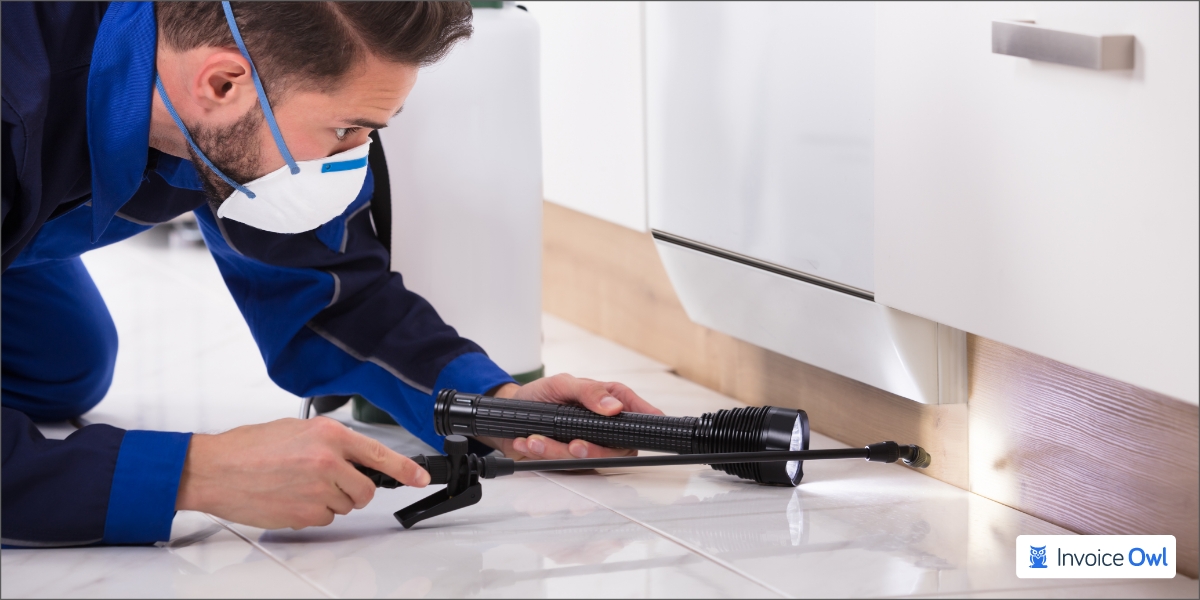
Pest control technicians identify and provide appropriate solutions to pest problems that an amateur cannot solve. The tasks of pest control technicians may vary, depending on their type of work and if they have expertise in controlling certain infestations. However, the following are some of the most common roles and responsibilities performed by pest control specialists:
Skills Required to Become a Pest Control Technician
If you are thinking about working as a pest control specialist and don't know the basic pest control technician requirements, work on the following skills and abilities to be successful and also you can read articles or blogs through online pest control website:
1. Give attention to detail
The pest control specialists pay great attention to their surroundings while conducting inspections to spot bug damage or droppings as well as infestation triggers. They then employ their focus on detail throughout treatment to ensure that they completely cover every nook and cranny of the damaged space.
2. Managing time
To make sure that they can reach all of the clients on time, pest control specialists must be able to complete inspections and treatments quickly. They also utilize their time management abilities to estimate the approximate time it could take to deal with a pest problem and arrange enough time to do it successfully.
3. Relational interaction
Pest control specialists must be able to communicate with a diverse group of clients and for that, they must have strong customer service skills. It is to explain the symptoms and reasons for a pest infestation as well as the corrective measures they will take. Additionally, they should be able to successfully respond to client inquiries, ask the correct questions to learn more about the customer's pest problems and log every assessment and remedy in writing.
4. Problem-solving ability
After spotting symptoms of infestation, the specialists utilize their problem-solving abilities to identify the type of pest they need to deal with, the severity of the infestation and potential harm, and the most effective pest management plans for getting rid of the pests. They even suggest ways to keep the pests away in the future.
To better assist clients, they combine analytical, critical thinking, and experimenting abilities.
What is the Salary of a Pest Control Technician?
The salary of a pest control technician varies according to their skill set, industry experience, certifications, geographical area, and more, but the median annual salary is $40,390 per annum.
According to the U.S. Bureau of Labor Statistics, the top 10% take a major chunk (i.e., $60,320) of the above amount ($40,390).
If you also want to be among the top-earning pest control technicians, you don't only need to provide your clients with great pest control services but need to offer some additional services to your customers.
These services include generating accurate estimates, professional invoices, multiple modes of payment, and so on. You can achieve all this by using InvoiceOwl.
InvoiceOwl is an estimating and invoicing software for pest control that helps you convert potential clients into regular customers and retain your existing clientele. You can use this software to create error-free and quick estimates & invoices.
After you have done the site inspection, you can create estimates from the site itself by using the InvoiceOwl app's QuickBid feature. This feature helps you create rough estimates within a few clicks.
Therefore, if you want to beat the competition in the pest control industry, resorting to estimating and invoicing software, such as InvoiceOwl, can be of great help!

Here's why working as a pest control technician is a fulfilling career path.
The job of pest control technician may seem unglamorous from the outside to some, but professionals in the field find it to be an extremely rewarding and meaningful career.
No doubt, the job of tackling infestations head-on can get tough at times, but experienced technicians highlight several perks and aspects that make it a recommended and worthwhile profession.
Let's find out the glory of the profession:
- The ever-rising need for pest management across municipal sectors ensures consistent workload and growth opportunities even in economic downturns.
- Solving pest issues has a direct, positive lifestyle impact on clients and communities and this ability to directly enhance quality of life is a major driver of job fulfillment.
- The job provides a unique opportunity to balance office and field work flexibly across diverse environments. Working both indoors and outdoors regularly adds variety and enrichment.
Create Bug-Free Estimates & Invoices in Minutes
InvoiceOwl is an all-in-one estimate and invoice software for pest control technicians to create and send professional-looking estimates and invoices in just a few taps. Win more clients and get paid faster.
Start Your FREE TrialFrequently Asked Questions
The pest control technician training programs typically last three months.
The pest control sector is expected to grow by 7% in this decade (2021-31), with technology especially expected to benefit. Since it was discovered that pest control personnel were crucial during the pandemic, the sector has been able to expand rapidly. Additionally, the assistance you offer in preserving the health and wellness of your clients makes this a highly fulfilling field to operate in.
The work environment of pest control workers completely depends on whether the pest control technicians work as freelancers, for a private firm, or for a government department.
According to the U.S. Bureau of Labor Statistics, the median annual salary for pest control technicians is $37,540 per year or $18.05 per hour. Top earners in the field can make over $60,320 annually.
Yes, most states require pest control technicians to obtain state licensure. The specific requirements vary by state but typically include passing written or oral exams covering pest identification, treatment methods, and safety protocols. You must also maintain this license through continuing education.
Conclusion
Pest control specialists use many methods to eliminate pests. Since an amateur can't take on these tasks, there are numerous job opportunities for an experienced pest control technician.
Apart from the multiple job opportunities, the pest control industry offers job security and decent remuneration. Therefore, becoming a pest control technician can be lucrative, given that you possess the right skills.
You can become a successful pest control specialist by working under the direct supervision of an experienced pest control specialist, getting the right certifications, learning about the various state rules and regulations, and employing the appropriate pest control solutions.
Related Resources

Best Pest Control Websites Contractors Should Know
With specialized treatment and professionalism in service delivery, here are some of the best pest control websites for contractors according to user reviews.
Read more![How to Start a Pest Control Business [Complete Guide]](/images/2022/08/How-to-Start-a-Pest-Control-Business.jpg)
How to Start a Pest Control Business [Complete Guide]
Looking to launch a new pest control business? We have covered a quick guide on how to start a pest control business that will thrive for years to come.
Read more
Examples of Pest Control Ads for Attracting Customers
Improving your marketing strategy can grow your pest control business. Learn how to create effective pest control ads and gain more business opportunities.
Read more
Pest Control Contract: The Complete Guide
Learn more details about what a pest control contract is, how a pest control service agreement differs from a contract and its benefits.
Read more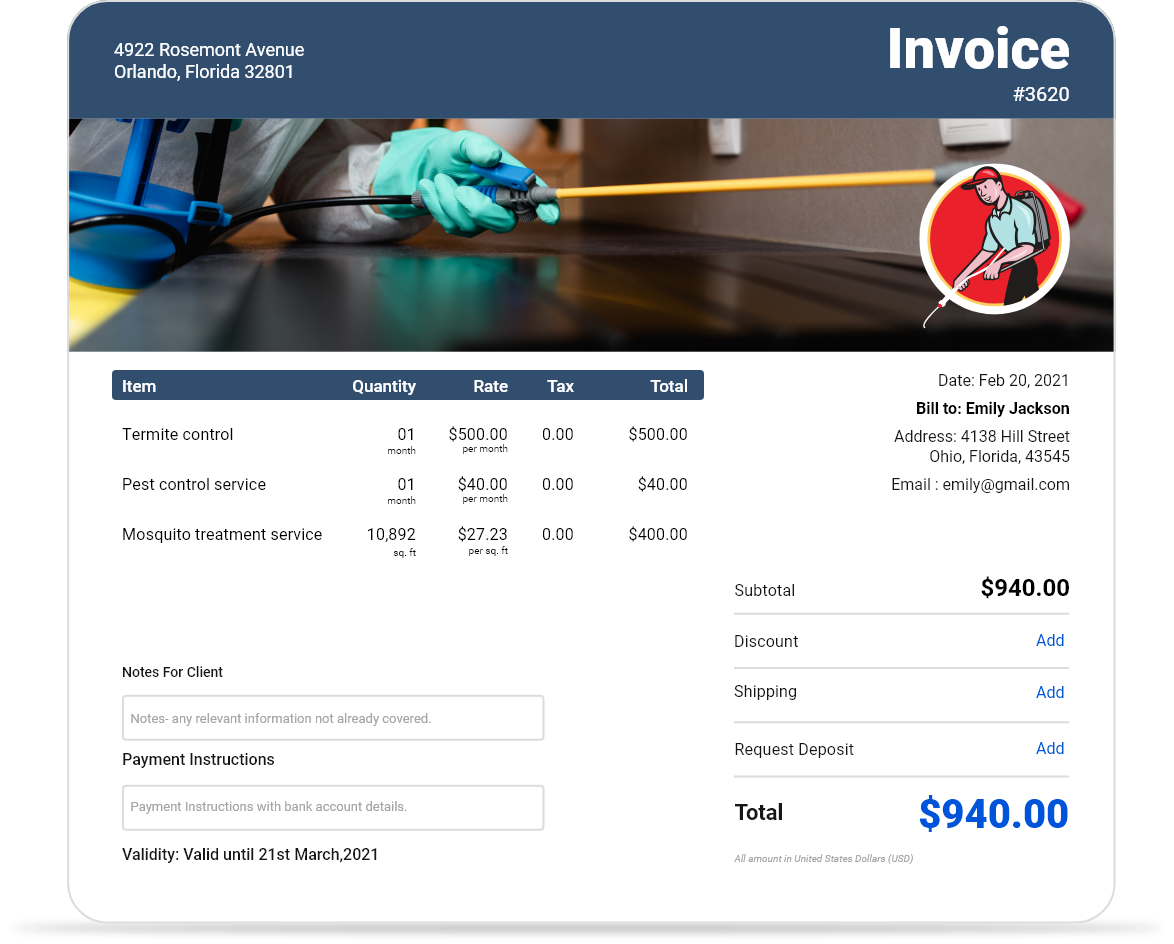
Pest Control Invoice Template
Pest Control Invoice Template
Read more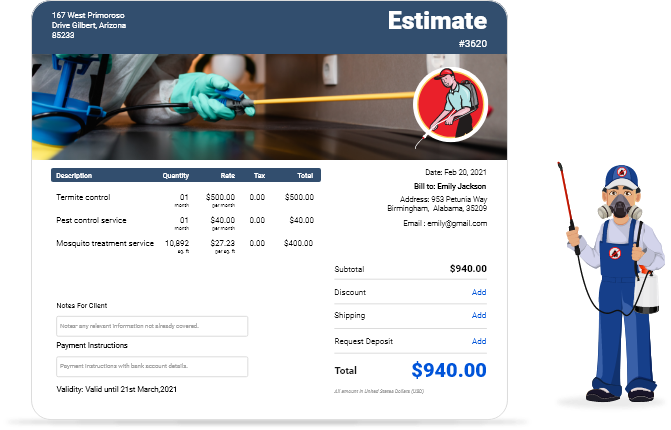
Pest Control Estimate Template
Pest Control Estimate Template
Read moreBest Pest Control Websites Contractors Should Know
With specialized treatment and professionalism in service delivery, here are some of the best pest control websites for contractors according to user reviews.
Read moreHow to Start a Pest Control Business [Complete Guide]
Looking to launch a new pest control business? We have covered a quick guide on how to start a pest control business that will thrive for years to come.
Read moreExamples of Pest Control Ads for Attracting Customers
Improving your marketing strategy can grow your pest control business. Learn how to create effective pest control ads and gain more business opportunities.
Read morePest Control Contract: The Complete Guide
Learn more details about what a pest control contract is, how a pest control service agreement differs from a contract and its benefits.
Read morePest Control Invoice Template
Pest Control Invoice Template
Read morePest Control Estimate Template
Pest Control Estimate Template
Read moreBest Pest Control Websites Contractors Should Know
With specialized treatment and professionalism in service delivery, here are some of the best pest control websites for contractors according to user reviews.
Read moreHow to Start a Pest Control Business [Complete Guide]
Looking to launch a new pest control business? We have covered a quick guide on how to start a pest control business that will thrive for years to come.
Read moreExamples of Pest Control Ads for Attracting Customers
Improving your marketing strategy can grow your pest control business. Learn how to create effective pest control ads and gain more business opportunities.
Read morePest Control Contract: The Complete Guide
Learn more details about what a pest control contract is, how a pest control service agreement differs from a contract and its benefits.
Read morePest Control Invoice Template
Pest Control Invoice Template
Read morePest Control Estimate Template
Pest Control Estimate Template
Read more