
Key Takeaways
- 01Handyman careers offer job security, flexibility, and low startup costs with consistent demand across the US
- 02Essential skills include technical expertise in carpentry, plumbing, electrical work, plus critical thinking and communication
- 03Licensing requirements vary by state—some jobs over $500 require licenses while others have lenient regulations
- 04Pricing typically ranges from $50-$100/hour depending on region and job complexity
- 05Building online presence through websites, social media, and Google Business Profile is crucial for success
Thinking about monetizing your DIY skills? It's time you learn how to become a handyman and build a thriving career. It sure is a lucrative path that gives you flexibility. There are diverse work opportunities and a high demand for the skill set.
However, launching a successful handyman business requires more than just basic knowledge of the tools. You need to be a problem solver and handle everything from repairs to business logistics.
Already felt the challenge to figure out the whats and hows when it comes to setting fair prices, generating professional invoices, and managing your time?
The good news is with the right guidance, you can overcome these hurdles and build your own business.
Time to roll up your sleeves and know how to launch your handyman career!
What Does a Handyman Do?
A handyman is someone who conducts basic maintenance on properties. Their main duties include repairing plumbing systems and carpentry to ensure they work properly. The opportunity of work is diversified to small and medium-sized projects.
While some of their work might not call for formal training, they're still the go-to individuals for homeowners, landlords, and business owners whenever they need to get something fixed in their properties.
Scope of work of a Handyman
A handyman often goes by the name of "a do-it-all service worker."
The detailed overview of the possible scope is given further:
Handyman Services: Demand Levels & Required Tools
| Service | Demand Level | Software/Tools |
|---|---|---|
| Electrical Services | High: Frequent need across residential, commercial, and hospitality industries. | Tools: Voltage testers, wire strippers, power drills, multimeters. Software: InvoiceOwl for invoicing, Jobber for task scheduling. |
| Plumbing Services | Very High: Essential for property management, hospitality, and restaurants. | Tools: Pipe wrenches, plumbers' snakes, Teflon tape, caulking guns. Software: FieldPulse for job tracking, QuickBooks for expense management. |
| Carpentry Services | Moderate to High: Regular demand in residential and retail industries. | Tools: Power saws, nail guns, sanders, levels. Software: Trello for task management, HoneyBook for client handling. |
| Painting and Decorating | High: Frequently needed in real estate, residential, and education industries. | Tools: Paint sprayers, rollers, ladders, drop cloths. Software: Canva for marketing materials, FreshBooks for expense tracking. |
| Outdoor & Landscaping Services | Moderate to High: Seasonal demand, especially in residential and hospitality sectors. | Tools: Power washers, hedge trimmers, snowblowers, rakes. Software: Buildium for property management, Google Calendar for scheduling. |
What are the benefits of a handyman career?
Economic downturns and layoffs are common, with over millions of layoffs annually during recessions. Therefore, the most attractive aspect of a handyman's job is that it is recession-proof.
If you're learning how to become a handyman, it is advantageous to you in the following ways:
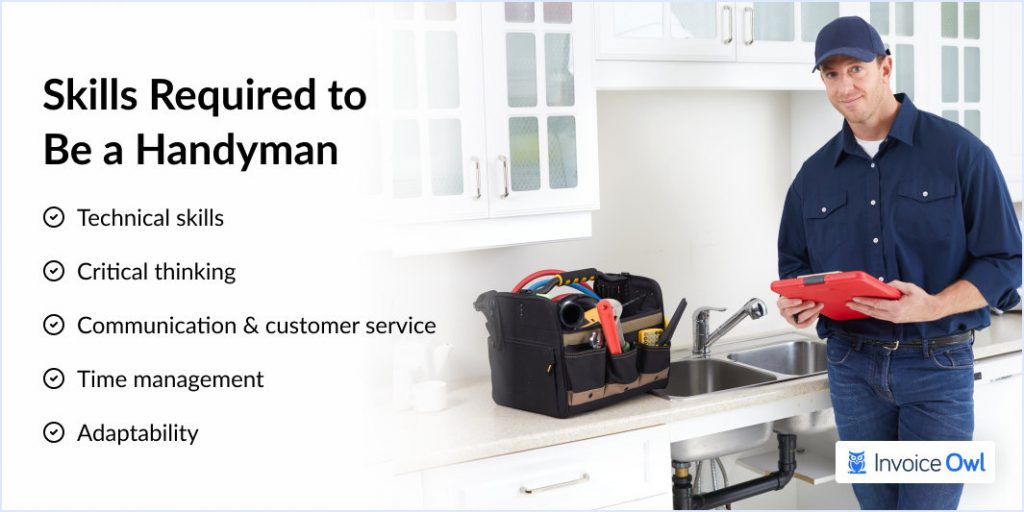
Skills Required to Be a Handyman
A successful career in this requires a combination of essential handyman skills based on varied technical expertise.
Here's a detailed breakdown of the top 5 skills handyman needs to make a name for themselves in their field:
Technical Skills
Considering that a handyman's job includes multiple areas, such as plumbing, electrical work, carpentry, painting and decorating, and basic appliance repairs. They also need to understand how to use tools and equipment such as hand tools, power tools, and diagnostic equipment safely.
Critical Thinking
A handyman needs to be quick and think on their feet to provide effective solutions to unexpected issues. They need to identify the root cause of problems in plumbing and electrical systems. They also need to find ways for cost-effective and practical fixes tailored to the client's needs.
Communication Skills
The U.S. is an absolute melting pot of cultures and languages. Thus, your job requires you to meet new people every day. The on-premise duty demands you to interact with clients proactively. This calls for strong communication skills where you're able to set clear expectations and understand clients' needs.
Time Management
If you want to run a profitable handyman business, you need to be able to handle multiple projects and meet deadlines. You should also be able to prioritize tasks and plan workdays effectively to maximize productivity and minimize travel time between clients.
Adaptability
Handymen need to understand the latest updates on new tools, materials, or techniques to broaden their service offerings. It helps you build a long-running handyman business if you can meet the varied demands of clients and adapt to different workspaces, right from residential homes to commercial buildings.
5 Steps to Becoming a Handyman
If you're thinking of becoming a full-time handyman, you need to understand some basic protocols, with a series of strategic 5 steps to ensure success and comply with regulations.
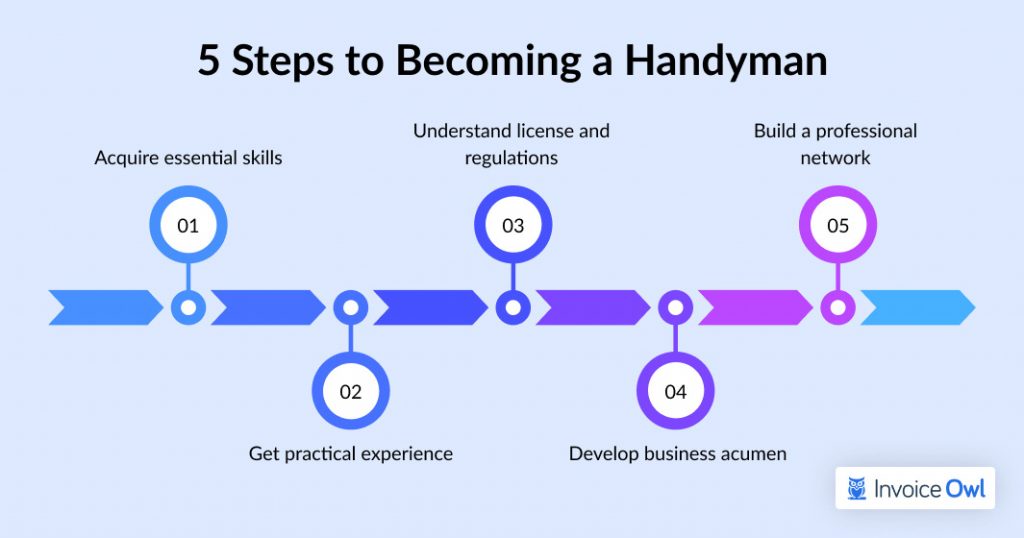
Here's a comprehensive guide to help you navigate this path:
Step-1: Acquire essential skills
First things first, think about developing your skill set to become a competitive handyman. A handyman may need to learn every repair work that a property owner may encounter. You can consider applying for internships and vocational training to get hands-on experience. Focus areas should include your core jobs, such as carpentry, plumbing, electrical repairs, and general maintenance.
Step-2: Get practical experience
Nothing works better for a handyman than hands-on training. Theory can only teach you the basics like plumbing or carpentry but with application, you can understand the critical thinking process and adaptation of the tasks.
Manual work also demands physical proficiency and familiarity with the basic tools. Repeated practice builds muscle memory that helps hone skills in drilling or assembling features. It also helps you learn how to avoid and fix errors.
One way to apply your skills in real-world settings is by working under experienced professionals or volunteering for projects. This practical training is invaluable for becoming a handyman.
Step-3: Understand handyman license and regulations
Not every task requires you to have a handyman license. But if you want to be a professional, it is a safe bet to get one. Research the specific handyman licensing requirements in your state and locality as they vary across the US.
Some states require a handyman license for certain types of work or projects exceeding a specific amount. For example, in California, a California general contractor license is required for jobs over $500. However, other states like Florida have lenient regulations for business licenses for minor non-structural work.
Apart from the licensing requirements, you need to consider getting general liability insurance as well. This is in case of any workplace accidents or mishaps. If you plan to hire employees, you need workers' compensation insurance as well.
Step-4: Develop business acumen
Even if you're a freelancer, you need to develop business acumen to build your presence. Start by creating a business plan where you outline your services, target audience, and pricing structure. Consider the operating costs, tools, and potential revenue.
You also need to automate invoicing and accounting tasks to save time and money. It is advisable to use tools like InvoiceOwl to generate invoices, track outstanding payments, and maintain a steady cash flow.
Step-5: Build a professional network
Networking is the key to growing your own handyman business. Collaborate with real estate agents, property managers, and contractors who can get you in touch with potential clients. Get yourself registered on platforms to create a professional profile and positive reviews. You should also engage with local communities. It helps you build rapport, establish trust, and lead to word-of-mouth recommendations.
How Do You Set Up as a Professional Handyman?
You need a defined plan to succeed if you're a handyman business owner who wants to expand their business, hire workers, and create a professional handyman business that provides an extensive range of services. Check out the steps mentioned below.
1. Create a business plan
A solid business plan is the foundation of a successful handyman business. Define your brand name and logo for brand recall and professionalism. Here's what you should include once you decide to launch a handyman business.
- Define your goals: Outline the short-term and long-term goals of your business. This significantly helps you allocate resources and figure out your operations. For example, as a business owner, your goal is to serve 20 clients monthly within the first year or expand services to include specialized repairs.
- Identify your target audience: Determine who you want to provide services to. These can include homeowners, landlords, property managers, or businesses. Understanding your audience helps you tailor your services to their needs.
- Service pricing: Research local competitors and establish a pricing model based on industry standards, experience, and project complexity.
- Accounting and budgeting: Figure out the needs for accounting and invoicing tools. Invest in these tools to automate the tracking of income, expenses, and taxes. Plan your budget to include maintenance, marketing, and insurance costs.
2. Establish a marketing strategy
A well-executed marketing plan ensures that your business reaches potential clients. Some of the marketing strategies you should consider are:
Online marketing strategies
Having an online presence significantly boosts your visibility, as search engines and online listed platforms are the first places users visit to find local services. Some of the ways you can build an online presence are:
- Website: Think about giving an online platform to your business, such as a professional handyman website. You can use the site to showcase all the handyman skills you offer, the pricing, and client testimonials. A clean, mobile-friendly design adds credibility to your business.
- Social media presence: Use platforms like Instagram and Facebook to share pictures of successful task completion. You can add before-and-after project photos, tips, and client reviews to add credibility.
- List on platforms: Look out for online platforms like TaskRabbit and Angi to connect with clients seeking handyman services. Ensure that your business has met all the licensing requirements before getting listed.
- Google Business Profile: Most users who are looking for a local handyman business use search engine platforms like Google with queries like "Handyman services near me" or "Affordable handyman services in Atlanta." Creating a Google Business Profile and optimizing the same can help your business appear on such search queries. Encourage your customers to leave positive reviews.
Offline marketing strategies
Along with online marketing, don't forget to ace the traditional marketing game that gives your business a higher visibility. Distribute flyers or brochures and also target festivities, such as Christmas and New Year to get more leads as demand for home renovation gets higher. Take advantage of your local community and advertise in the local newspapers or bulletin boards.
3. Start networking
Local handyman businesses rely considerably on positive word-of-mouth marketing. If you want people to talk about the services your handyman business provides, start building your network and get people talking. Some of the audiences and groups you can target are real estate agents, property managers, and contractors.
Building a rapport with them can ensure consistent work opportunities and lead to long-term partnerships. Also, engage in community events to establish your presence and connect directly with clients.
How Should You Price Your Handyman Services?
Pricing your handyman services effectively has its challenges as it involves balancing competition. You'd also have to balance client expectations and add the costs of learning new skills for unique tasks.
Considering all these factors, you can decide on the pricing accordingly:
- Conduct market research: See how your competitors are pricing them. What are the average rates for the services of a handyman in your area? What are the prices for each of the services individually? For example, a handyman business in the US typically charges between $50 and $100 per hour, depending on the region and the job complexity.
- Adopt transparent pricing practices: Provide clients with detailed estimates that break down the individual costs of labor, materials, and additional costs. Ensure that you add these costs to invoices and estimates that you generate. It builds client trust and ensures faster payments.
- Set hourly rates and flat fees: Divide your rates based on the complexity of the jobs. For simple and quick jobs such as hanging shelves and lawn maintenance, consider flat fees. But for larger and more complex tasks, such as remodeling, and furniture building, you can charge hourly rates and material costs.
- Account for overheads: Record all the costs of tools, vehicle maintenance, insurance, and handyman training when you set your rates. Your overall pricing needs to cover all these regular expenses while leaving room for profit.
- Offer tiered pricing for specialized skills: Some tasks in handymen services can be more complex than your regular work. These handyman services also include your investment in acquiring advanced skills (e.g., HVAC or electrical work).
What is the Best Way to Get Handyman Experience?
Experience is critical if you're learning how to become a handyman. Since the work is an innate skill set, it can only be honed with experience. It also prepares you to handle real-world challenges. Some of the ways you can gather experience are:
- Start with DIY projects: Start small and preferably work with family and friends and ask them if they want anything fixed, such as leaky faucets or painting walls. You might not get paid but you'd get to experience the work with extremely low risks and offer value to your network.
- Take on small jobs: Offer your services to neighbors or local platforms like Facebook marketplace. Take up small jobs such as hanging shelves, replacing light fixtures, or minor plumbing tasks to build your skillset gradually.
- Volunteer your services: You can look for non-profit projects where you can practice your skills—for example, assisting in renovating community centers or repairing playgrounds. It doesn't pay you but is a great boost to your honing skills while contributing to your community.
- Work as an apprentice: Seek opportunities to assist experienced handymen or contractors. Working with professionals allows you to observe the best industry practices such as acquiring a handyman license and learning how to price your services.
Create Branded Handyman Estimates & Invoices in Seconds!
InvoiceOwl lets you create professional documents in your custom way. Tailor estimates and invoices by using your brand colors, adjusting the logo position, and watermarking them.
Start Your FREE TrialFrequently Asked Questions
Most states do not require specific licenses for handymen. So you can take a breather if you're tackling only light repair work or maintenance work. But if the job involves plumbing, electrical, or structural work over a certain dollar amount, then you need to step up and meet the licensing requirements.
The essential skills to become a successful handyman is to have basic knowledge and passion for the respective fields, such as carpentry, plumbing, electrical work, and painting. A good handyman knows all the technical skills with the right set of zeal.
To start a handyman business, you need a business plan, revenue model and register your business. You'd have to brush up on the requisite skills and experience (and if you're going to work on a larger scale, the legal checklists and insurance checklists, too). Then, simply market your service in local directories, social media, and through word-of-mouth referrals.
Handymen need a few sets of tools to get started. The professionals must know the basics, which are hammers, screwdrivers, and a power drill. Also, there are measuring tape, pliers, a utility knife, a toolbox, a wrench set, and a ladder. You can buy some tools but rent those that require significant investment.
Yes, you definitely can work as a handyman part-time to gain experience. This allows you to be flexible while gathering the skills while maintaining another job for a steady income flow.
In the US, handymen make on average from $15 to $60 per hour. However, the income level does vary depending on location, services, and expertise. If you are good at what you do, you can make much more than that! So when you are offering unique services and consistently do your job well to increase your income. It will help you create lifelong customers.
Yes, you can create a handyman invoice without invoicing tools with Microsoft Excel or Word. It's easy to do so and you can create quick invoices in a given format. However, it is ideal to use invoicing tools if you're in for the long haul and want to be a professional. Specialized invoicing tool like InvoiceOwl helps you be accurate, save time, and track payments more efficiently.
Related Resources

14 Actionable Accounting Tips for Small Business Owners
New to finance? Discover 14 simple small business accounting tips to track revenues, expenses, and costs, and grow your business effectively.
Read more
Maximize Your Margins With Profitability Tips for Appliance Repair Businesses
Discover strategies to increase profitability in your appliance repair business and boost your margins with essential tips for success.
Read more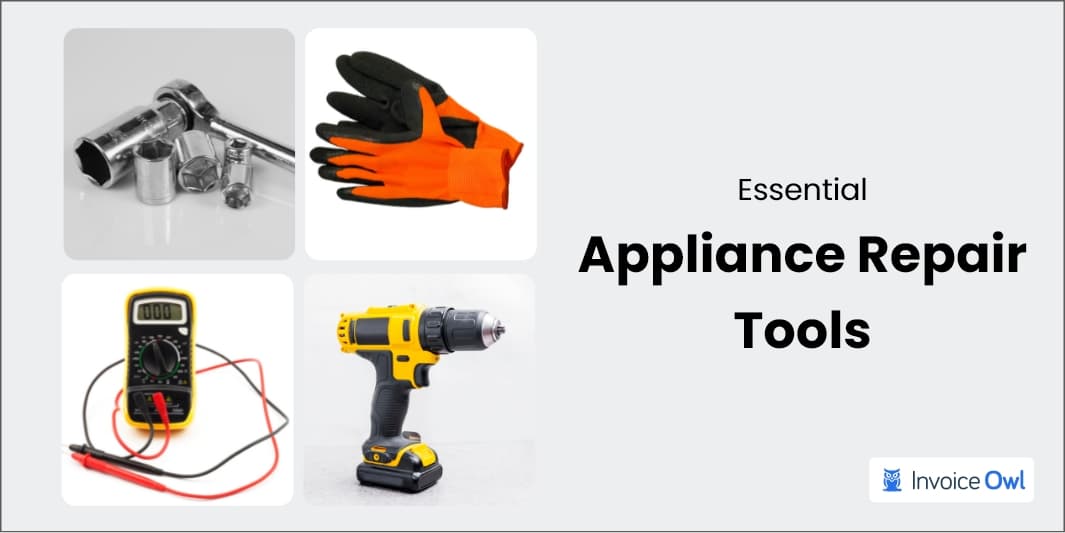
Essential Appliance Repair Tools: Look What You Need to Get the Job Done
Get the latest and most essential appliance repair tools and equipment for technicians in 2026. Find everything you need to get the job done right.
Read more
10 Best Handyman Apps in 2026
Go through the top 10 handyman apps you can choose for your handyman service business management and remove the inefficiencies from your operations.
Read more
Estimating Handyman Jobs in 2026 - Pricing Strategy
How you estimate your handyman jobs decides wether you get the job or not. If you want to learn how to estimate your handyman services for accuracy and profit, here is the pricing strategy for you.
Read more
Top 10 FreshBooks Alternatives for Efficient Invoice Management in 2025
Explore the top alternatives to FreshBooks for 2025. Compare features and pricing to find the best fit for your business needs.
Read more
The Ultimate Guide to HoneyBook Alternatives for Small Businesses in 2025
Explore the best HoneyBook alternatives and competitor for 2025. Compare features & pricing to find the perfect fit for your business.
Read more
10 Best QuickBooks Alternatives You Should Consider
Looking for a QuickBooks alternatives? Discover the top 10 invoice software options for businesses in 2025 that fit your pricing & feature requirements.
Read more14 Actionable Accounting Tips for Small Business Owners
New to finance? Discover 14 simple small business accounting tips to track revenues, expenses, and costs, and grow your business effectively.
Read moreMaximize Your Margins With Profitability Tips for Appliance Repair Businesses
Discover strategies to increase profitability in your appliance repair business and boost your margins with essential tips for success.
Read moreEssential Appliance Repair Tools: Look What You Need to Get the Job Done
Get the latest and most essential appliance repair tools and equipment for technicians in 2026. Find everything you need to get the job done right.
Read more10 Best Handyman Apps in 2026
Go through the top 10 handyman apps you can choose for your handyman service business management and remove the inefficiencies from your operations.
Read moreEstimating Handyman Jobs in 2026 - Pricing Strategy
How you estimate your handyman jobs decides wether you get the job or not. If you want to learn how to estimate your handyman services for accuracy and profit, here is the pricing strategy for you.
Read moreTop 10 FreshBooks Alternatives for Efficient Invoice Management in 2025
Explore the top alternatives to FreshBooks for 2025. Compare features and pricing to find the best fit for your business needs.
Read moreThe Ultimate Guide to HoneyBook Alternatives for Small Businesses in 2025
Explore the best HoneyBook alternatives and competitor for 2025. Compare features & pricing to find the perfect fit for your business.
Read more10 Best QuickBooks Alternatives You Should Consider
Looking for a QuickBooks alternatives? Discover the top 10 invoice software options for businesses in 2025 that fit your pricing & feature requirements.
Read more14 Actionable Accounting Tips for Small Business Owners
New to finance? Discover 14 simple small business accounting tips to track revenues, expenses, and costs, and grow your business effectively.
Read moreMaximize Your Margins With Profitability Tips for Appliance Repair Businesses
Discover strategies to increase profitability in your appliance repair business and boost your margins with essential tips for success.
Read moreEssential Appliance Repair Tools: Look What You Need to Get the Job Done
Get the latest and most essential appliance repair tools and equipment for technicians in 2026. Find everything you need to get the job done right.
Read more10 Best Handyman Apps in 2026
Go through the top 10 handyman apps you can choose for your handyman service business management and remove the inefficiencies from your operations.
Read moreEstimating Handyman Jobs in 2026 - Pricing Strategy
How you estimate your handyman jobs decides wether you get the job or not. If you want to learn how to estimate your handyman services for accuracy and profit, here is the pricing strategy for you.
Read moreTop 10 FreshBooks Alternatives for Efficient Invoice Management in 2025
Explore the top alternatives to FreshBooks for 2025. Compare features and pricing to find the best fit for your business needs.
Read moreThe Ultimate Guide to HoneyBook Alternatives for Small Businesses in 2025
Explore the best HoneyBook alternatives and competitor for 2025. Compare features & pricing to find the perfect fit for your business.
Read more10 Best QuickBooks Alternatives You Should Consider
Looking for a QuickBooks alternatives? Discover the top 10 invoice software options for businesses in 2025 that fit your pricing & feature requirements.
Read more